


English


ABOUT ORGANIC-LOCK
DESIGN, INSTALLATION & MAINTENANCE
ADDITIONAL RESOURCES
PRODUCT SPECIFICATIONS
PROJECTS
WHERE TO PURCHASE
CONTACT US
DEALER LOGIN
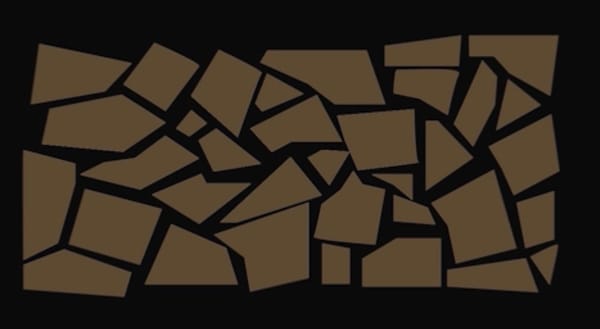
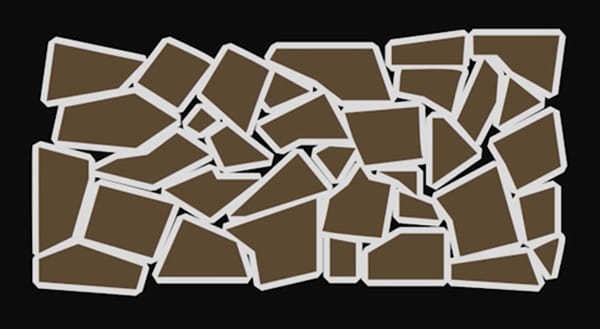
When water comes into contact with an Organic-Lock™ Stabilized Aggregate, the water is absorbed by the Organic-Lock™ binder. The binder swells in size and grips onto surrounding aggregate particles, holding them together creating enhanced stability and significantly reducing erosion.
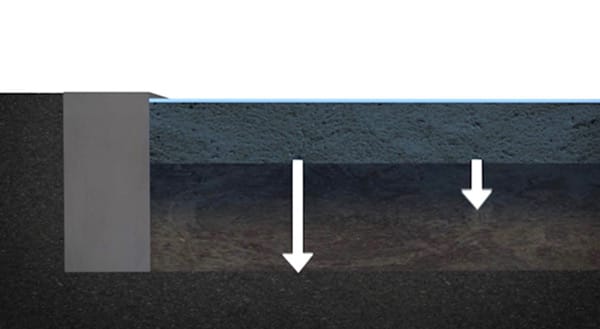
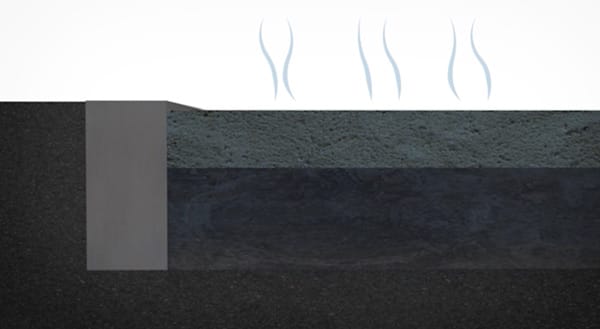
Once the gel forms to its maximum swell volume, it is unable to take on any new water so the excess water passes directly through the system down into the groundwater table. Over time, the gel releases its water through evaporation into the atmosphere and through percolation into the groundwater table…recharging the system to be ready for the next rainfall..
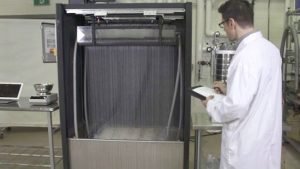
The core focus for the development of the Organic-Lock™ formulation is on its ability to resist erosion due to excessive rainfall. Envirobond uses a customized rainfall simulation device that provides consistent and comparative stress to each sample studied.
By preparing samples that are subjected to a controlled rainfall simulation, Envirobond’s researchers have been able to understand the relationship between the binding strength and its ability to resist erosion. This has lead to a patented formulation making Organic-Lock™ the strongest organic binder on the market today.
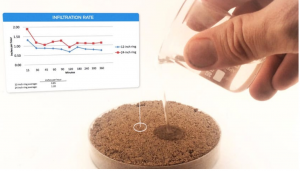
Traditional surfaces like asphalt or concrete are often installed to resist erosion, however they are also commonly impermeable to water. Organic-Lock™ offers an ideal solution of being stable and also water permeable. When water comes across the Organic-Lock™ Stabilized Aggregate system, it easily permeates the pores of the aggregate.
The water permeability rate of Organic-Lock™ Stabilized Aggregate, determined by an Independent ASTM standard double ring infiltrometer test, shows a rate of 0.85 inches per hour

Organic-Lock™ Stabilized Aggregates derive much of their strength from the aggregate itself. The gel works best with the natural interlocking ability of well-graded crushed aggregate particles to create an optimally structured surface.
Only aggregates that meet our optimal gradation guidelines, which specify a detailed matrix of particle size distribution, are approved to become Organic-Lock™ Stabilized Aggregates. We determine this using a simple sieve analysis.