


English


ABOUT ORGANIC-LOCK
DESIGN, INSTALLATION & MAINTENANCE
ADDITIONAL RESOURCES
PRODUCT SPECIFICATIONS
PROJECTS
WHERE TO PURCHASE
CONTACT US
DEALER LOGIN
Angel Park and Magical Garden (Angel Park), located in the heart of North Philadelphia, is part of The Village of Arts and Humanities' broader vision to revitalize and connect underserved urban neighborhoods in the area. The project began planning in 2022 and was installed in Fall 2023, reclaiming abandoned space and transforming the area into a safe, engaging, and beautiful space forcommunity gatherings and youth engagement.
As the first phase of a comprehensive campus master plan by SALT Design Studio, Angel Park aims to foster a sense of community through art and nature. A central theme of this master plan is the creation of an interconnected campus for Village visitors and neighboring residents in an inner-city neighborhood, where providing secure, accessible pathways is so important in an urbanenvironment.
The landscape design of Angel Park, led by SALT Design Studio, carefully balanced the community’s needs, the project’s budget, andthe unique characteristics of the site. The design also integrates the space into the larger campus plan for The Village of Arts andHumanities. The following sections outline the key design objectives that shaped the project.
Safe Passage
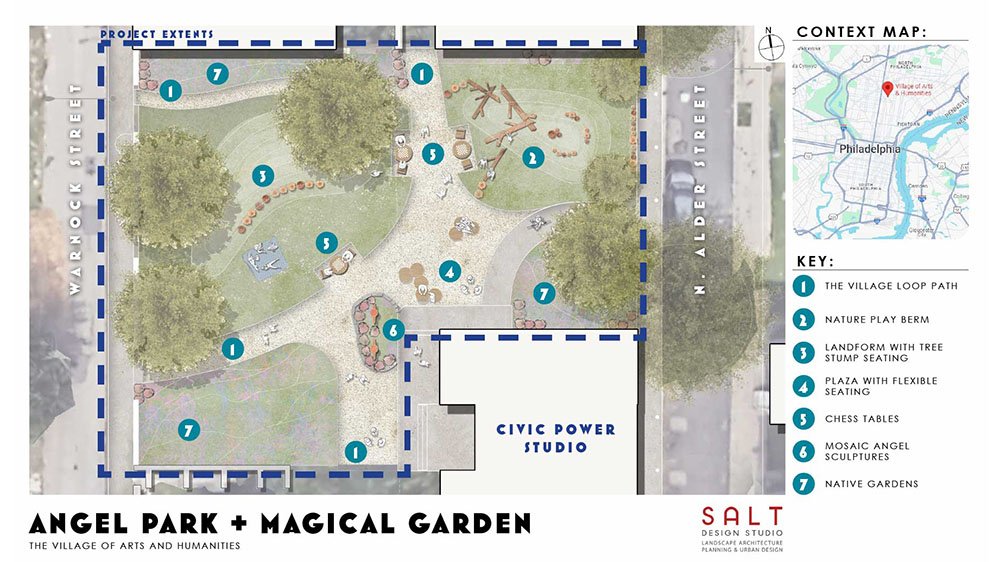
The theme of safe passage was central to the design of Angel Park. It was essential to create a safe and accessible through-way for traditionally underserved neighborhoods as well as an inviting park space for community gathering. Pathway design and lighting design were key components to providing safe navigation routes and enhancing overall neighborhood safety.
Art as a Pillar of Community Revitalization
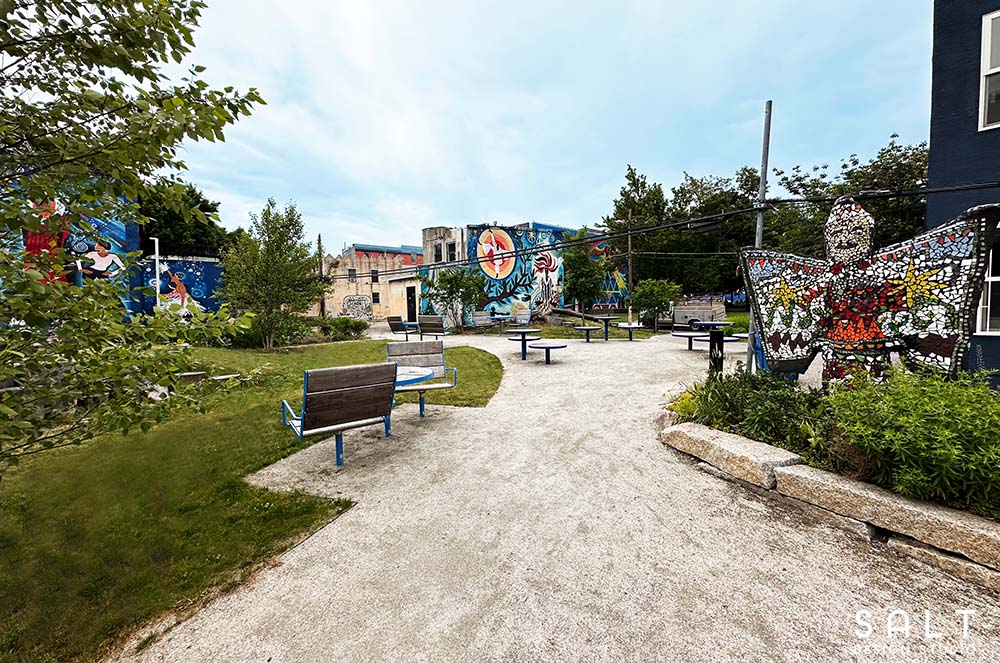
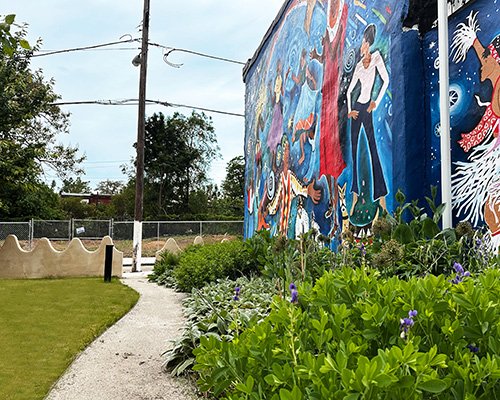
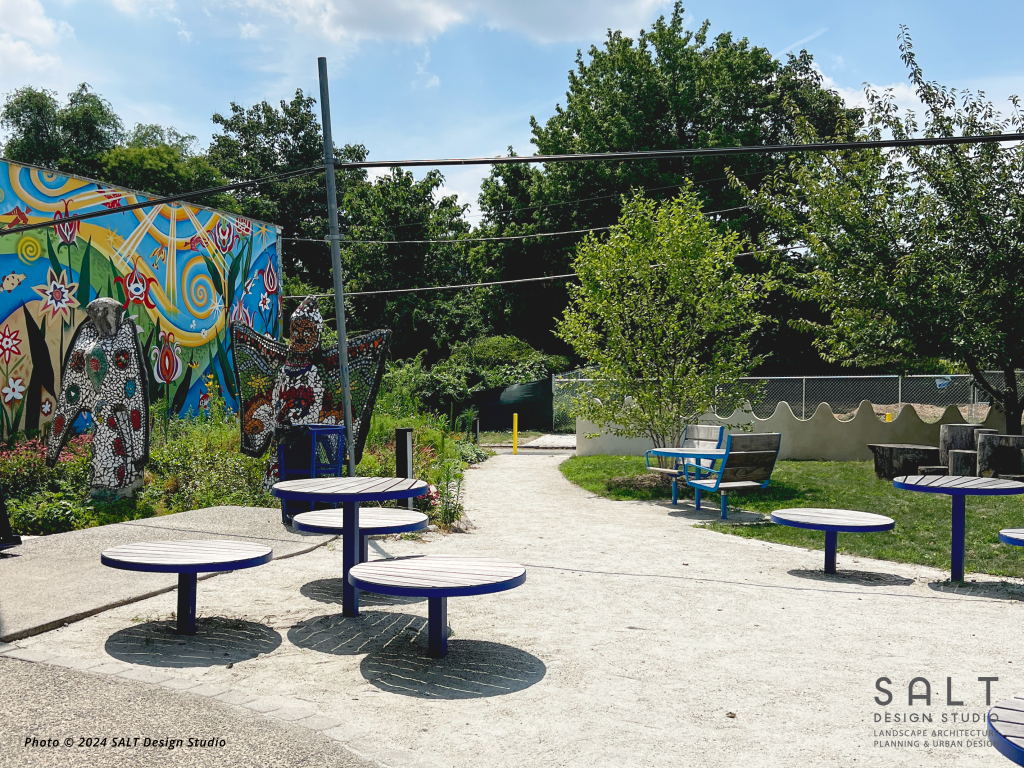
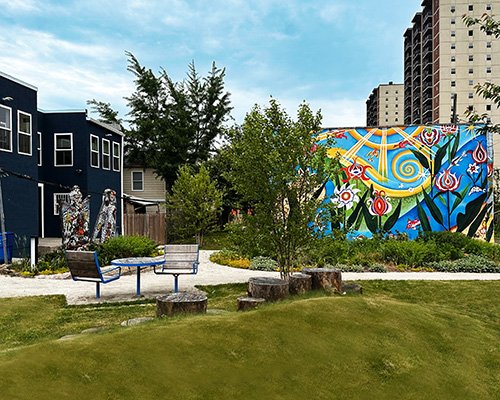
The Village of Arts and Humanities, founded by artist and professor Lily Yeh, has a longstanding tradition of embedding art withincommunity spaces. Angel Park was no exception; existing brightly colored murals and angel mosaics were preserved and featured inthe revitalized Angel Park.

"OUR CLIENT BEING AN ARTS ORGANIZATION, WE OF COURSENEEDED TO INTEGRATE ART, ART PROGRAMMING, ANDSTORYTELLING INTO THE SPACE. ALL OF THE VILLAGE OFARTS AND HUMANITIES PARK SPACES HAVE VERY UNIQUESTORIES ABOUT PAST ARTISTS WHO HAVE CREATED WORKTHERE AND STORIES ABOUT FORMER RESIDENTS WHO HAD AVERY BIG PRESENCE."
- Katrina Rogus, Studio Director, SALT Design Studio
Community Play and Engagement Spaces
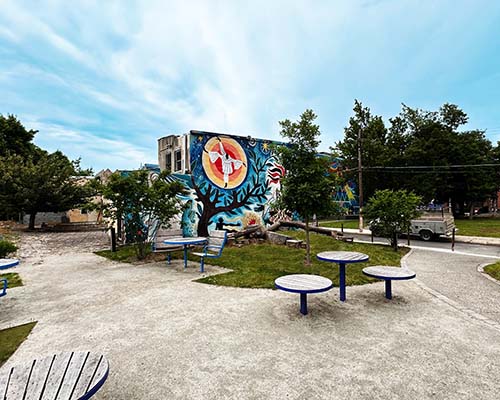
The design emphasized creating spaces for community engagement. “We pinpointed a specific program for each one of the parks in the master plan, and Angel Park is specifically really focused on play and a space for children,” recalled Rogus.The park features earthen berms and nature play elements made from salvaged trees. “Kids can choose their own adventure: climb up the berms, hang out on the logs, and play in an environment that connects them to nature," Rogus explained.The design also pays homage to "Big Man," a beloved local figure who was known for ensuring the safety of children as they passed through the area. Big Man loved to play chess; to honor his legacy, SALT Design Studio integrated beautiful chess tables with chairs throughout the park where the community can gather.
Integrated Project Delivery Approach
The project team adopted an integrated project delivery (IPD) process; a collaborative project approach where designers, builders,and other key stakeholders work together from the outset to optimize project outcomes.
“WE KNEW DURING THE DESIGN PHASE THAT WE WOULD BE WORKING WITH A TRUSTED CONTRACTOR, APIARY STUDIO, TO BUILD THE PROJECT, SO WE DEVELOPED THE DRAWINGSTO A CERTAIN LEVEL AND THEN WORKED COLLABORATIVELY WITH APIARY ON SEVERAL DESIGN COMPONENTS. THIS ALLOWED FOR SOME CREATIVE FREEDOM IN THE FIELD AS THEY BUILT IT OUT.”
- Katrina Rogus, Studio Director, SALT Design Studio
This joint effort between SALT Design Studio and Apiary Studio, coupled with flexibility in design, enabled the team to make real-time adjustments based on site conditions.
Environmental Site Disturbance Constraint
From a technical standpoint, the design had to navigate a limit on site disturbance set by the Philadelphia Water Department (PWD). This regulation mandates that any project disturbing 5,000 square feet or more must undergo a detailed review by the PWD to ensure compliance with stringent stormwater management requirements, which could necessitate more complex post-construction stormwater planning. The project aimed to stay below this limit to avoid additional time and budget impacts associated with the extended review and compliance process.
To keep the project under threshold, the design team got creative. SALT Design Studio carefully planned new pathway placement where disturbances were already intended, such as locations where existing pathways were being removed. They also designed a solar lighting scheme of bollard fixtures with concrete foundations, avoiding the need for extensive excavation to install underground conduit.
Pathway Network Design
A key component of the design was the integration of a pathway system to create a cohesive loop connecting park spaces and unifying the campus.
“WE REALLY LOOKED AT HOW TO BRING PARK SPACES TOGETHER BY REINFORCING A SENSE OF CAMPUS AND CONNECTING SPACES BETWEEN THE BUILDINGS. WE HAD A NOTION OF CREATING THE VILLAGE LOOP, WHICH IS A NETWORK OF PHYSICAL PATHWAYS THAT WILL CONNECT ALL OF THE SPACES IN AN ACCESSIBLE WAY.”
- Katrina Rogus, Studio Director, SALT Design Studio
This strategic approach, developed as part of the Village of Arts and Humanities master plan, ensured that the pathways not only linked various elements of Angel Park but also aligned with the broader vision for the campus.
Pathway surfacing material selection was an example of the IPD approach taken for this project. The decision was influenced by the need for a cost-effective, durable, and aesthetically pleasing pathway material.
“WE PRESENTED A FEW OPTIONS TO THE CLIENT. WE WERE TRYING TO MAINTAIN A SIMILAR AESTHETIC TO THE EXISTING ADJACENT CONCRETE PATHWAY BUT DECIDED THATCONCRETE PERHAPS DIDN’T QUITE FIT AT ANGEL PARK. WE ENDED UP GOING CHOOSING STONE DUST FOR PATHWAYS FOR A MORE NATURAL LOOK AND A SOFTER FEEL. THENAPIARY STUDIO TOOK IT TO THE NEXT STEP AND WENT WITH THE ORGANIC-LOCK STABILIZED AGGREGATE.”
- Katrina Rogus, Studio Director, SALT Design Studio
Apiary Studio specializes in the application of innovative building materials and conventions, taking a creative approach to landscape projects. In collaboration with SALT Design Studio, Apiary Studio selected Organic-Lock Stabilized Aggregate (OLSA) for pathway surfaces.
“ANGEL PARK AND MAGICAL GARDEN WAS OUR FIRST TIME USING ORGANIC-LOCK STABILIZED AGGREGATE. WE TOOK A CREATIVE AND RESEARCH-DRIVEN APPROACH TO SELECTTHIS MATERIAL, WORKING CLOSELY WITH SALT DESIGN STUDIO TO ENSURE IT MET THE PROJECT'S REQUIREMENTS. THE RESULT WAS A PATHWAY THAT NOT ONLY FIT THEAESTHETIC AND FUNCTIONAL NEEDS OF THE SPACE BUT ALSO ENHANCED THE OVERALL DURABILITY AND SUSTAINABILITY OF THE PARK.”
- Hans Hesselein, Principal, Apiary Studio
OLSA is a natural crushed stone material pre-mixed with Organic-Lock, a plant-based aggregate binder, to create durable, permeable, and accessible surfaces for pathways and other applications . OLSA's natural appearance complements Angel Park’s aesthetic, while its durability supports low maintenance and longevity, making it ideal for high-traffic areas. It’s also ADA-compliant, ensuring accessibility for all.
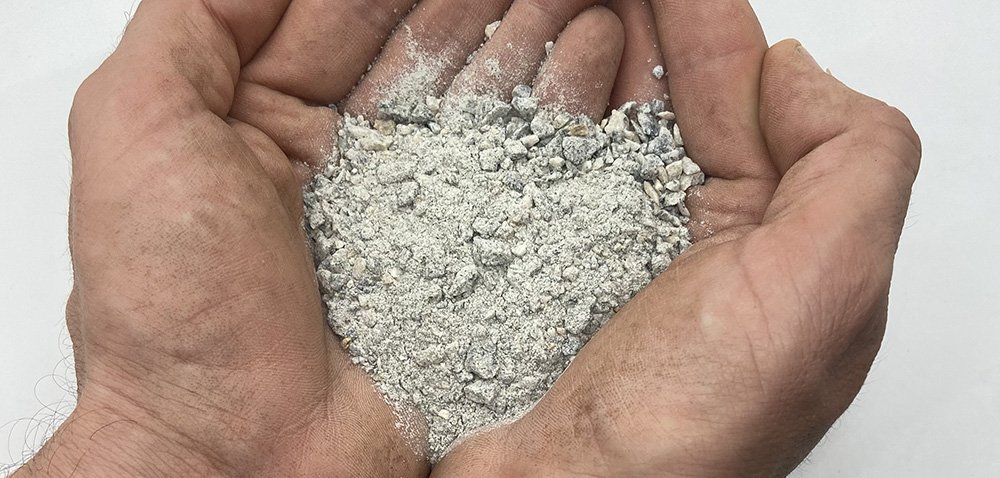
Stancills supplied 30 tons of OLSA in Aspen Trail to cover approximately 1200 square feet of pathways at Angel Park.
The construction of Angel Park required close collaboration between SALT Design Studio and Apiary Studio to adapt to site conditions as construction progressed while minimizing unnecessary site disturbances.
For pathways, the installation process was also supervised by OLSA supplier Stancills. Given the site's unique challenges and the team’s unfamiliarity with OLSA, Stancills provided on-site training and support to ensure proper installation techniques were followed.
“WE DELIVERED THE OLSA IN TWO STAGGERED BATCHES TO ACCOMMODATE SITE STAGING CONSTRAINTS. THIS ALSO ALLOWED US TO MANAGE THE MOISTURE CONTENT OF THEAGGREGATE MIX FOR A SINGLE DAY INSTALLATION DURING HOT WEATHER.”
- Chris Siciliano, Stancills
Moisture content is crucial in OLSA because it activates the binder, allowing it to swell and gel, which locks the aggregate particles together for stability. Proper hydration also ensures the aggregate blend has the right consistency for effective compaction.
Proper base preparation, moisture management, and compaction were all critical factors in achieving the desired pathway surface. Apiary Studio used a walk-behind double drum roller for compaction, adjusting techniques to navigate the tight spaces and curves around park furniture. "Hand compaction was used around tight areas where the roller couldn’t reach to get to the required level of compaction," Hesselein added.
Ultimately, the collaborative and flexible construction approach taken was successful in providing firm, durable, natural pathway surfaces. “We ended up loving the installation and the client did as well, so the use of Organic-Lock Stabilized Aggregate will be continued in the other Village of Arts and Humanities park spaces,” said Rogus.
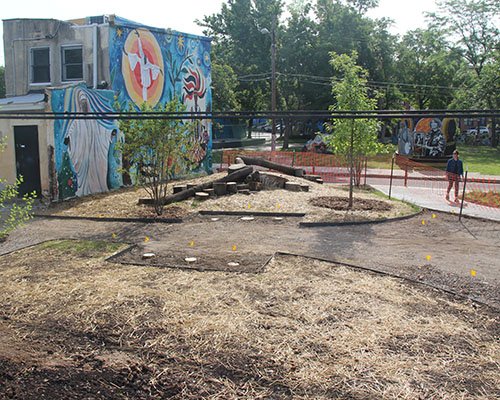
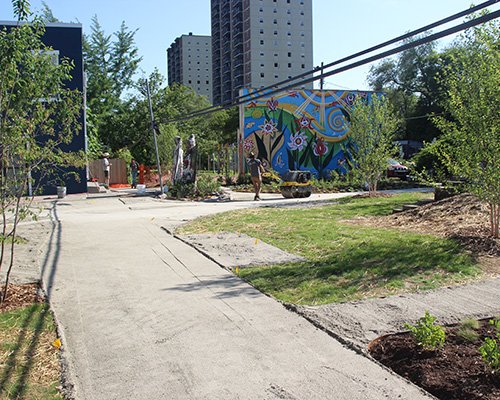
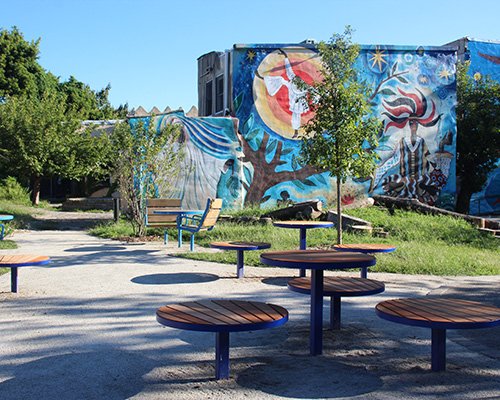
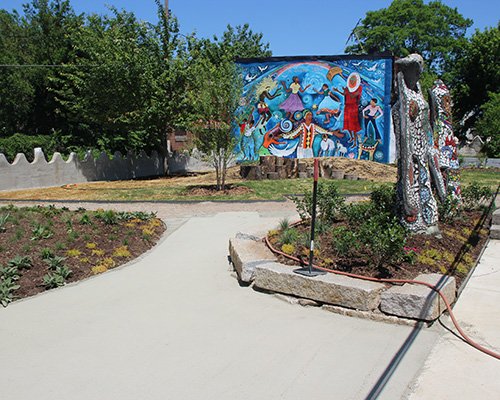
Construction Photos Courtesy of Apiary Studio (2023)

Designing for Safe Passage: The design for Angel Park focused on safety and creating secure routes forchildren and community members in an underserved neighborhood.

Stormwater Regulation Compliance: Limits on site disturbance necessitated creative solutions from the design team to remain under threshold, including reusing existing pathway contours and designing a solar lighting system to avoid excavating for lighting power conduit.

Unfamiliar Pathway Surfacing Material: As this was the design and construction team’s first use of OLSA, training and oversight was provided by Stancills; they supplied the material pre-hydrated and ready to install in two stages, effectively managing site staging constraints and material hydration.
At Angel Park and Magical Garden, SALT Design Studio and Apiary Studio successfully transformed an overgrown and underutilized open space into a vibrant, safe, and engaging community space. This project underscores the importance of creating safe passageways in inner-city neighborhoods, enhancing both the physical environment and the quality of life for residents.
The park’s art installations, play areas, and pathways have become a focal point for the neighborhood, embodying the vision of The Village of Arts and Humanities to create spaces that are both safe and inspiring. The project also provides a model for future phases of The Village of Arts and Humanities' campus master plan.
Contributors
SALT Design Studio - https://www.saltdesignstudio.com/
Apiary Studio - https://www.apiary-studio.com/
Stancills - https://stancills.com/
Organic-Lock - www.organic-lock.com