


English


ABOUT ORGANIC-LOCK
DESIGN, INSTALLATION & MAINTENANCE
ADDITIONAL RESOURCES
PRODUCT SPECIFICATIONS
PROJECTS
WHERE TO PURCHASE
CONTACT US
DEALER LOGIN
Riverfront Park is an ambitious urban renewal project located along the historic downtown banks of the Rappahannock River inFredericksburg, Virginia. Spanning 4 acres and completed in May 2021, the park artfully integrates modern amenities with a deeprespect for historical significance.As Fredericksburg’s first smart park, the site is equipped with solar-powered lighting, USB charging stations, and interactive waterfeatures, establishing it as a technologically advanced space. Despite its contemporary focus, the park pays homage to the area’s richcolonial and Civil War history. This innovative public space harmonizes modern design elements with historical context, offering amultifunctional area for community gatherings and recreation.
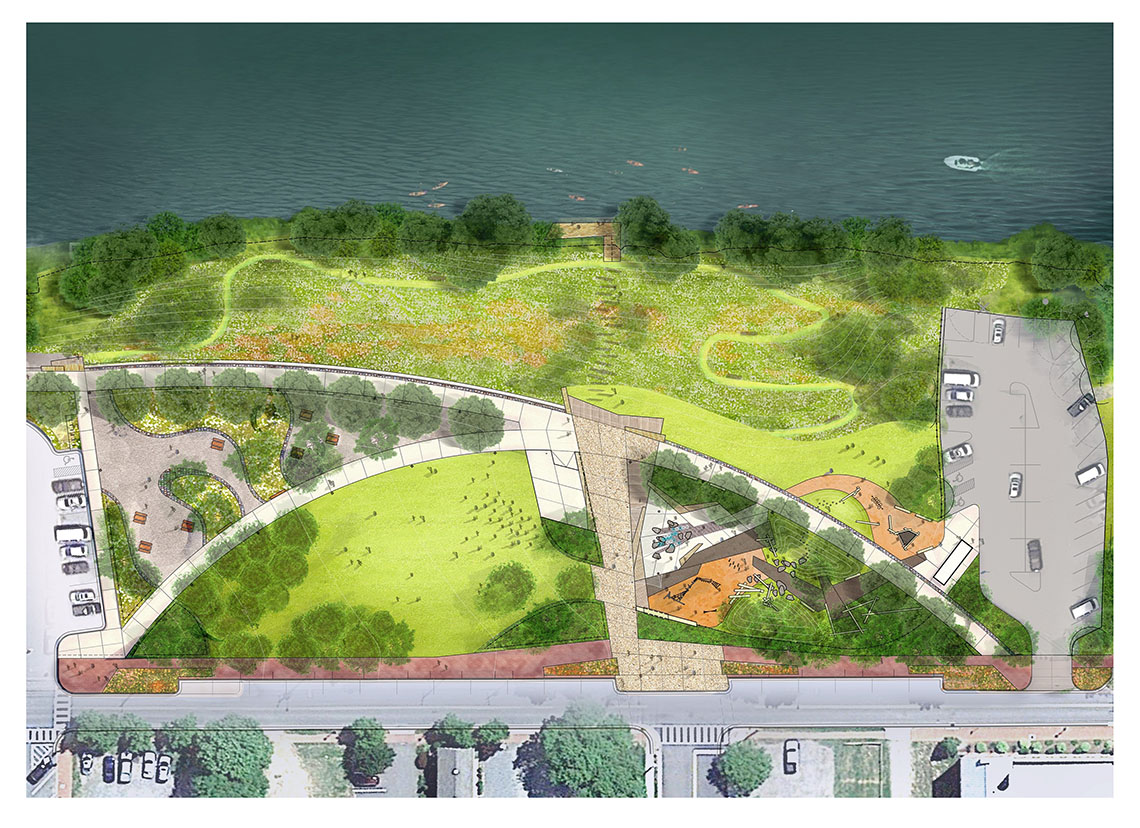

Images courtesy of Rhodeside & Harwell
The design objectives for Riverfront Park were multifaceted, aiming to create a modern recreational area integrated into the surrounding historically significant city of Fredericksburg. Initiated as part of a master plan in 2008, the design process for Riverfront Park began in earnest in 2016.Landscape design firm Rhodeside & Harwell faced the challenge of reconciling contemporary aesthetics with the area's colonial and Civil War history. According to Rhodeside & Harwell principal Derrick J. Wolbaum:

“FREDERICKSBURG IS A VERY HISTORICAL CITY. A LOT OF THEEXISTING PARKS ARE VERY TRADITIONAL AND REFLECT THATSURROUNDING HISTORY. THE CITY WANTED ACONTEMPORARY DESIGN FOR THIS PARK, SO ONE OF THECHALLENGES WAS STAKEHOLDER MINDSET. THE CITY SET UPA TASK FORCE AND WE MET WITH THEM AND WITHSTAKEHOLDER GROUPS THROUGH THE WHOLE PROCESS TOGET EVERYONE ON BOARD.”
- Wolbaum, Rhodeside & Harwell
“The overall layout and geometry of the site is very contemporary. For example, there are interactive water features, contemporary playgrounds, contemporary use of historic materials. There were materials that we used that were found on site and that had been stockpiled from historic streets that we repurposed in a contemporary manner through the site to tie the history into it.”Luck Ecosystems, the supplier of the surfacing material, for the project, also highlighted the use of historic materials on the project.
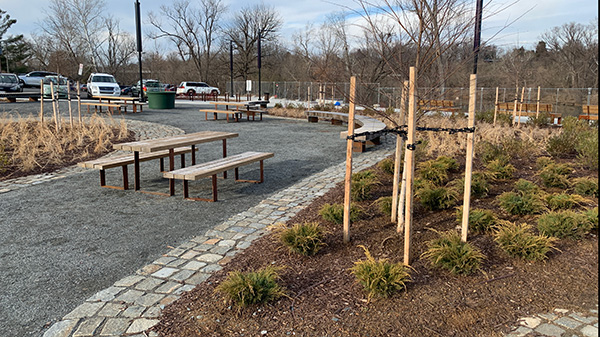
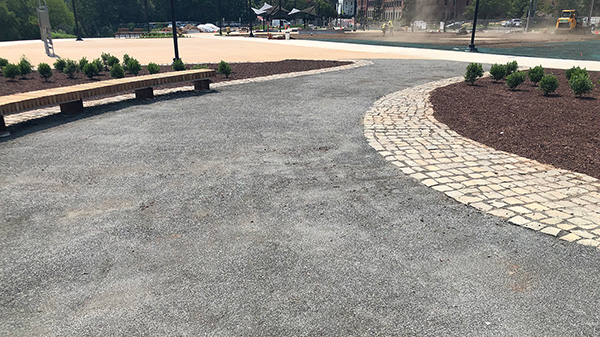
“IN THE 1960S AND 1970S THEY RE-PAVED FREDERICKSBURGWITH ASPHALT AND PULLED ALL THE COBBLESTONE OUT OFTHE STREETS. SOMEONE HAD THE FORESIGHT TO STORE THATMATERIAL. IN THIS PARK, THESE COBBLESTONES WEREINCORPORATED IN THE WALKWAYS LEADING INTO THE PARK,ALONG WITH A STORYLINE OF SIGNAGE AND HISTORICALFEATURES TO GUIDE YOU AS YOU WALK ALONG AND INTOTHE LARGER PARK AREA.”
- Luck Ecosystems
Flood resilience was another key design consideration, as the park is situated within the Rappahannock River's floodline. Thisnecessitated the use of materials that could withstand periodic inundation without significant damage. The park’s design includeselevated areas and strategically placed drainage to manage stormwater and prevent erosion. The natural meadows and permeablesurfaces, help absorb excess water and reduce runoff. The use of durable materials and structures anchored firmly to the groundfurther contribute to the park's overall sustainability and flood resilience.
Material selection was critical in achieving the project's design and functional goals. In selecting materials, Rhodeside & Harwellprioritized durability, historical resonance, and aesthetic appeal.
“THE SITE IS LOCATED WITHIN A FLOODLINE, SO EVERYTHINGWE DESIGNED HAD TO TAKE FREQUENT FLOODING INTOACCOUNT,” SAID WOLBAUM. “EVERYTHING HAD TO BEDURABLE, THINGS HAD TO BE ANCHORED TO THE GROUNDWITH EARTH ANCHORS, AND FOR MATERIALS WE HAD TOTHINK ABOUT HOW THEY WOULD STAND UP TO FLOODS.”
- Wolbaum, Rhodeside & Harwell
Stabilized aggregate was chosen as the natural surfacing material for the large gathering and garden area in order to achieve thenatural look and feel desired, without compromising on maintenance requirements.
“ONE OF THE PROGRAM ELEMENTS WAS CREATING A LARGE GATHERING AREA RIGHT NEXT TO WHERE A FUTURE STAGE IS GOING TO BE, BUT WE DIDN’T WANT TO HAVE LARGE, EXPANSIVE AREAS OF PAVING. OUR GO-TO WAS THE STABILIZED GRANITE, SO THE AREA WOULD FEEL MORE LIKE A GARDEN.”
- Wolbaum, Rhodeside & Harwell
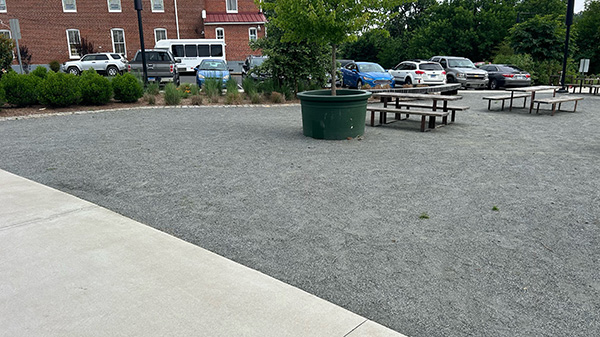
Organic-Lock Stabilized Aggregate (OLSA) was chosen for its superior durability, while providing a visually appealing, permeablesurface. OLSA combines a specifically graded aggregate with a patented, renewable, plant-based binder. This mixture is designed tobe blended with crushed aggregate, creating permeable and natural-looking pathways and surfaces.
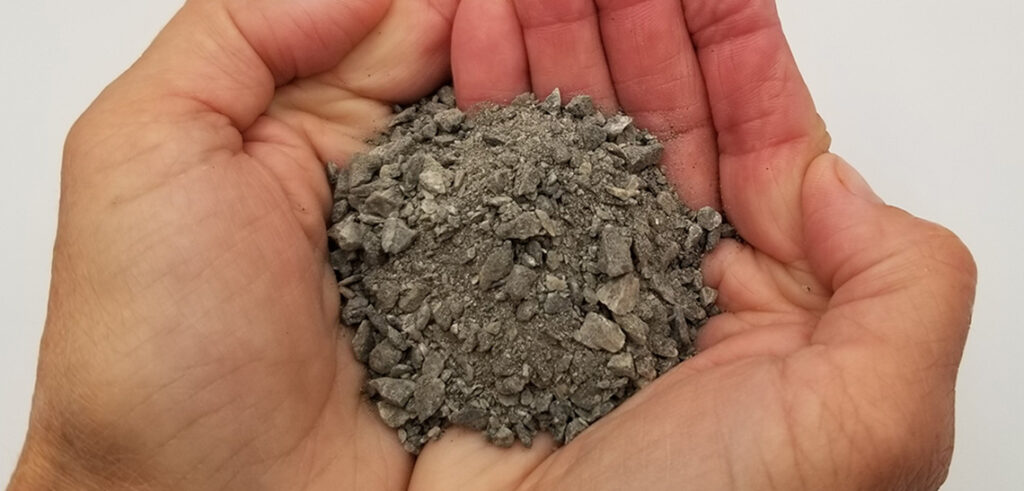
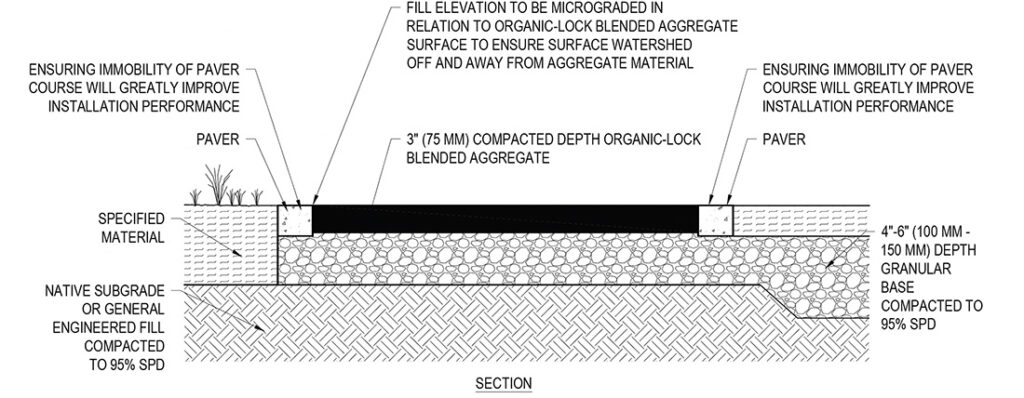
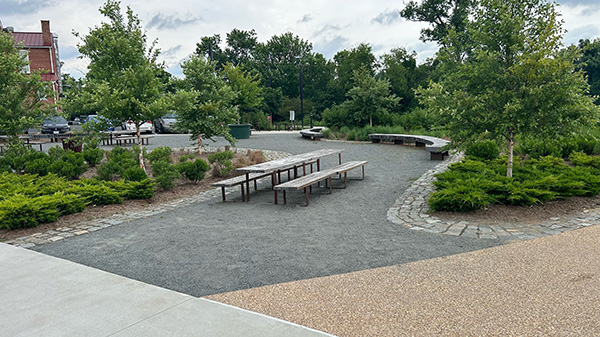
Luck Ecosystem supplied 115 tons of OLSA in Greene County Grey (Medium Grey) to cover approximately 4700 square feet.The OLSA was designed to be bordered by historic cobblestones. This necessitated an edge design that would ensure full compactionand strength of the stabilized aggregate without compromising or damaging the cobblestone border. The following Organic-Lock detail illustrates this edge condition.
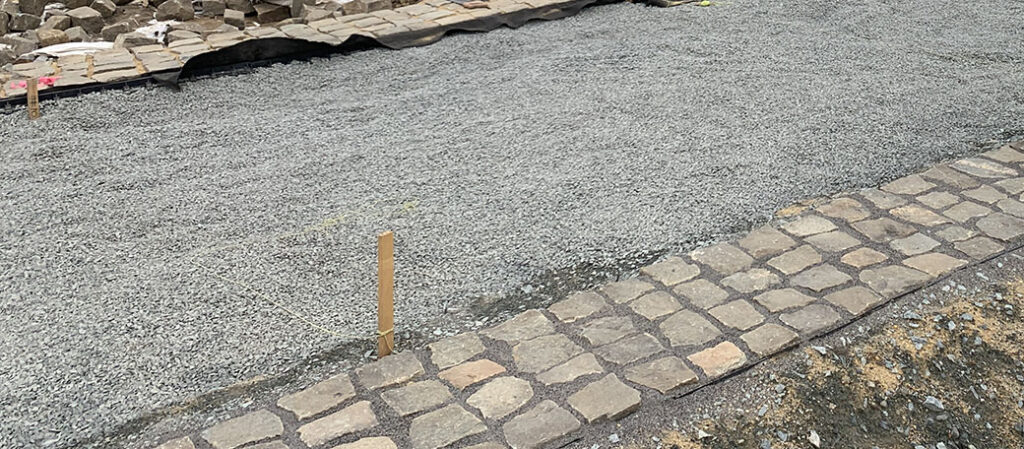
The planning and installation of Riverfront Park were meticulously coordinated, involving close collaboration between various stakeholders.Luck Ecosystems provided on-site support for the stabilized aggregate portion of the project, including material delivery andhands-on troubleshooting to ensure success. The OLSA was delivered pre-mixed with water to streamline the installation process, ensuring proper hydration level and consistency and reducing potential errors.The integration of historical cobblestones into the park’s pathways was a notable aspect, linking the contemporary design with the city's historical fabric. This approach not only honored the historical context but also demonstrated the OLSA’s versatility in both modern and historical applications. John Irby from Luck Ecosystems noted that:
“STABILIZED AGGREGATE DOESN’T EXCLUDE THE USE OF OTHER MATERIALS AND IT DOESN’T HAVE TO TURN SITES INTO AN OVERLY MODERN LOOK - IT CAN BE USED TO HONOR THE HISTORICAL.”
- Luck Ecosystems
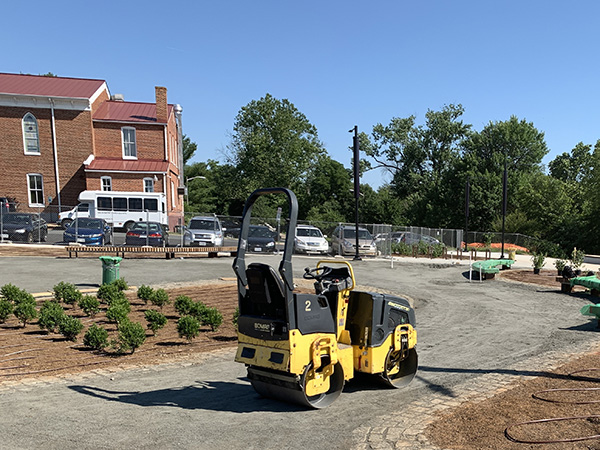
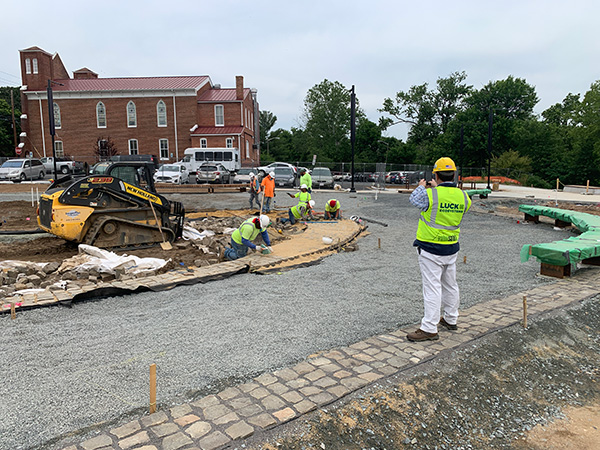
The Riverfront Park project faced several notable challenges, each requiring innovative solutions to harmonize contemporary designwith the site's historical significance and environmental considerations.

Flood Resilience: The park had to be designed to withstand periodic flooding without significantdamage. This required the use of durable, permeable materials and strategically placed drainagesystems. Elevated areas and the integration of natural meadows helped manage stormwater andprevent erosion.

Contemporary Design in a Historical Context: Balancing modern amenities with historical elements was a critical challenge.

Above-Ground Utilities: Overhead wires disrupted views from the street to the river. Although it would have been ideal to place these utilities underground, value engineering decisions led to keeping themabove ground, impacting the overall visual integration of the park with its natural surroundings.

Parking Lot Preservation: The preservation of an existing parking lot within the park was a requirement from the City Council. This interrupted the continuity of the meadow along the riverfront, impacting the natural flow and aesthetics of the park. This compromise was necessary to meet city requirements butpresented a design challenge in maintaining the park's cohesive look.
Riverfront Park represents a harmonious blend of contemporary design and historical context, creating a space that is both innovative and respectful of its past. Despite the challenges of working within a floodplain, the project has been well-received by the community and stakeholders.The use of Organic-Lock Stabilized Aggregate (OLSA) proved effective in achieving a durable, aesthetically pleasing surface that complements the park's overall design. Maintenance of the OLSA area has been manageable, with no major issues reported even after minor flooding events.Since opening to the public in 2021, the park has become a vibrant community hub, offering a variety of recreational opportunities. The integration of smart technology has enhanced the park’s functionality, making it a model for future urban park developments while maintaining ties to the rich history of the surrounding area.
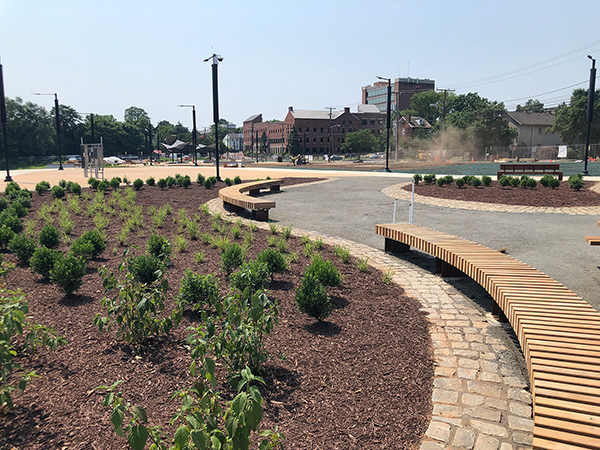
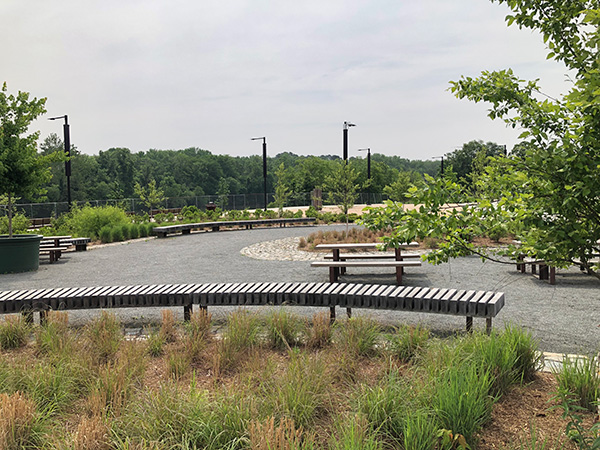
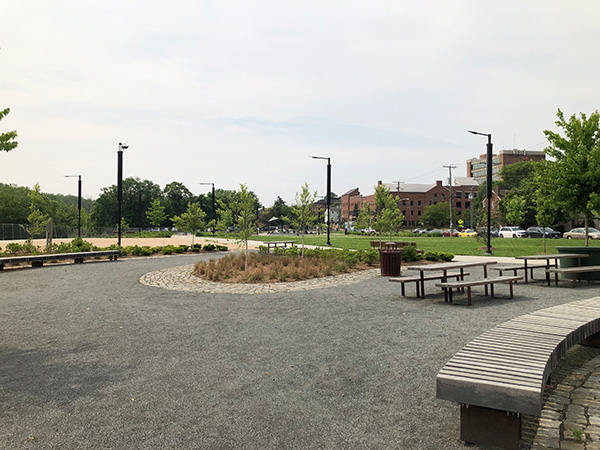
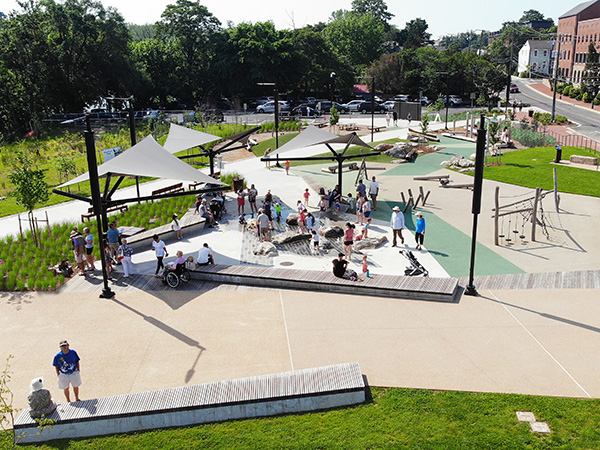
Three years post-installation, the OLSA at Riverfront Park continues to provide a natural surface aesthetic while ensuring stability and erosion resistance. With no issues reported thus far after minor flooding events, the system has proven effective. As it remains in place over time, OLSA improves as the aggregate particles naturally consolidate and compact under weathering and traffic forces, enhancing its strength resilience. The true test of its durability will come with larger floods, which will highlight its long-term performance.
Contributors
Rhodeside & Harwell - https://www.rhiplaces.com/fredericksburgLuck Ecosystems - www.luckecosystems.com/Organic-Lock - www.organic-lock.comTOP