


English


ABOUT ORGANIC-LOCK
DESIGN, INSTALLATION & MAINTENANCE
ADDITIONAL RESOURCES
PRODUCT SPECIFICATIONS
PROJECTS
WHERE TO PURCHASE
CONTACT US
DEALER LOGIN
Alice Wainwright Park Shoreline ImprovementsProject Location: Miami, FloridaPathway Material: American BeechAnother successful project supplied by Stancills.

Stancills Inc. is a leading supplier of high-quality sand and gravel products based inPerryville, Maryland. Since its establishment in 1934, the company has built a reputation for excellence, serving diverse market sectors with top-quality products and exceptional customer service.Stancills specializes in custom aggregate blends, path mixes, green roof planting media, bioretention soils, infield and sports field mixes, and equestrian footing.
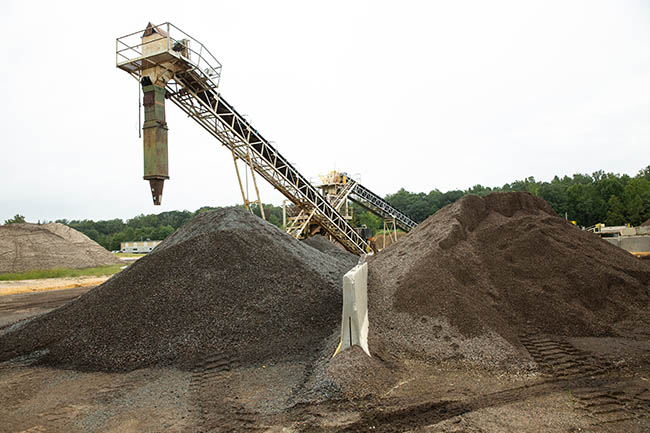
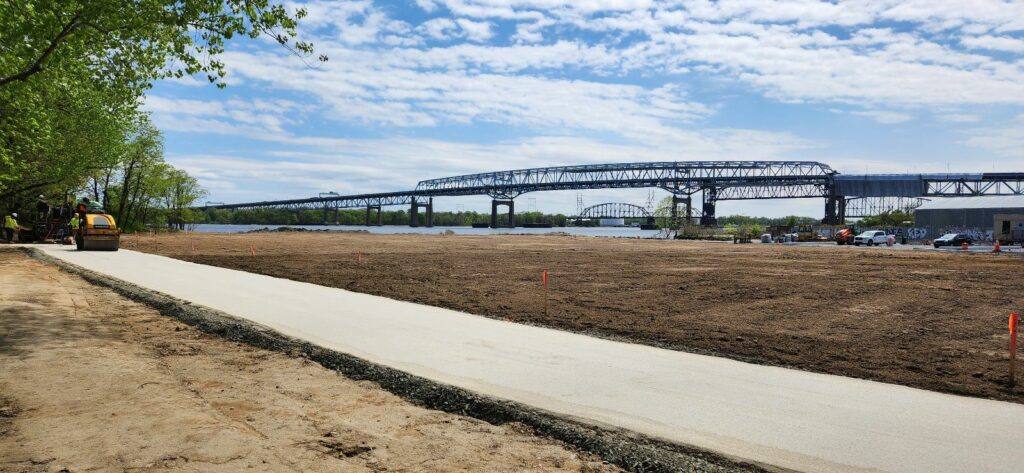
With over eight decades in the precision aggregate blending business, Stancills has developed a 7-component blending plantalongside the ability to handle unique project requirements. Their path mixes, used in place of standard hardscape options, can be stabilized with the Organic-Lock binder for enhanced stability and reduced maintenance. Stancills blends approved aggregates with the binder to create Organic-Lock Stabilized Aggregate and offer a range of natural surfacing options to the market.With a wide range of premium products and customized solutions, Stancills is equipped with the experience, equipment, andmaterials to assist with any project - large or small.Learn more about Stancills and their products: https://stancills.com/
Alice Wainwright Park, located along the Miami coastline, is a vital green space that serves both ecological and recreational purposes.It forms part of the City of Miami's Shoreline Improvements project, initiated by the Office of Capital Improvements to address the pressing need for resilient coastal design in an area frequently impacted by severe weather, including hurricanes and tropical storms.Phase 1 of the Shoreline Improvements project, completed in December 2021, included the following improvements to AliceWainwright Park.
Resilient design paired with striking aesthetics were essential elements of this project.
The design objectives for the Alice Wainwright Park Shoreline Improvements project were deeply rooted in the principles of ecological sensitivity and resilience. Mariana Boldu, the Director of Resilience Design at Curtis + Rogers Design Studio (Curtis + Rogers) and thelandscape architect leading the project, emphasized that the vision for the project was to create a landscape that harmonizes with the park's natural elements while enhancing its durability against coastal challenges.

"IT STARTED, AS MANY COASTAL PROJECTS DO, WITH THE NEED TO UPGRADE THE SEAWALL TO MEET CODE AND IMPROVE RESILIENCE. THERE WAS ALSO A NEED TO ENHANCE THE LANDSCAPE AROUND THE SEAWALL. THAT’S HOW WE JOINED THE COASTAL AND CIVIL ENGINEERS AS PART OF THE TEAM."
Mariana Boldu, Curtis + Rogers
Resilience and DurabilityGiven the park's coastal location and exposure to severe weather, creating a resilient and durable landscape was crucial. The design needed to withstand hurricanes, tropical storms, and tidal flooding. The main design component increasing resilience was the raised seawall – elevated by almost four feet in height across a shoreline length of 1125 feet.
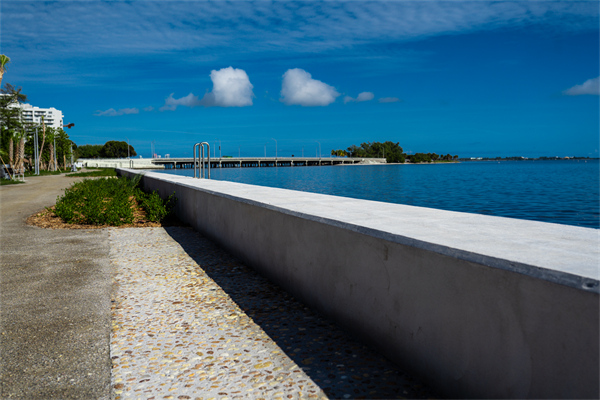
Courtesy of JONESPLANEcological Sensitivity and Native Vegetation One of the primary design objectives was to increase the park's canopy shade using nearly 100% native vegetation. This objective necessitated the removal of 70 invasive Australian pines, which were detrimental to the local ecosystem. The goal was to restore the natural balance and allow native species to thrive, requiring precise planning to ensure that the removal process did not disrupt the native vegetation.
"REMOVING 70 AUSTRALIAN PINES THAT PROVIDED SIGNIFICANT SHADE WAS NOT AN EASY TASK. EVEN THOUGH WE REMOVED THEM, WE TRIED TO COMPENSATE AND RESTORE THE SHADE. AT THE SAME TIME, WE ELEVATED THE SEAWALL WITH A SIGNIFICANT AMOUNT OF FILL. WE ALSO HAD MANY EXISTING NATIVE TREES THAT WE WANTED TO SAVE. WE CAREFULLY DESIGNED THE GEOMETRY OF THE PATHWAYS AND SLOPES TO AVOID AFFECTING THE VEGETATION WE INTENDED TO PRESERVE."
Mariana Boldu, Curtis + Rogers
Alice Wainwright Park also hosts a Natural Forest Community (NFC) which is a Tropical Hardwood Hammock. These upland hardwood forests occur only in South Florida and along the Florida coastlines. Once widespread, today tropical hardwood hammocks occur primarily as remnant habitats. The design aimed to create a seamless transition from the water's edge to the NFC portion of thepark, preserving the hammock forested area. "It was a signature piece, and this part specifically is a very special area within the city of Miami because it hosts one component that is an untouched Natural Forest Community," recalled Boldu. "We were very sensitive about the transition from the water's edge into the hammock forest portion of the park."Archaeological Preservation The park contains a bluff, a significant archaeological feature that was once a submerged reef. Now exposed, the preservation of this feature required careful consideration during the design process.Ensuring Accessibility Accessibility was another crucial design consideration, with ADA compliance required for the baywalk. The pathways also needed to accommodate light vehicle circulation without compromising the natural look and feel of the park. This requirement influenced the choice of materials, as the pathways had to be both stable and permeable.Curvilinear Pathway Design The pathways were designed to be both functional and visually appealing, with a curvilinear, free-flowing geometry that echoes natural forms.
"THE DESIGN SEAMLESSLY INTEGRATES WITH THE SURROUNDING CONTEXT, EXUDING A TIMELESS QUALITY THAT RESPECTS THE SETTING. IT DOESN'T OVERSHADOW THE EXISTING BEAUTY. INSTEAD, IT MAKES A MINIMAL, SUBTLE GESTURE TO LET NATURE SHINE. WE USED A SOFT, MEANDERING GEOMETRY, EMULATING THE WAVES AS THEY COME ASHORE."
Mariana Boldu, Curtis + Rogers
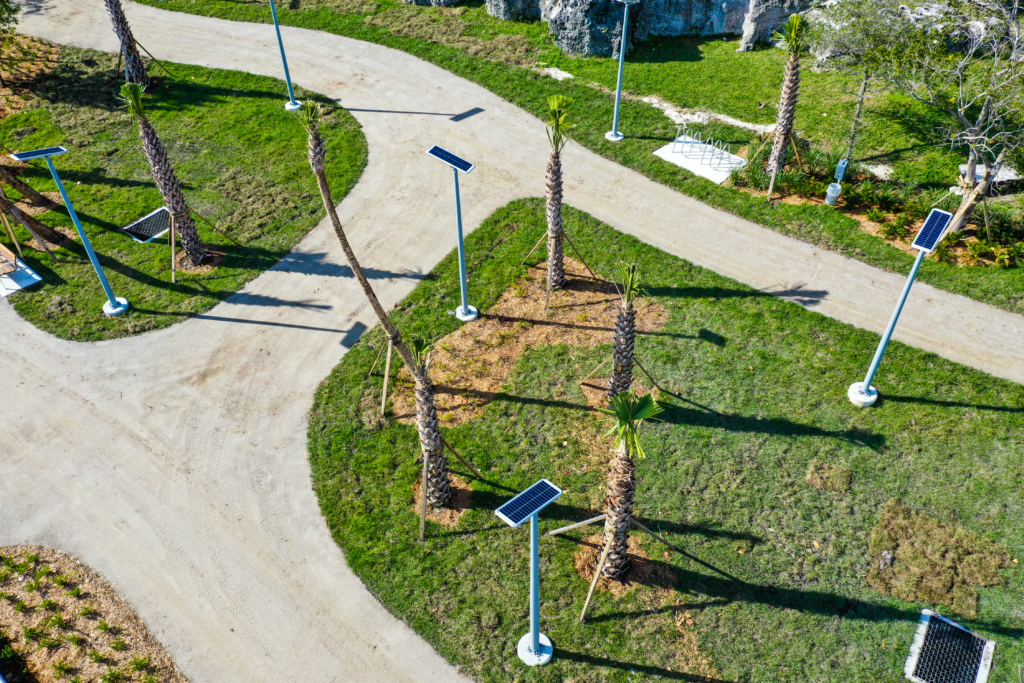
Courtesy of Curtis + Rogers
Given the sensitive ecological context, selecting the appropriate surfacing materials was an important design consideration. Theproject team chose stabilized aggregate for the pathways throughout the park.
"GIVEN THE ECOLOGICAL SENSITIVITY OF THE AREA, WEBELIEVED IT WAS CRUCIAL TO CHOOSE A SENSITIVE PAVINGALTERNATIVE. WE AIMED TO USE A MATERIAL DIFFERENT FROM TRADITIONAL HARDSCAPE FOR THE PATH, ONE THAT MIMICKED THE NATURAL DYNAMICS OF A BEACH,PARTICULARLY THE EBB AND FLOW OF WATER. WE WANTED THE MATERIAL TO REFLECT THIS, CREATING A DEEPER CONNECTION WITH THE SURROUNDING ECOLOGY.ADDITIONALLY, AVOIDING A HARD EDGE AT THE PATH'S BORDER WAS A DELIBERATE DESIGN CHOICE TO SOFTEN THE TRANSITION AND ACHIEVE A MORE NATURAL APPEARANCE."
Mariana Boldu, Curtis + Rogers
Organic-Lock Stabilized Aggregate (OLSA), known for its durability, was chosen as a natural surfacing material to withstand frequentflooding while providing a stable, visually appealing surface. OLSA combines a specifically graded aggregate with a patented,renewable, plant-based binder. This mixture is designed to create resilient, natural-looking pathways and surfaces. Its workability alsolent itself well to the project, which features gently curved pathways.
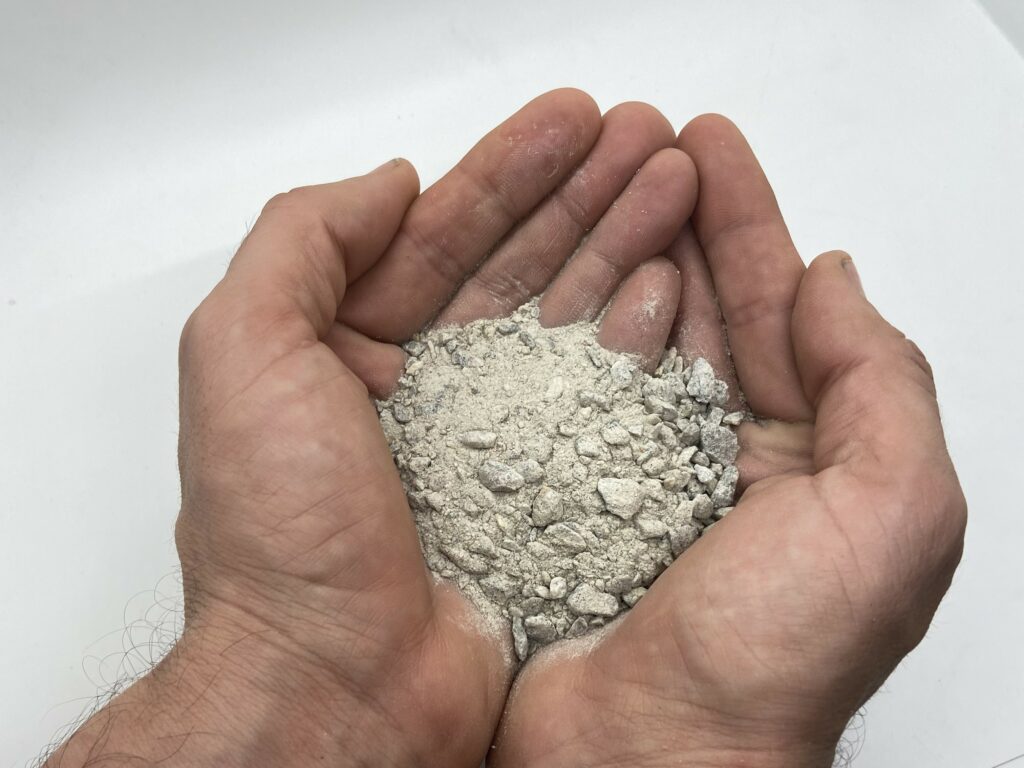
Courtesy of StancillsStancills supplied 650 tons of OLSA in American Beech to cover approximately 19,000ft2 of pathways at Alice Wainwright Park. The use of OLSA provided a natural aesthetic that blended seamlessly with the park's environment while offering the durability needed for a coastal landscape.
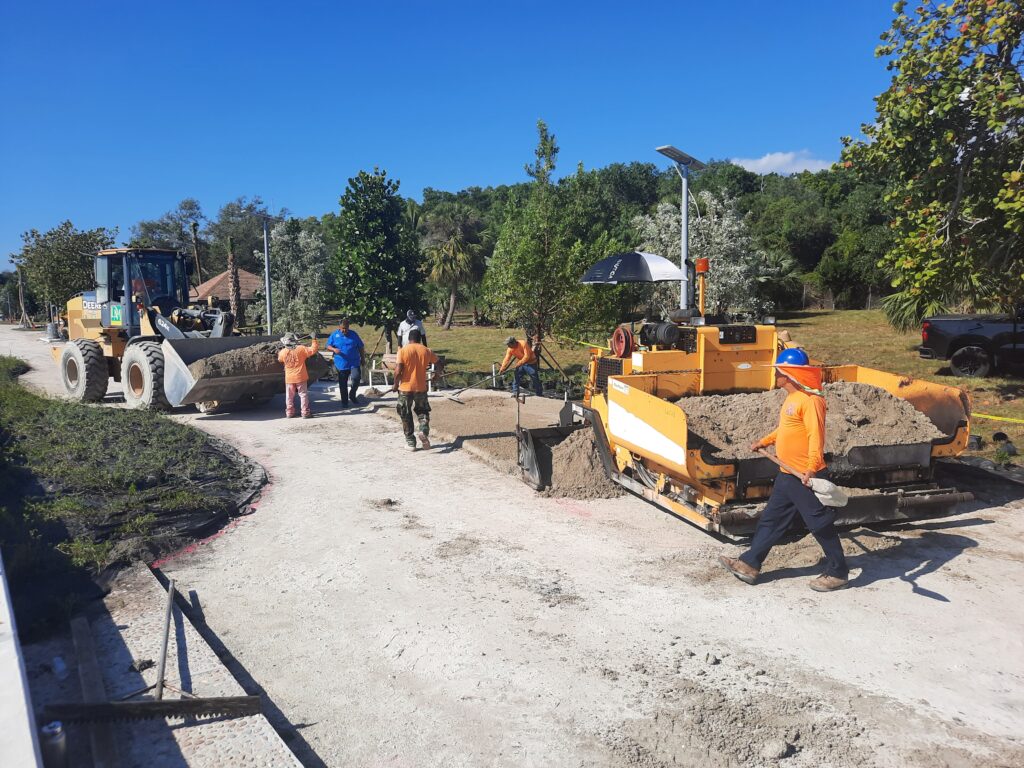
The planning and installation were complex and required meticulous coordination. One key consideration was local weather; the installation could not be carried out during hurricane season or inclement weather conditions.The installation was further complicated by the lack of a local aggregate source, requiring material to be shipped from Stancills in Maryland. Stancills worked closely with the design and installation teams to ensure the OLSA arrived on time and in good condition.
"WE HAD TO BRING THE MATERIAL IN A LITTLE BEFORE THE INSTALLATION AND STORE IT PROPERLY, WHICH POSED ITS OWN SET OF CHALLENGES. THE MATERIAL HAD TO BE STOREDON A CLEAN PAD TO AVOID CONTAMINATION. THEN, BEFOREINSTALLATION, WATER HAD TO BE BLENDED IN THOROUGHLY TO GET TO THE CORRECT MOISTURE CONTENT. WE COORDINATED WITH THE CONTRACTORS TO EDUCATE THEM ON HOW TO GET THIS JUST RIGHT.”
Chris Siciliano, Stancills
Once the installation began, Curtis + Rogers visited the site to review progress.
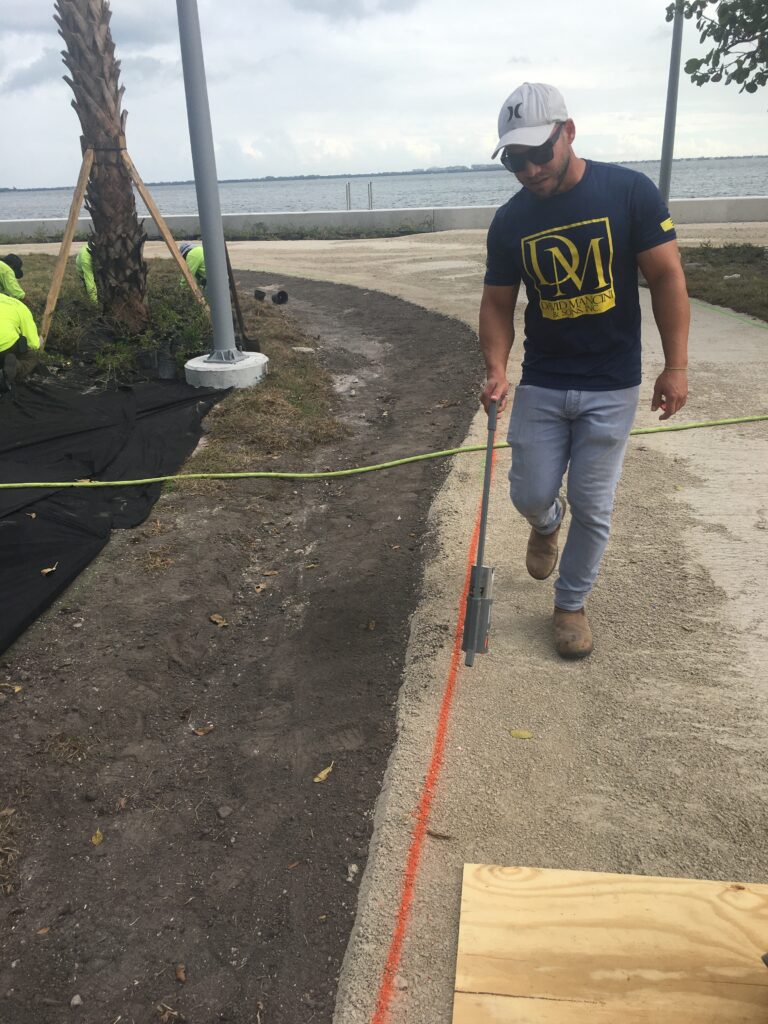
“WHEN WE ARRIVED AT THE PARK DURING THE INSTALLATION, WE WEREN'T SATISFIED WITH THE CURVES OF THE PATHWAY IN MANY SECTIONS. THE CONTRACTORS WERE VERY COOPERATIVE, SO WE MADE SOME ADJUSTMENTS ON SITE. WE USED FLEXIBLE HOSE TO REWORK THE CURVE OUTLINES AND MARKED THEM WITH PAINT. IT WAS QUITE A HIGH-TECH IMPROVISATION [LAUGHS] – DESPITE HAVING ALL THESE CONSTRUCTION DOCUMENTS WITH PRECISE COORDINATES, ONCE YOU'RE ON-SITE, YOU MUST ADAPT TO THE REAL CONDITIONS.”
Mariana Boldu, Curtis + Rogers
This method and collaborative effort through on-site adjustments achieved the desired geometry for the pathways at the park.
Courtesy of Curtis + Rogers
The project encountered numerous challenges across technical, environmental, and administrative fronts. Addressing these challenges required thoughtful design considerations and careful execution, ensuring that solutions were implemented with an understanding of how each aspect influenced the others. These challenges are described in more detail below.

Designing for Coastline Resilience: The design had to account for the park's exposure to severe weather, including hurricanes. The main solution was the almost four-foot increase in the height of the seawall protecting the shoreline.

Invasive Vegetation Removal: The removal of almost 70 invasive Australian pines posed a challenge, as they accounted for a significant portion of the park’s canopy shade. This challenge was addressed by bringing that shade back in with nearly 100% native species.

Conserving Native Vegetation: Existing native trees were protected during design and constructionstages through project stakeholder collaboration.
"CRAFTING THE PATHWAY GEOMETRY TO AVOID DAMAGING EXISTING TREE ROOT SYSTEMS WAS A SIGNIFICANT DESIGN CHALLENGE. DURING CONSTRUCTION, WE HAD TO COLLABORATE CLOSELY TO ACHIEVE THIS. WE VIEW THE EXISTING TREE CANOPY AS AN ASSET, THOUGH IT CAN BE SEEN AS AN OBSTRUCTION DURING BUILDING. IT REQUIRED A GIVE-AND-TAKE APPROACH WITH THE CONSTRUCTION TEAM TO CLOSELY MONITOR AND PROTECT THIS ASSET."
Mariana Boldu, Curtis + Rogers

Local Government Changes: Amidst local government changes during design development, theproject team steadfastly communicated and held to their project vision..
"DURING THE LIFESPAN OF THE PROJECT, WE HAD THREE DIFFERENT PARK DIRECTORS. EACH ONE BROUGHT A SLIGHTLY DIFFERENT VISION, BUT WE WERE ABLE TO SET FIRM OBJECTIVES AND MAINTAIN THE KEY ASPECTS OF THE PROJECT THAT WERE IMPORTANT TO US."
Mariana Boldu, Curtis + Rogers

Unfamiliarity with Surfacing Material Choice: The choice of OLSA as pathway surfacing material at AliceWainwright Park marked the first use of this material in the City of Miami. The decision to use OLSA wasnot without challenges, as stakeholders were initially hesitant to try a new, locally untested product
"MANY PEOPLE ARE HESITANT TO TRY SOMETHING NEW THAT HASN'T BEEN USED LOCALLY, AND THAT WAS THE CASE WITH ORGANIC-LOCK [STABILIZED AGGREGATE] HERE. IT TOOK SOME CONVINCING AND RESEARCH. THE SUPPORT FROM THE ORGANIC-LOCK TECHNICAL TEAM THROUGHOUT THE DIFFERENT STEPS, ALONG WITH THE PROVIDED LITERATURE AND TRAINING, HELPED TO GET EVERYONE ON THE SAMEPAGE. IN OUR VIEW, THIS PRODUCT WAS ONE OF THE BEST OPTIONS FOR THIS SITUATION."
Mariana Boldu, Curtis + Rogers

Aggregate Sourcing: Logistical complexity was added to the project with the OLSA being brought in from Maryland. Stancills worked hand in hand with the project team to coordinate delivery and providesupport during the installation..

Hurricane Season and scheduling challenges: Installation had to be carefully timed around hurricane season, ultimately occurring in December right after the season ended.

On-Site Landscape Geometry Adjustments: The landscape architect and contractors had to navigate on-site adjustments and collaboration to achieve the desired curved pathway geometry.
Phase 1 of Alice Wainwright Park was completed in December 2021. Its native vegetation and meandering pathways are protected byan elevated seawall against vulnerabilities to sea level rise, storm surge, erosion, and flooding.Phase 2 of Alice Wainwright Park is under design development as of summer 2024 and will include landscaping of the upland park area as well as the construction of additional amenities.Click here to read more about the City of Miami’s Alice Wainwright Park Seawall and Baywalk Improvements project.Click here to view a before and after drone video of Alice Wainwright Park along the seawall.
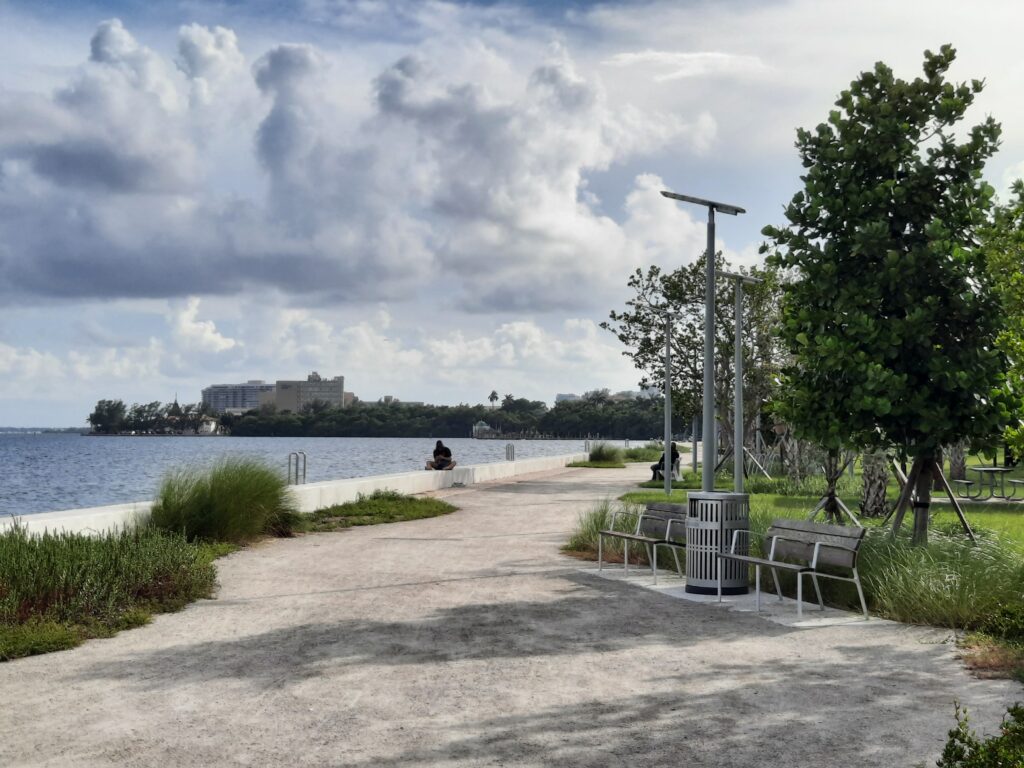
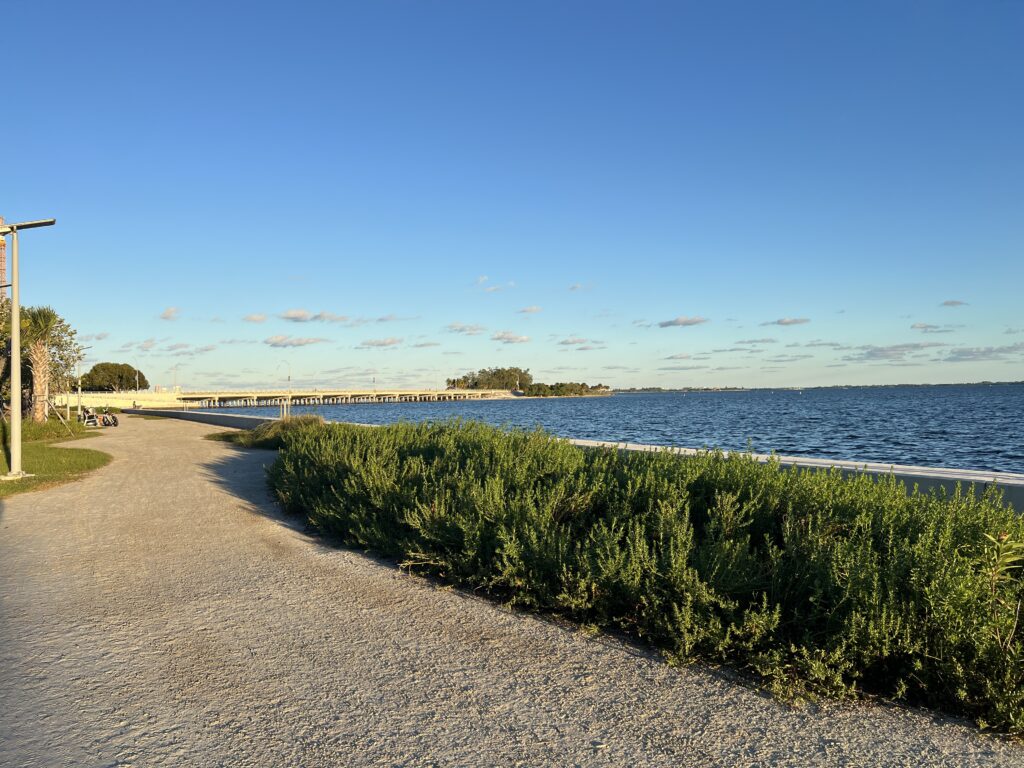
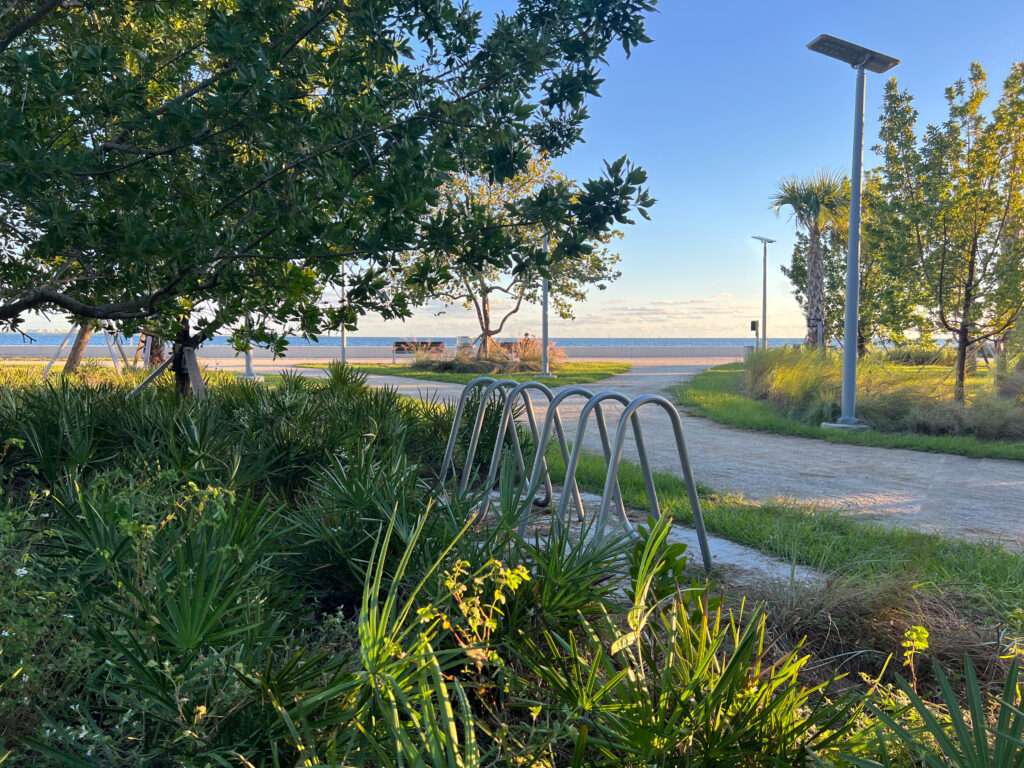
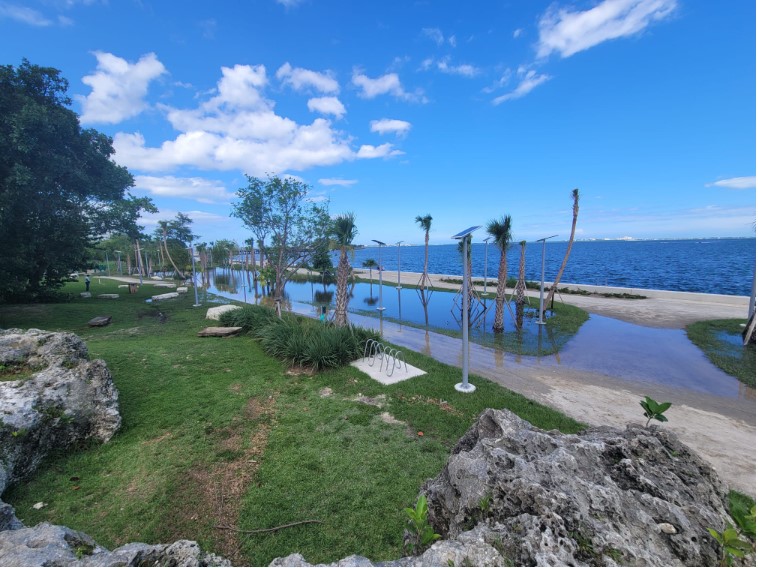
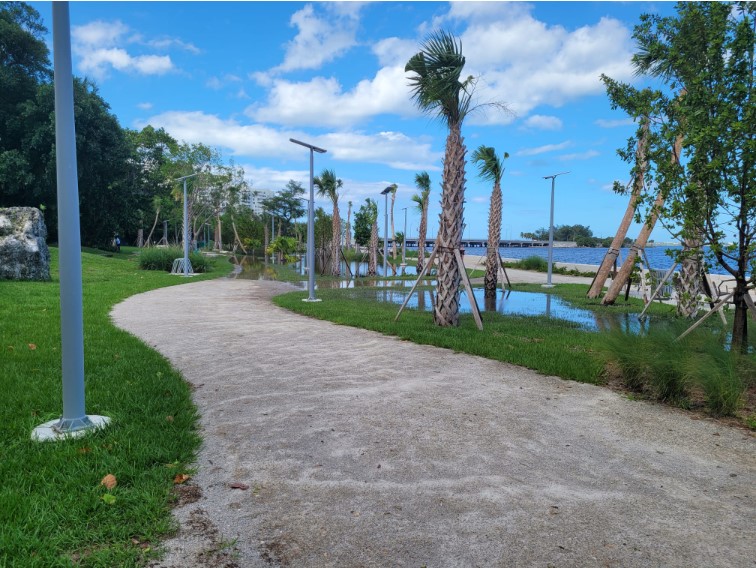
Images courtesy of Curtis + RogersWeathering the Storm The pathways at Alice Wainwright Park have maintained their form and functionality even under challenging weather conditions. The first test of resiliency came with a tropical storm in 2022, a few months after the installation. Despite concerns about ponding water, the OLSA pathways held up remarkably well, demonstrating their durability. “We took a risk, felt it was worth attempting, and are very happy that it resulted positively,” reflected Boldu (Curtis + Rogers). The following photos show the OLSA pathways at Alice Wainwright right after that tropical storm.
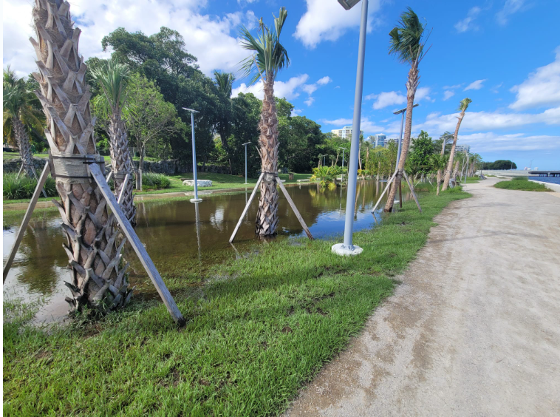
Images courtesy of Curtis + Rogers
Contributors
Curtis + Rogers - https://www.curtisrogers.com/alicewainwrightpark-rdStancills - https://stancills.com/Organic-Lock - www.organic-lock.comTOP