


English


ABOUT ORGANIC-LOCK
DESIGN, INSTALLATION & MAINTENANCE
ADDITIONAL RESOURCES
PRODUCT SPECIFICATIONS
PROJECTS
WHERE TO PURCHASE
CONTACT US
DEALER LOGIN
Block Quote


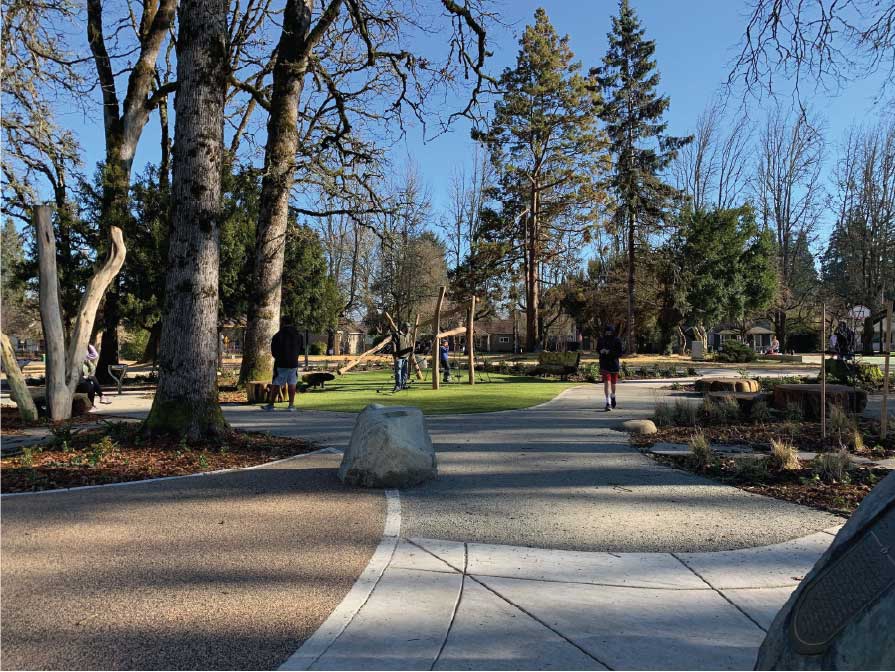
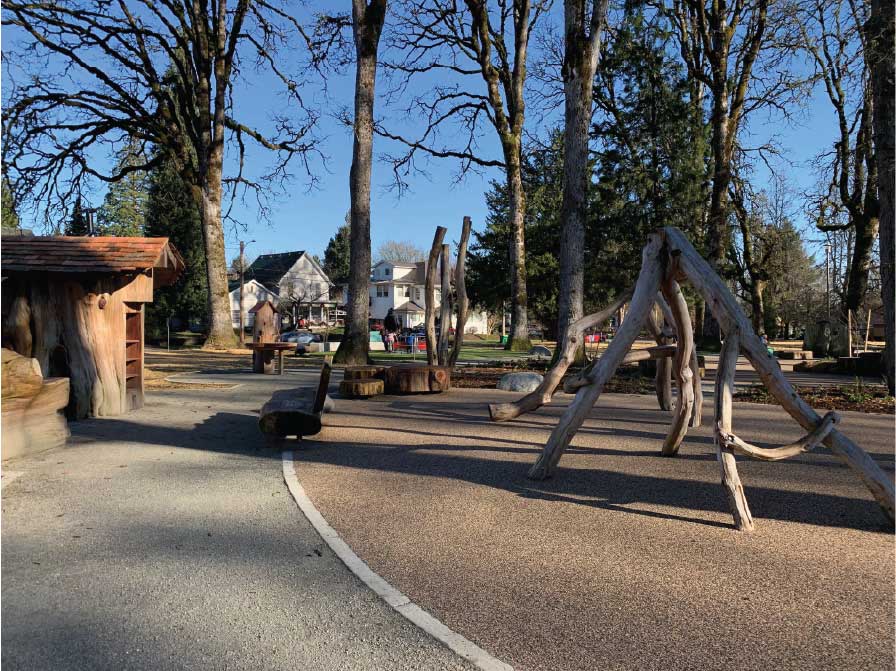
Anna and Abby’s Yard, located in Forest Grove, Oregon, is a heartfelt project that transformed a portion of Rogers Park into a vibrant natural play area. Completed in October 2020, this space was created in memory of two young sisters who tragically passed in a 2013 hit-and-run car accident while playing in a pile of leaves outside their home.
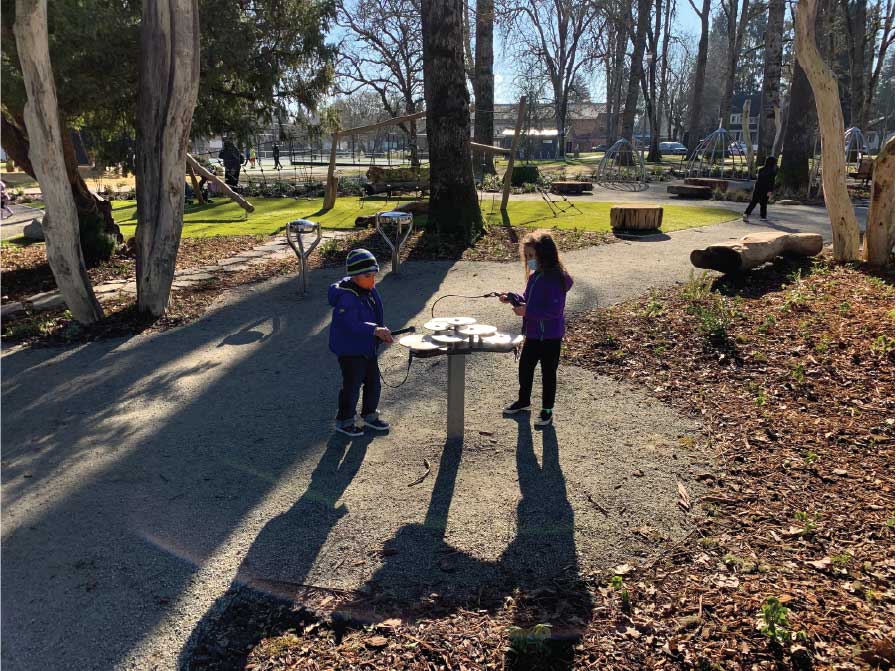
Anna & Abby’s Yard is designed to celebrate life and imagination. The vision for Anna and Abby’s Yard was to create an accessible and inclusive play area that emphasizes natural elements and blends seamlessly with the existing forested environment.
The final design offers a unique and imaginative environment for children and families, fostering a sense of joy and wonder while preserving the natural beauty of the park.
The multi-disciplinary firm MIG Inc., led by Melissa Erikson and Christina Frank, was tasked with creating an inclusive, accessible natural play area within the existing Rogers Park, under the majestic canopy of Oregon white oaks. Erikson described Anna and Abby’s Yard as a “once-in-a-lifetime project.” The primary objective was to honor the memory of the two sisters by creating a space that embodies their spirit. This emotional and highly sensitive project aimed to balance accessibility and inclusivity with a design that celebrates the wild and the imaginative.
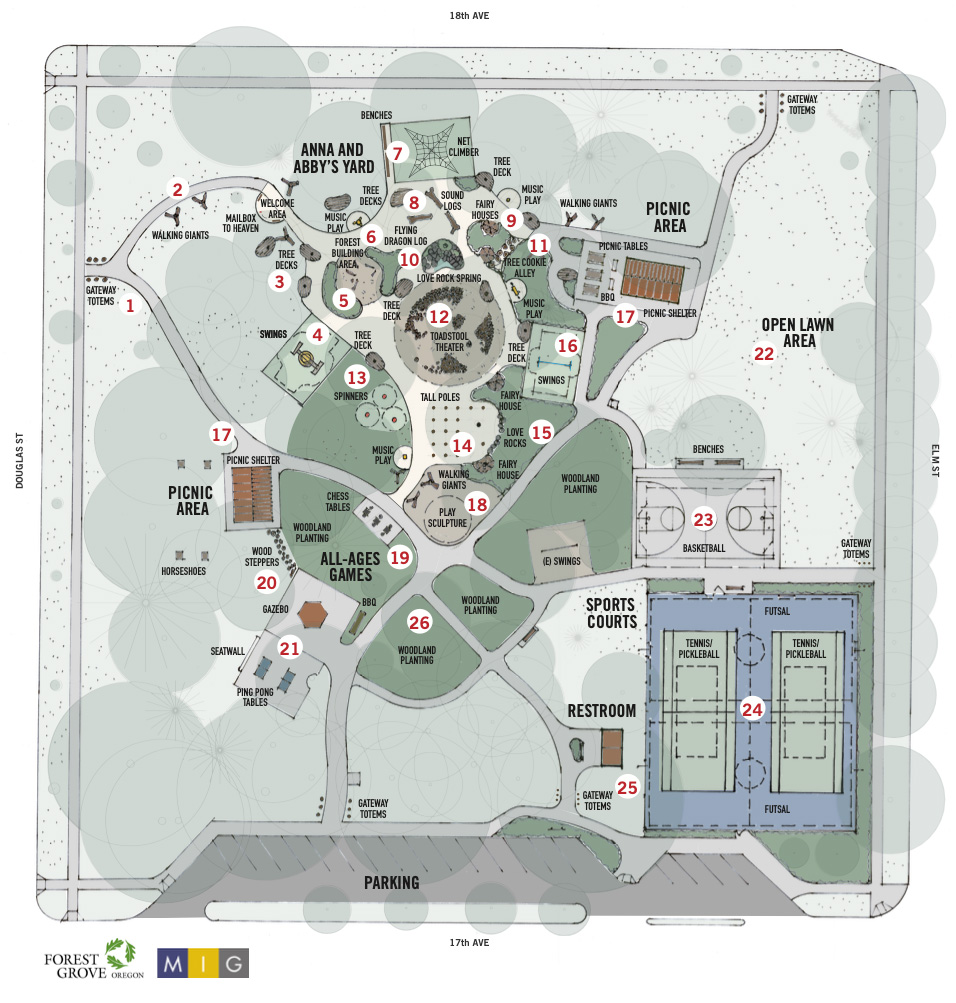
“ONE OF THE KEY DESIGN CONSIDERATIONS WAS BEING SENSITIVE TO THE SURROUNDING CONTEXT, TO THE EXISTING TREES,” SAID ERIKSON. “THE EXISTING FOREST INFLUENCED EVERY ASPECT OF THE DESIGN AND CONSTRUCTION PROCESS. IT WAS ALL ABOUT WORKING WITHIN THE WOODS AND WITH WOOD.”
The design had to harmonize with the natural environment, respecting and preserving the mature Oregon white oaks that define the character of Rogers Park. This meant that every pathway, play area, and installation had to be carefully planned and executed to avoid disrupting the delicate ecosystem of the forest.
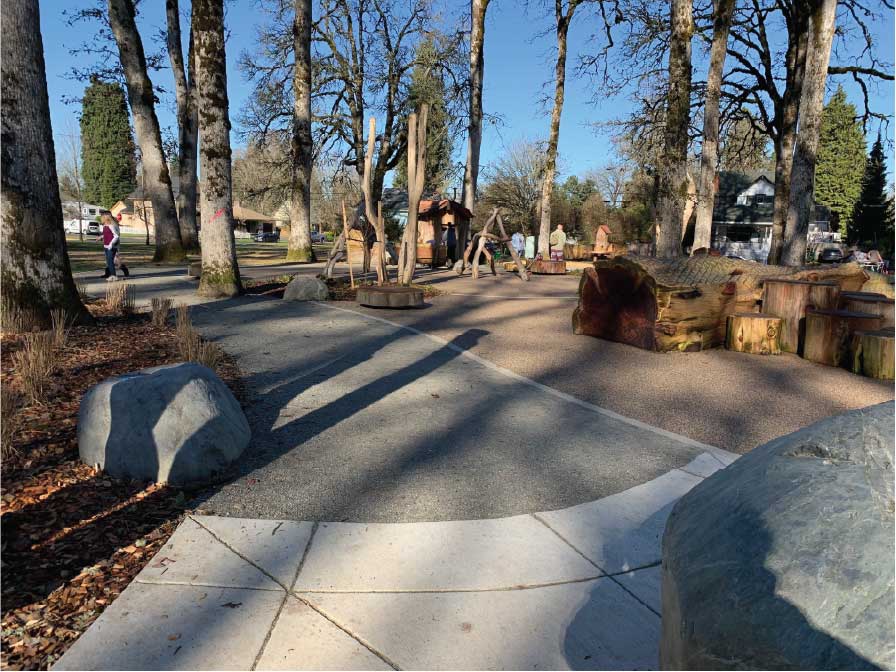
The decision to use Organic-Lock Stabilized Aggregate (OLSA) for the forest pathways at Anna and Abby’s Yard was driven by the need to create firm, stable pathways that blend naturally with the forest setting, Melissa Erikson explains. OLSA is a high-performance, sustainable binder for pathways and other surfaces, designed to stabilize aggregate particles. It is made from organic materials and is blended with specific aggregates to ensure durability, permeability, and a natural aesthetic, reducing maintenance needs compared to unstabilized aggregates.
“WE DIDN’T WANT TO PUT IN ASPHALT OR CONCRETE – WE WANTED IT TO LOOK MORE LIKE A FOREST PATH, AND WE FELT THAT ORGANIC-LOCK STABILIZED AGGREGATE WOULD LOOK CLOSEST TO A FOREST PATH WHILE GIVING US THE FIRM AND STABLE SURFACING THAT WE NEEDED TO HAVE.”
Melisa Erikson, MIG Inc (Landscape Architect
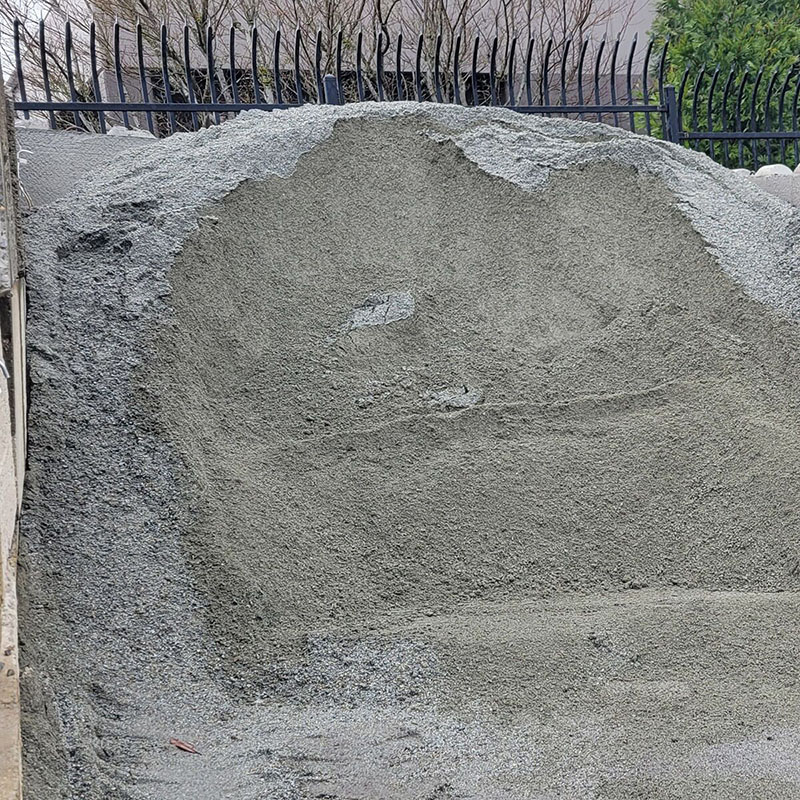
The selected aggregate, Silver DG (decomposed granite) supplied by Portland Rock & Landscape Supply, was mixed with Organic-Lock to ensure durability and accessibility, providing a stable yet aesthetically pleasing surface that met ADA compliance standards. Portland Rock & Landscape supplied 72 tons of OLSA to cover 7,300 square feet of natural pathways at Anna and Abby’s Yard.
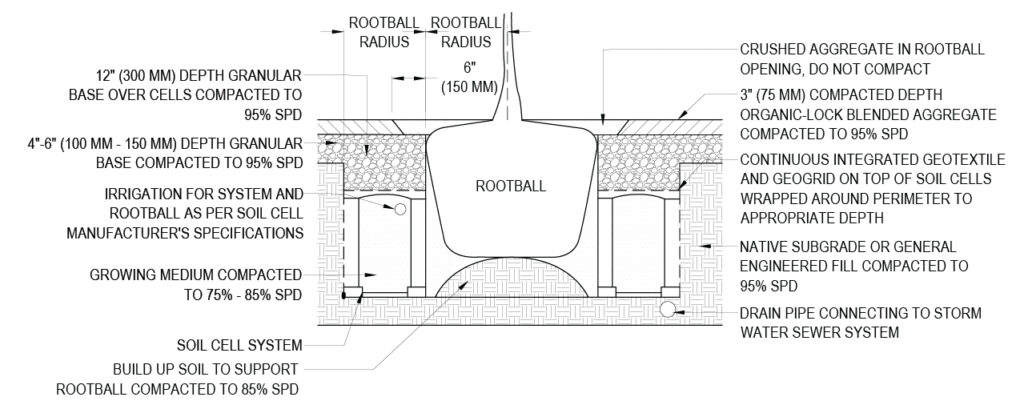
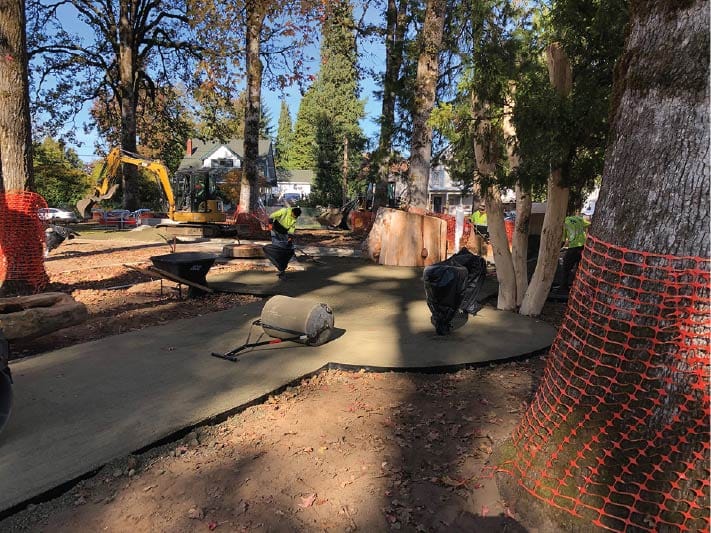
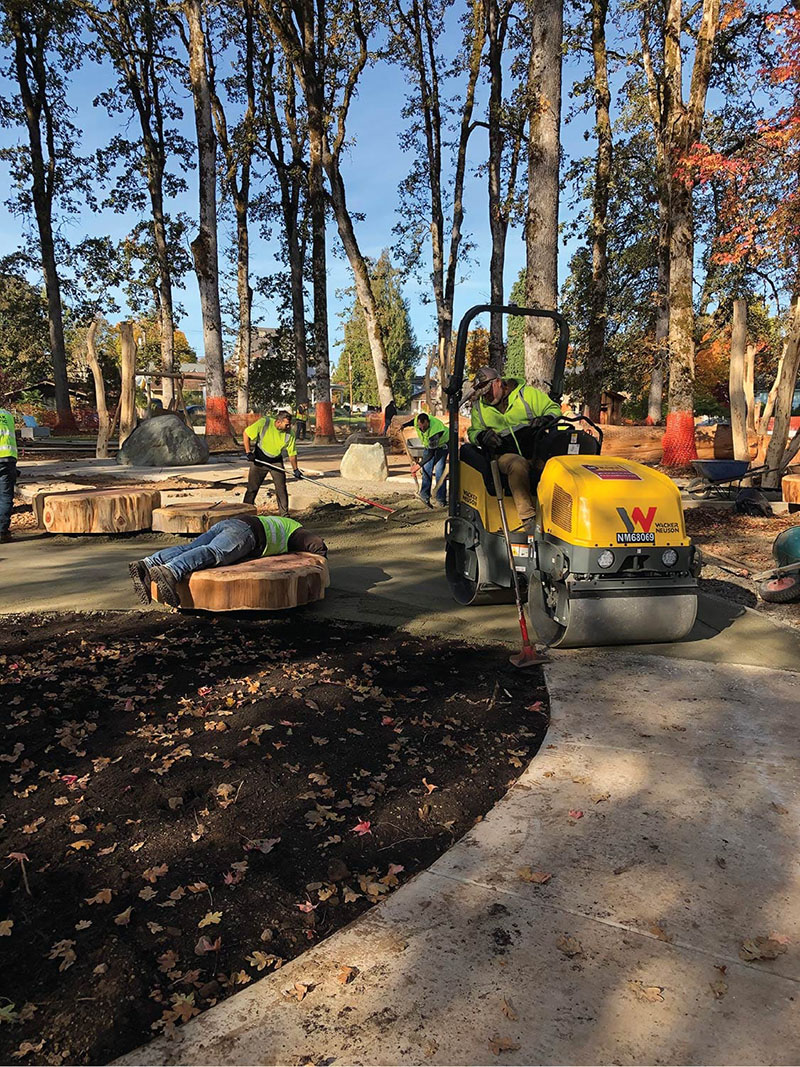
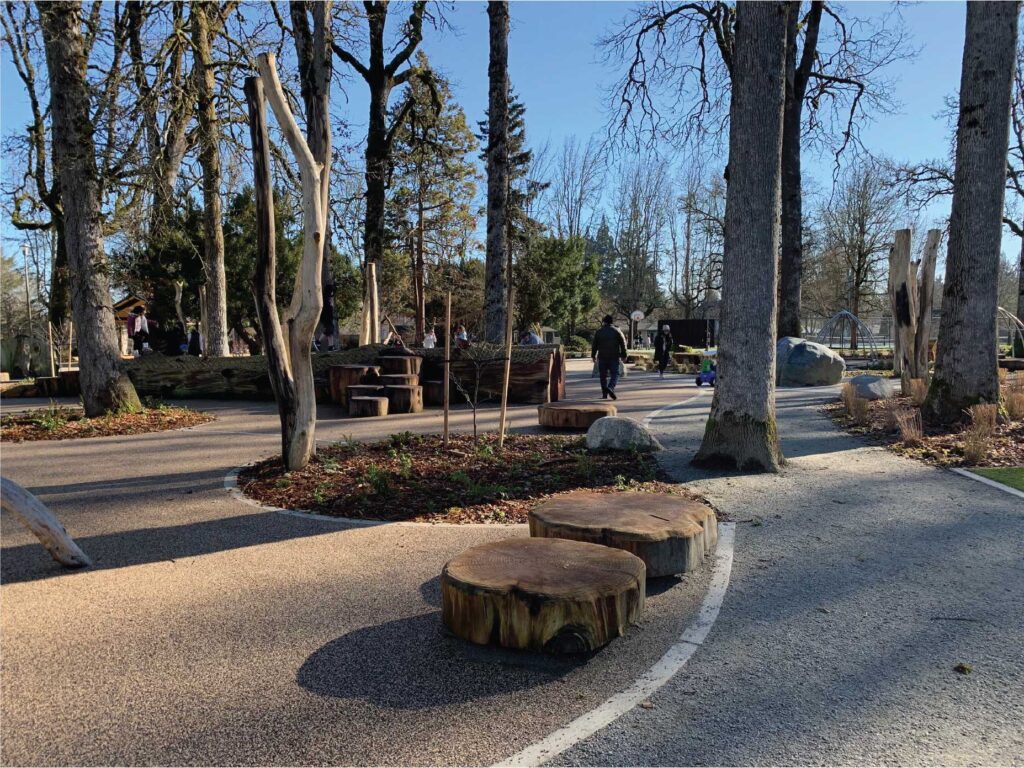
OLSA was also chosen for its ability to be installed around trees. For this application, Organic-Lock recommends installing unstabilized, uncompacted aggregate within the diameter of the tree root ball to allow for maximum water infiltration to the roots. Outside of the root ball diameter, install OLSA and compact with a minimum 1-ton roller to ensure strength and stability. Using this method, there is no visible difference between the area within the root ball and outside of the root ball. This area from the tree to the outside diameter of the root ball will be less stable and more prone to movement. This risk, however, is offset by the reduced amount of expected traffic directly adjacent to a tree trunk
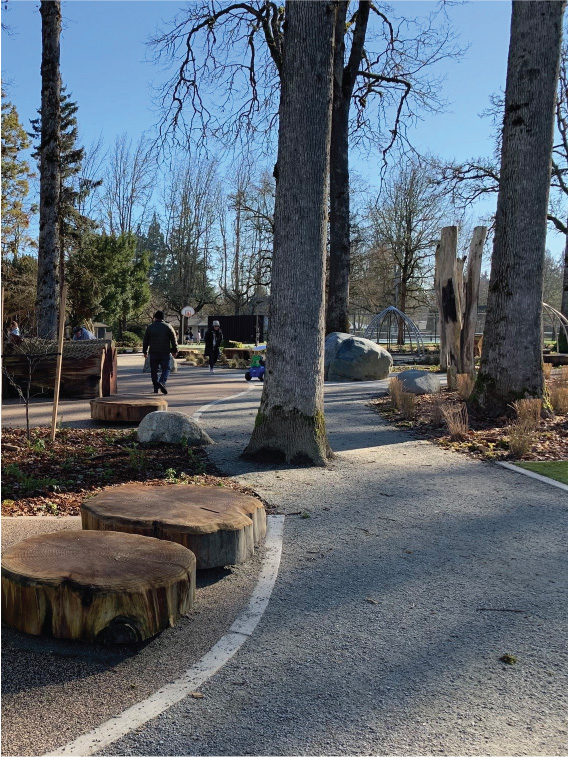
Attention and care for the existing trees was a key element in the construction of Abby and Anna’s Yard. Erikson noted that, “one key piece was that we had a great arborist, Morgan Holen – maintaining the Oregon white oaks was critical.”
The installation of the OLSA was a meticulous process overseen by Kodiak Pacific Construction and involved close collaboration with Organic-Lock.
The installation required careful planning to avoid disturbing the existing root systems of the white oaks. “Some hand excavation had to be done to work within the root systems. We even had to shift some of the design as the project progressed to avoid having pathways over major root lines,” recalled Erikson.
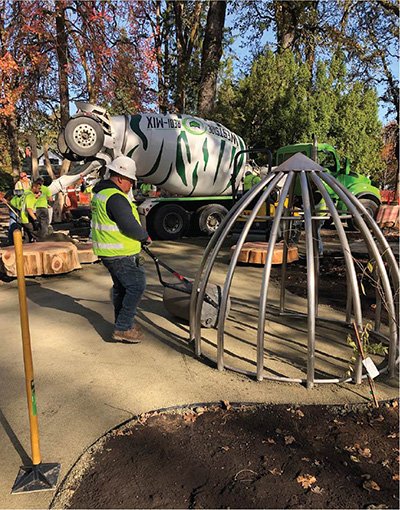
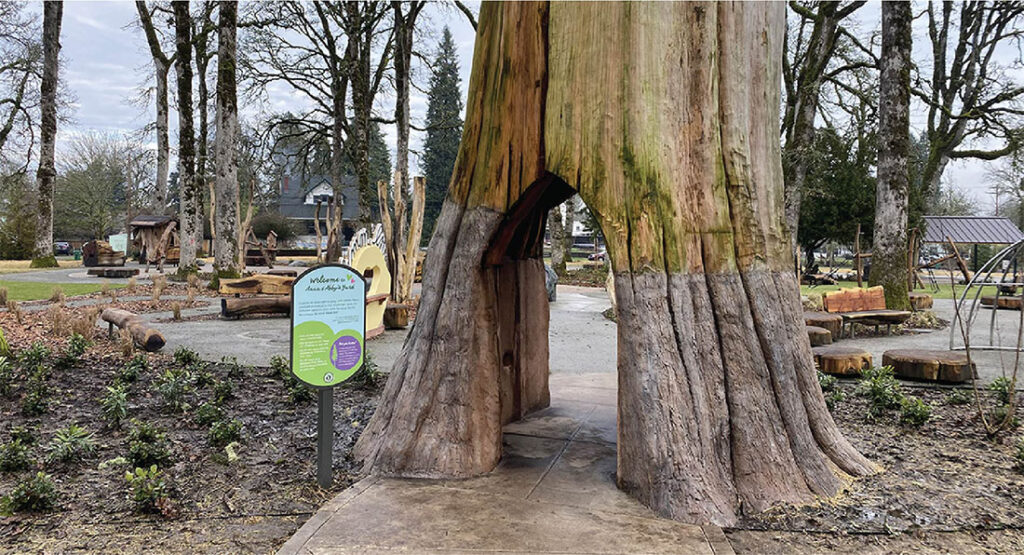
Custom play equipment repurposed from a 180-foot redwood tree was central to the project’s vision. “People came from all over to watch master tree climbers cut it into components. After the tree was crafted into play components off-site, these elements had to be craned onto the site, weaving through surrounding trees and rotating them into place. The skill of the contractors was beautiful – to see people who really know their craft was impressive,” recalled Erikson.
The main project challenges surrounded existing and new vegetation at the site. These challenges required careful consideration and adaptive solutions to ensure the successful realization of Anna and Abby’s Yard – more details below.
1- Tree Protection: Preserving the mature Oregon white oak trees within Rogers Park presented a significant challenge. The design and construction process had to meticulously consider the existing trees to avoid any damage to their root systems or overall health. This required close collaboration with arborists and careful planning to ensure the project's success while maintaining the integrity of the forest ecosystem.
2- Installing Pathways Around Existing Trees: Incorporating pathways and play areas within the park while respecting the presence of the established trees posed a logistical challenge. The installation of pathways required techniques that wouldn't harm the root systems of the trees.
3- High Usage Impact: The immediate popularity and heavy usage of Anna and Abby's Yard presented unforeseen challenges, particularly concerning new planting. The original planting scheme, intended to serve as a visual barrier to the park, didn't take hold as expected under immediate high use. “We would have liked to have the planted areas fenced off for a bit longer,” said Erikson, “because the planting never really took hold. When the park opened, it was loved, and the planting got trampled.” Despite this aspect of the design not coming to full fruition, the forest-like nature was realized, and the park embraced by the community all the same.
Anna and Abby’s Yard has become a cherished space within the Forest Grove community. The pathways, stabilized with Organic-Lock, have held up well under heavy use, maintaining their form and functionality through various weather conditions. Through careful planning and construction, the Oregon white oaks have been preserved, giving park visitors the feeling of being in the forest.
The project’s success lies not only in its physical outcomes but even more so in capturing and celebrating the memories of Anna and Abby. As Erikson highlighted, “the project really was about providing a framework for those stories and the joy the community had in letting their imagination go wild.” The careful selection of materials, integration of existing trees, and collaborative effort between the landscape architect, contractors, and community members have created a lasting and touching tribute.
MIG – gcom.com/work/anna-abbys-yard
Portland Rock & Landscape Supply – www.portlandrock.net/
Bluemels Garden & Landscape Center – www.bluemels.com