


English


ABOUT ORGANIC-LOCK
DESIGN, INSTALLATION & MAINTENANCE
ADDITIONAL RESOURCES
PRODUCT SPECIFICATIONS
PROJECTS
WHERE TO PURCHASE
CONTACT US
DEALER LOGIN
Block Quote


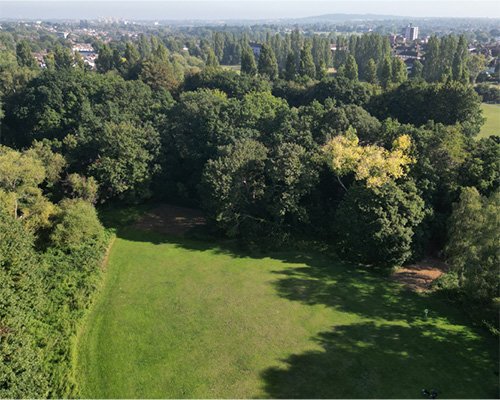
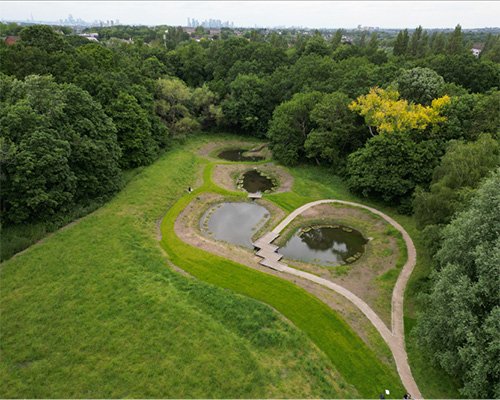
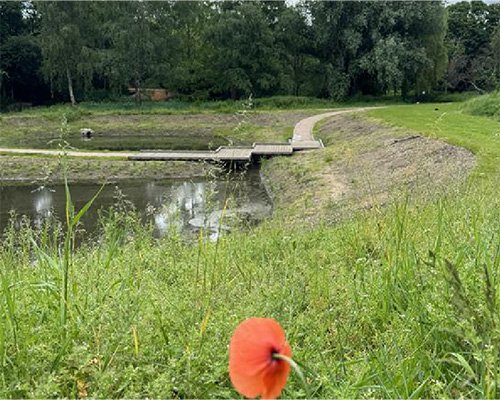
Chinbrook Meadows is a transformative environmental project in Lewisham, South-East London. This project aimed at enhancing water quality, boosting biodiversity, reducing flood risks, and providing the community with a natural space for engagement and recreation.
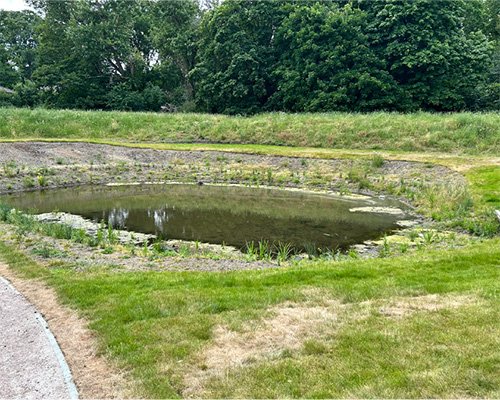
The project, spearheaded in collaboration by Lewisham Council and environmental charity Thames21, involves the creation of constructed wetlands. These wetlands help filter pollutants from water before it enters the River Quaggy, which runs through the park. The wetlands were designed to address issues such as unpleasant odours and water discoloration caused by polluted runoff, particularly from the Grove Park Ditch.
The Chinbrook Meadows Wetlands project was driven by four primary design objectives: enhancing water quality, mitigating flood risks, promoting biodiversity, and creating an accessible community space. Each objective required careful integration of ecological and civil engineering with landscape design to meet both environmental and social needs.
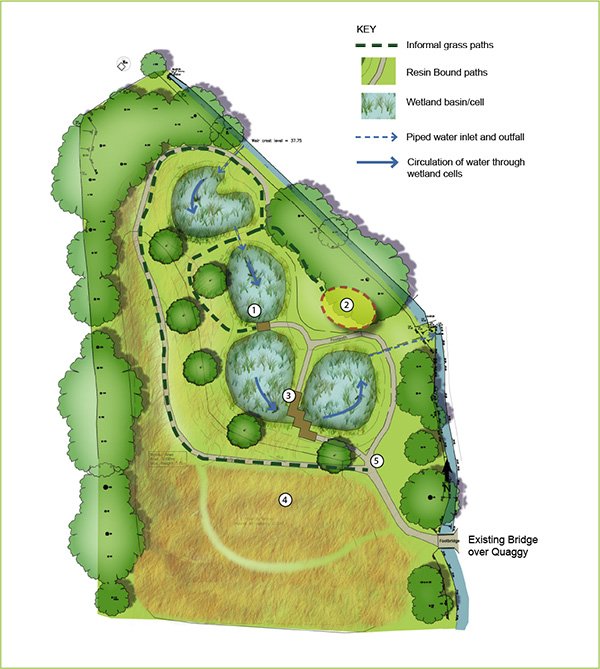
The primary objective of the project was to improve the water quality of water entering the River Quaggy from the Grove Park Ditch. The design focused on capturing and treating urban pollutants through a series of constructed wetlands.
“THE WETLANDS, WHICH ARE ORGANIZED INTO FOUR CELLS IN SERIES, ARE DESIGNED TO TRAP SEDIMENTS AND CONTAMINANTS, ALLOWING THE WATER TO BE NATURALLY FILTERED BY VEGETATION AS IT MOVES THROUGH EACH CELL. PLANTS TRAP AND BREAK DOWN POLLUTANTS IN THE WATER BEFORE IT DISCHARGES BACK TO THE RIVER.”
– Marcus Gayle, Flood Risk Manager for Lewisham Council
Vegetation in the wetlands was carefully selected for its ability to absorb excess nutrients and improve water quality over time. “The wetland vegetation takes excess nutrients out of the water as it grows,” explained Jo Goad, River Restoration Officer at Thames21. “In addition, slowing the water down as it passes through the wetland cells allows the sediment and heavy metals to settle instead of going into the river.”
A wetland management plan was developed to maintain this system, which involves periodic vegetation removal, litter collection, and dredging once every ten years.
The wetlands at Chinbrook Meadows were designed to function as a natural flood management system, capable of temporarily storing excess stormwater during heavy rainfall events. By incorporating gravity-fed water flows through the cells, the system delays the release of water into the River Quaggy, reducing peak flow rates. This approach was part of a broader sustainable drainage system (SuDS) strategy, designed to manage surface water more effectively across the site.
Flood risk mitigation is a form of future-proofing, as large rainfall events are expected to become more frequent as the effects of climate change become more extreme. This makes the storage of water in green urban spaces increasingly important in reducing flooding or surrounding areas.
The restoration of Chinbrook Meadows aimed to increase local biodiversity by creating a diverse wetland habitat. Native plants, such as reeds, rushes, and wildflowers, were integrated to support a variety of aquatic and terrestrial species. The planting strategy was developed to maximize ecological functionality while maintaining the aesthetic integrity of the park.
“WE WANTED TO ENSURE THAT THE WETLANDS COULD SUSTAIN A DIVERSE RANGE OF SPECIES WHILE SUPPORTING NATURAL REGENERATIVE PROCESSES. OVER 2,700 PLANTS WERE PLANTED AND SPECIES WERE CHOSEN BASED ON THEIR ABILITY TO THRIVE IN WETLAND CONDITIONS AND SUPPORT WILDLIFE. WE ALSO SPREAD WILDFLOWER SEED ALL OVER THE BANKS – IT’S MEANT TO BE QUITE A WILD SPACE.”
– Jo Goad, River Restoration Officer, Thames21
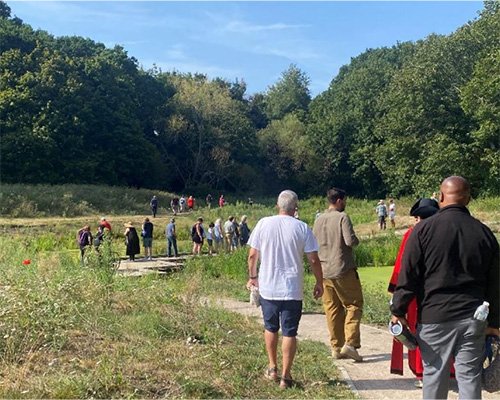
This project aimed to transform an underutilized area into a welcoming, accessible space for the community. An integral part of the design was creating a space that the community could enjoy and care for.
“COMMUNITY ENGAGEMENT IN URBAN SPACES IS INCREDIBLY IMPORTANT. ONE OF THE BENEFITS OF HAVING THIS WETLAND IN AN URBAN AREA IS THAT, THROUGH COMMUNITY EVENTS WHERE PEOPLE HELP CLEAN, PLANT, AND MONITOR THE WETLANDS, THEY DEVELOP A SENSE OF OWNERSHIP AND STEWARDSHIP. COMBINED WITH AN UNDERSTANDING OF THE WETLAND’S IMPORTANCE, THIS SENSE OF OWNERSHIP ENCOURAGES THE SURROUNDING COMMUNITY TO TRULY VALUE AND CARE FOR THE WETLAND.”
– Jo Goad, River Restoration Officer, Thames21
Pathways throughout the wetland park were designed to ensure easy access for visitors, including those with limited mobility. The design team emphasized creating unobstructed sightlines and natural transitions between the wetland areas and the rest of the park, enhancing both safety and visual appeal.
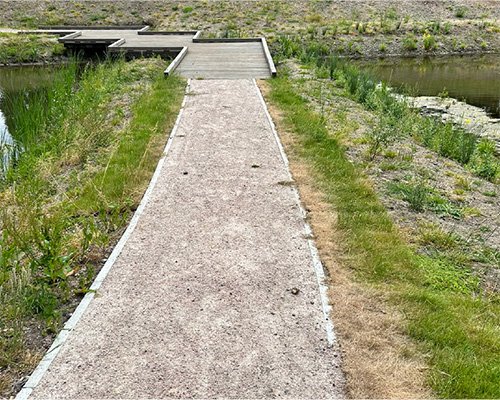
Initially, the pathways at Chinbrook were going to be made of tarmac. Baylis Landscapes, the installing contractor for the project’s pathways, suggested Organic-Lock Stabilized Aggregate (OLSA) as an alternative solution.
“HAVING WORKED WITH DAY GROUP ON A PILOT TO TEST THE PRODUCT, WE WERE IN A NICE POSITION TO SUGGEST THAT OLSA COULD WORK WELL ON THIS PROJECT. BASED ON OUR EXPERIENCE WORKING WITH THE PRODUCT AND MONITORING ITS PERFORMANCE OVER 6 MONTHS, WE PROPOSED IT AS AN ALTERNATIVE TO THE TARMAC SURFACE IN THE DESIGN FOR CHINBROOK MEADOWS.”
– Roy Nicholls, Project Manager, Baylis Landscapes
The decision to use OLSA for the pathways at Chinbrook Meadows Wetlands was driven by both aesthetic and functional considerations. OLSA’s natural composition aligns with the park’s ecological focus, providing a visually cohesive, earth-toned surface that complements the surrounding landscape. Functionally, the material’s permeability supports the flood mitigation goal of the project by reducing overall stormwater runoff. Additionally, OLSA’s durability and resistance to erosion ensures that the pathways remain stable under traffic, minimizing maintenance and enhancing long-term performance
“COMPARED TO TARMAC, THE STABILIZED AGGREGATE FINISH IS MORE IN KEEPING WITH THE NATURAL LOOK OF THE URBAN WETLAND SPACE – IT’S MORE FIT FOR PURPOSE.”
– Marcus Gayle, Flood Risk Manager, Lewisham Council
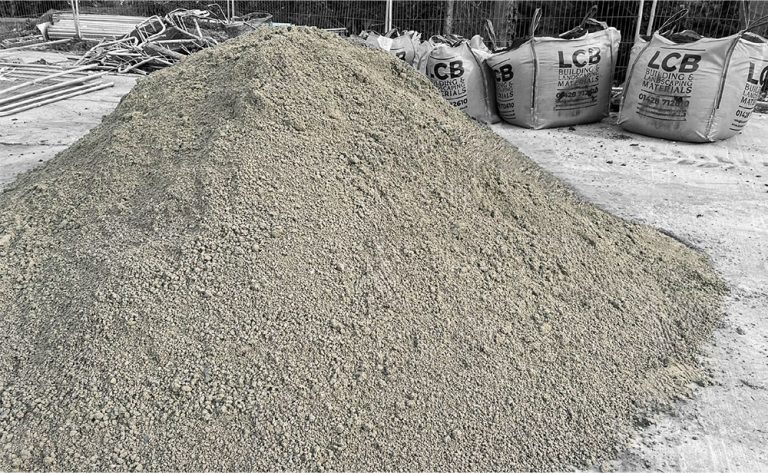
Day Aggregates supplied 23 imperial tonnes (26 tons) of OLSA to cover approximately 150m² (1615 ft2) of footpaths at Chinbrook Meadows. Day Aggregates blends the Organic-Lock binder with approved aggregates to supply projects with OLSA.
The installation of the OLSA pathways at Chinbrook Meadows required collaboration between Baylis Landscapes, the contractor, and Day Aggregates, the licensed OLSA dealer. Day Aggregates provided on-site support with particular attention to managing the moisture content of the OLSA, which was essential for successful installation in the park’s wet environment. For this project, Day Aggregates pre-hydrated the OLSA to ensure arrival on site ready to be installed. Baylis Landscapes conducted regular checks to maintain the correct water content in the material throughout the installation.
In addition to the contractor and dealer coordination, Thames21 and Lewisham Council worked closely with Baylis Landscapes to ensure the pathway installation aligned with the park’s overall flood risk mitigation strategy, supporting the wetlands’ role in stormwater management.
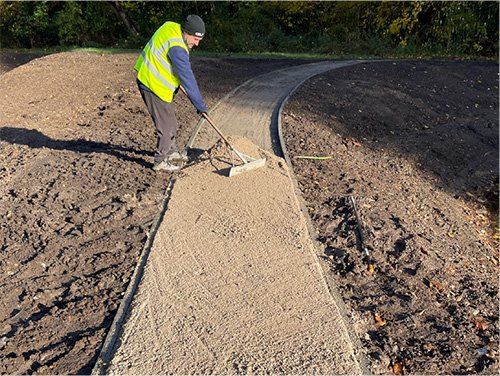
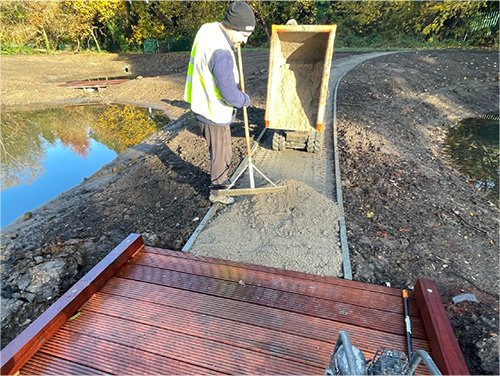
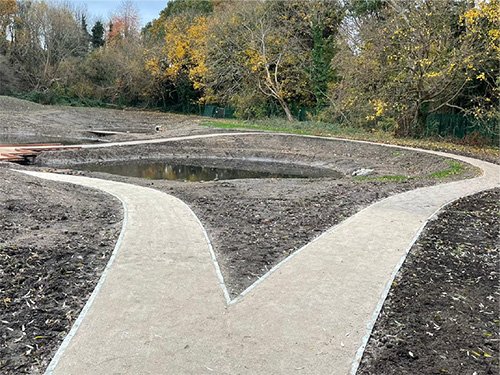
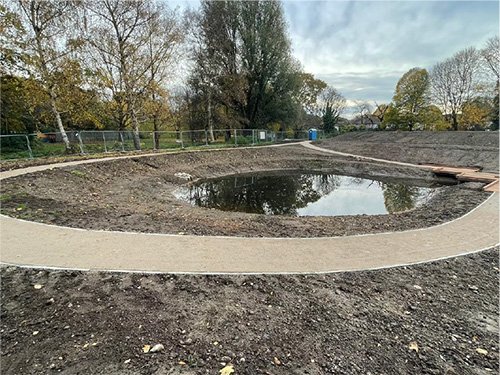
The challenges faced at Chinbrook Meadows were largely centered around water – both in managing water volume and quality on-site as well as dealing with the area’s wet weather conditions.
1- Water Management: The entire project was shaped by the need to manage water effectively. The wetlands were designed to mitigate flooding risks and to slow stormwater runoff before it entered the River Quaggy. This objective influenced every aspect of the design, from the wetland cells to the choice of materials. The system had to be carefully calibrated to ensure that the wetland cells could handle varying water volumes, trapping pollutants and gradually filtering the water through to the river.
2- Wet Weather: Heavy rainfall and wet conditions presented significant staging and coordination challenges during the construction process. Managing the water content in the Organic-Lock Stabilized Aggregate (OLSA) was particularly critical, as it requires a specific moisture balance for optimal installation. Excess water from rainfall complicated this balance, requiring careful adjustments to ensure that the pathways would compact correctly and bind effectively. The Baylis installation team worked closely with Day Aggregates to monitor moisture levels and make on-the-spot corrections, ensuring that the material was installed successfully under difficult conditions.
3- Aggregate Pathway Compaction and Consolidation: Following the installation of the pathways, an unexpected issue arose prior to the park’s public opening. The site experienced several months of heavy rainfall, which affected the Organic-Lock Stabilized Aggregate (OLSA) pathways. Without immediate foot traffic, some areas of the OLSA surface exhibited slight movement underfoot. Although the installation achieved the required compaction during construction, the lack of immediate use delayed the natural aggregate consolidation process that typically occurs as pathways are trafficked. OLSA surfaces are designed to become more stable over time with regular use. As the park experienced regular use and drier weather over time, the aggregate naturally consolidated, leading to increased pathway stability and performance as intended.
Chinbrook Meadows has successfully achieved its primary objectives of improving water quality, reducing flood risks, enhancing biodiversity, and creating an accessible community space. This resilient, sustainable urban landscape strikes a balance between ecological restoration and public use, fostering ongoing community involvement and stewardship.
Since its opening, local visitation has grown, with residents actively participating in planting and maintenance efforts as the park continues to evolve. “The wetlands have become a vibrant, colorful space,” remarked Jo Goad of Thames21, whose organization continues to support and monitor the flourishing wetland park.
As the wetlands mature and community engagement deepens, Chinbrook Meadows is set to serve as a long-term model for urban ecological renewal, showcasing how public spaces can be both functional and environmentally restorative.
Thames21 – www.thames21.org.uk
Lewishm Council – www.lewisham.gov.uk
Baylis Landscapes – www.baylislandscapes.co.uk
Day Aggregates – https://www.dayaggregates.co.uk
Organic Lock – www.organic-lock.com/