

English


ABOUT ORGANIC-LOCK
DESIGN, INSTALLATION & MAINTENANCE
ADDITIONAL RESOURCES
PRODUCT SPECIFICATIONS
PROJECTS
WHERE TO PURCHASE
CONTACT US
DEALER LOGIN
Block Quote


North American landscape projects have long favored monolithic hardscape materials like asphalt and concrete for pathways, trails, and public spaces. These materials have been the go-to choices for many landscape architects and municipalities due to their low cost and ease of installation. However, a growing awareness of environmental impact and an interest in sustainable, permeable, and natural-looking surfaces have prompted a shift towards alternatives such as stabilized aggregate surfacing.
This article delves into the key trade-offs between traditional hardscape materials and stabilized aggregate, drawing insights from an interview with John D. Collver, OALA/CSLA Senior Landscape Architect at SVEDAS Architects Inc. John has over 40 years of experience designing landscapes with stabilized aggregate and has been specifying Organic-Lock for projects since its inception in Canada.
In North America, traditional hardscape materials like asphalt and concrete have dominated landscape projects for decades. These materials are often chosen for their durability, ability to withstand heavy traffic, and low maintenance requirements. Their appeal is rooted in familiarity and the industry perception that these materials are low-risk options that deliver a clean, finished look.
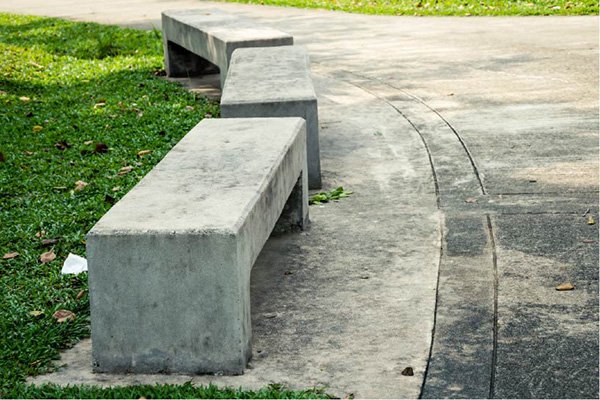
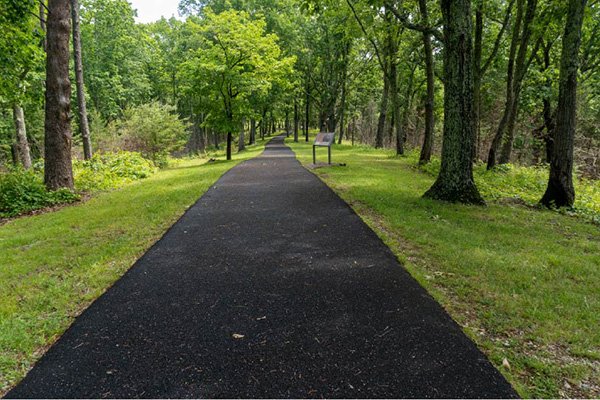
“HERE IN NORTH AMERICA, WE HAVE A CULTURE OF HARDSCAPING. PEOPLE TYPICALLY DEFAULT TO ASPHALT, IF THE PROJECT HAS A BIGGER BUDGET, THEY GO WITH CONCRETE, AND IF IT’S A SPECIAL APPLICATION, THEY’LL USE PAVING STONE.”
– John D. Collver, SVEDAS Architects Inc.
This preference for traditional, monolithic hardscape materials comes with its own set of challenges. Asphalt, while initially cost-effective, is prone to cracking and requires regular maintenance to prevent potholes and edge deterioration. Concrete, although more durable, can be costly and is also subject to cracking and patch repairs, which can detract from the aesthetic quality of a landscape.
Moreover, both asphalt and concrete are impermeable, contributing to increased stormwater runoff. This can overwhelm local drainage systems and contribute to environmental issues like flooding and water pollution.
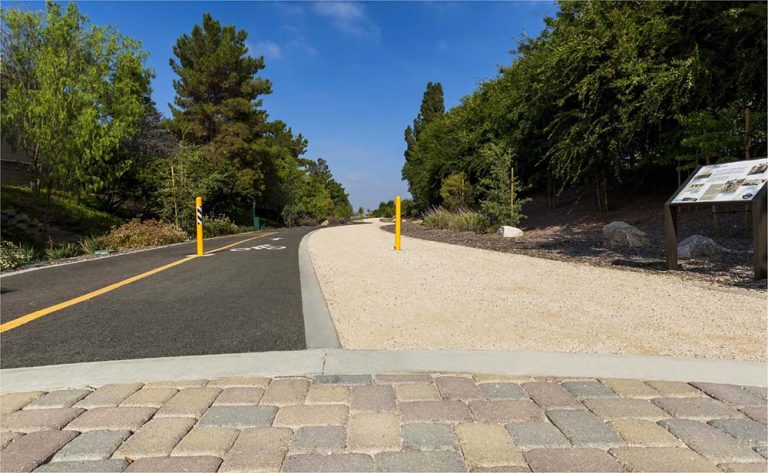
In response to these limitations, landscape architects are increasingly turning to alternatives like stabilized aggregate surfacing. Stabilized aggregates combine natural crushed stone with a stabilizing binder, creating a firm, stable surface that retains a natural look and feel. This type of surfacing is particularly appealing for projects that aim to integrate seamlessly with natural surroundings or that require permeable surfaces to reduce stormwater runoff.
“WHEN I FIRST STARTED SPECIFYING STABILIZED AGGREGATE, I WAS LOOKING FOR LOW-IMPACT DEVELOPMENT PRODUCTS AND METHODOLOGIES. THIS TYPE OF NATURAL SURFACING PRODUCT THAT IS EASY TO MAINTAIN AND FIX MADE IT A NO-BRAINER.”
– John D. Collver, SVEDAS Architects Inc.
Organic-Lock Stabilized Aggregate (OLSA) is a sustainable surfacing solution that merges the aesthetic appeal of natural crushed stone with the structural integrity provided by a renewable, plant-based binder. At the heart of OLSA is its patented binder technology, which sets it apart from other natural surfacing options. It binds aggregate particles together, providing both durability and flexibility while allowing water to permeate through the surface.
Unlike traditional hardscape materials, stabilized aggregate is designed to create permeable, stable, and durable pathways that maintain a natural look and feel. This makes it an ideal choice for projects that aim to balance aesthetics, functionality, and environmental stewardship.
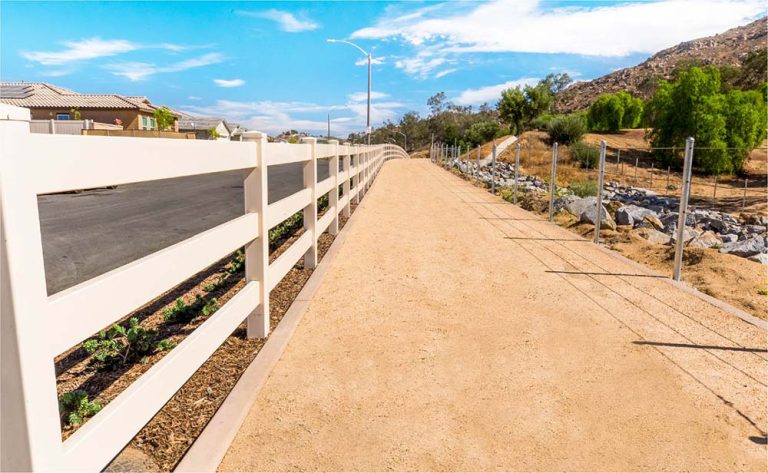
Stabilized aggregate is particularly suited for projects in sensitive environments where maintaining a low impact on the natural surroundings is crucial. The shift towards using stabilized aggregates, like OLSA, reflects a broader trend in landscape architecture to prioritize sustainability, adaptability, and natural aesthetics in outdoor space design.
Traditional hardscape materials like asphalt and concrete are often perceived as low-risk options due to their widespread use and contractor familiarity. This familiarity can keep initial costs competitive. However, as John Collver highlights, these materials are not without their financial considerations.
“IF YOU LOOK AT THE LIFE CYCLE, I WOULD THINK STABILIZED AGGREGATE WOULD PERFORM EQUALLY IF NOT BETTER THAN ASPHALT OR CONCRETE WHEN IT COMES TO MAINTENANCE AND REPAIRS; STABILIZED AGGREGATE IS VERY EASY TO FIX, EASY TO REPAIR.”
– John D. Collver, SVEDAS Architects Inc.
In the current North American landscaping industry, the initial cost of stabilized aggregate can be higher than traditional hardscape, depending on the supplier and project location, as well as installer unfamiliarity with the genre of product. However, as market availability and industry education expand, the life-cycle cost trade-offs are expected to tip more in favor of stabilized aggregates.
Monolithic hardscape materials like asphalt and concrete are impermeable, and as a result can contribute to increased stormwater runoff which can lead to flooding and pollution in local waterways. These materials do not allow water to infiltrate the ground, exacerbating issues related to stormwater management and erosion. In contrast, stabilized aggregate is permeable, allowing water to pass through and reducing runoff. This type of green infrastructure can help manage stormwater more effectively and support local water tables.
“IN HIGHLY SENSITIVE AREAS OR WHERE LOCAL REGULATIONS FAVOR LOW-IMPACT DEVELOPMENT, WE ADVOCATE FOR THE USE OF STABILIZED AGGREGATE INSTEAD OF HARDSCAPE PRIMARILY FOR ITS PERMEABILITY AND LOWER COSTS.”
– John D. Collver, SVEDAS Architects Inc.
Organic-Lock takes sustainability one step further with its patented aggregate binder being made from 100% naturally occurring materials. The binder gets its strength from a rapidly renewable plant material, which Organic-Lock improved on by adding two additives (made from naturally occurring materials) to patent the Organic-Lock formula.
It can be combined with recycled aggregates, locally sourced aggregates, and light-colored aggregates (reducing the heat island effect) to further support project sustainability goals.
Hardscape materials like concrete and asphalt provide a clean, uniform appearance that many clients and stakeholders find appealing. However, these materials can often look out of place in natural or historical settings. Stabilized aggregate offers a more natural appearance that blends seamlessly with the landscape.
“I’M A REAL FAN OF EUROPEAN LANDSCAPES AS THEIR DEFAULTS SEEM TO BE DIFFERENT THAN OURS. THERE IS A REASON WHY THEY HAVE BEEN USING LOOSE AGGREGATE MATERIALS FOR CENTURIES OVER THERE IN A VARIETY OF APPLICATIONS.”
– John D. Collver, SVEDAS Architects Inc.
While durable, both asphalt and concrete require regular maintenance and can show signs of wear, especially in freeze-thaw conditions. Repair patches are often visible, detracting from the overall appearance. Additionally, the rigidity of these materials makes them susceptible to cracking under stress or environmental changes.
Stabilized aggregate requires a different maintenance approach. Communicating maintenance expectations and educating maintenance teams are some of the main barriers in the widespread adoption of stabilized aggregates for landscape projects. For example, managing loose surface particles may be a maintenance concern around features like drains or entrances to buildings. Care should be taken when removing snow or debris. Addressing moisture and shade issues are also important maintenance aspects; preventing water from sitting on the surface is paramount.
The trade-off here comes in the repair – stabilized aggregates are flexible, and damages can typically be fixed by watering, scarifying, and recompacting to a like-new condition.
“ONCE YOU HAVE A FAILURE WITH ASPHALT OR CONCRETE, IT’S PERPETUAL PATCHWORK MAINTENANCE, AND IT LOOKS LIKE PATCHWORK – YOU CAN ALWAYS TELL. BUT WITH ORGANIC-LOCK STABILIZED AGGREGATE, YOU CAN REPAIR DAMAGES AND IN A COUPLE OF WEEKS OF EXPOSURE YOU WOULDN’T EVEN KNOW IT HAD BEEN DAMAGED BY LOOKING AT IT.”
– John D. Collver, SVEDAS Architects Inc.
Stabilized aggregate surfaces tend to get better over time and exposure, under the forces of natural consolidation and compaction (traffic, weathering, aggregate settling). These natural surfaces age gracefully with proper maintenance analysis and minimal intervention.
The preference for hardscape materials is deeply ingrained in North American landscape projects, where clients and stakeholders are accustomed to the uniform, finished look of asphalt and concrete. This preference can be a significant barrier to adopting alternative materials like stabilized aggregate.
“FURTHERING THE ADOPTION OF STABILIZED AGGREGATE INVOLVES TRYING TO WORK THROUGH THAT CULTURE AND EDUCATE ALL THE PARTIES INVOLVED TO HAVE A CULTURAL SHIFT IN SURFACE MATERIAL CHOICE. EDUCATION IS SO IMPORTANT FOR OUR CLIENTS, OTHER DESIGN PROFESSIONALS, AND CONTRACTORS.”
– John D. Collver, SVEDAS Architects Inc.
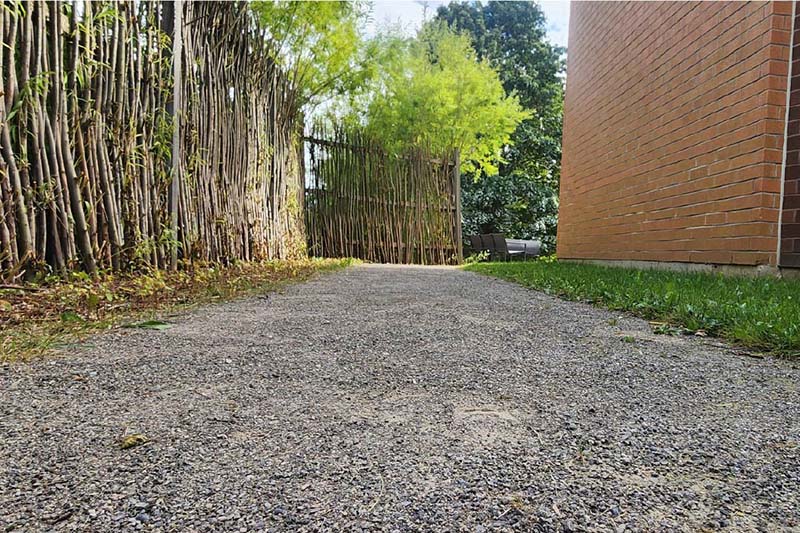
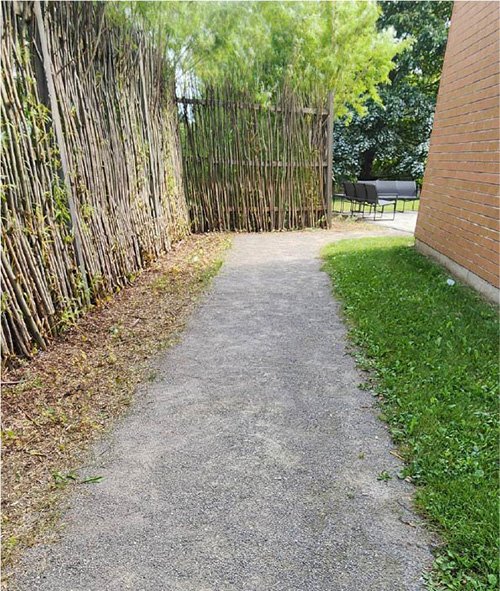
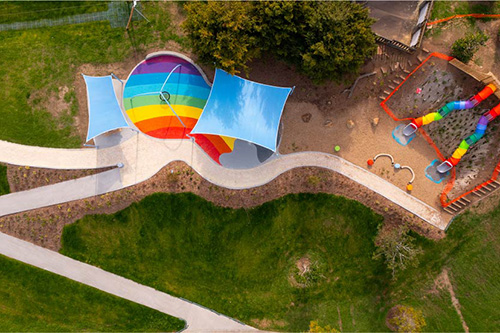
The Greensville School project in Dundas, Ontario, provides a compelling case study of the trade-offs between traditional hardscape and stabilized aggregate. The project initially aimed to incorporate Organic-Lock Stabilized Aggregate extensively. However, budget constraints and a lack of familiarity with the product among contractors led to a reduction in the planned use of stabilized aggregate.
Despite the scaled-back implementation, the stabilized aggregate pathway has proven successful over time. Since its installation in May 2021, the pathway has maintained its stability and appearance, even in a high-traffic school environment, demonstrating the material’s durability and suitability for similar projects.
“THIS BEING AT A SCHOOL, A LOT OF THE GENERAL PUBLIC WALK ALONG THE PATHWAY. AFTER THREE WINTERS, THE ORGANIC-LOCK STABILIZED AGGREGATE IS HOLDING ITS OWN, IT’S DOING WHAT IT’S SUPPOSED TO DO. THE AMOUNT OF LOOSE GRIT IS MINIMAL. I WOULD SAY THAT IN THIS PATHWAY APPLICATION, IT TOTALLY WORKED.”
– John D. Collver, SVEDAS Architects Inc.
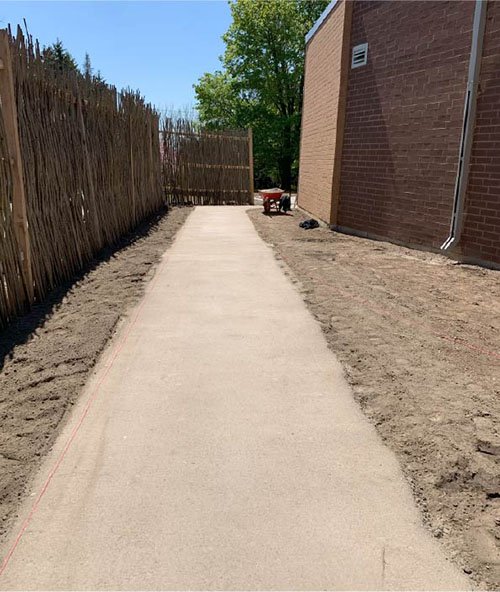
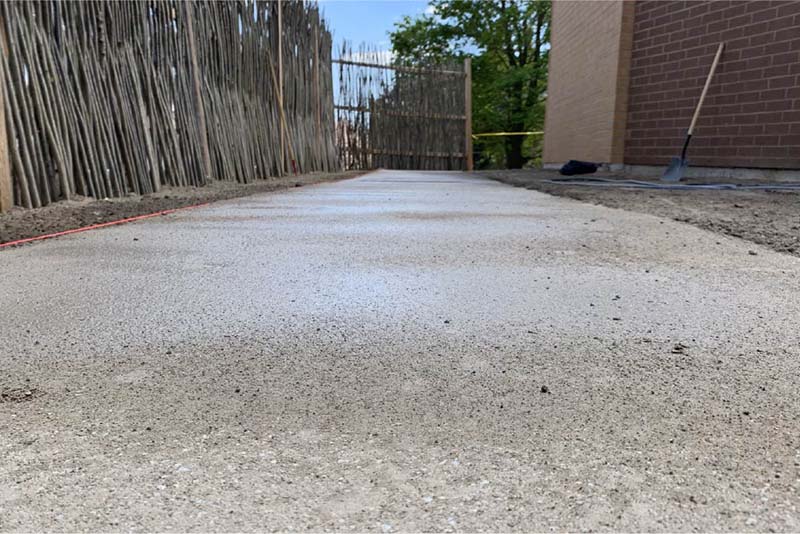
The experience of the Greensville School project offers several lessons for landscape architects and project managers considering stabilized aggregate in lieu of traditional hardscaping materials.
1- Design to Suit Material Properties: Stabilized aggregate surfaces should generally be designed to shed water using crowns, cross-slopes, and water diversion techniques. Avoiding water collection on these surfaces helps ensure optimal performance. Other design considerations include slope and grading, edging and containment, traffic type and volume, environmental conditions, and accessibility requirements, among others.
2- Contractor Education and Training: Ensuring that contractors understand the material's properties, installation requirements, and procurement details can prevent inflated bids and support project success when it comes to construction.
3- Installation Timing and Weather Conditions: Stabilized aggregate requires a specific installation process that includes proper hydration, spreading, thorough compaction, and final watering with cure time before use. Proper installation under optimal conditions is crucial for the success of stabilized aggregate. Stabilized aggregate cannot be installed in wet conditions or in temperatures below freezing.
4- Setting Maintenance Expectations: Stabilized aggregate calls for different maintenance considerations than hardscape materials because of its material properties and surface finish. Communicating maintenance best practices is key to ensuring installation success.
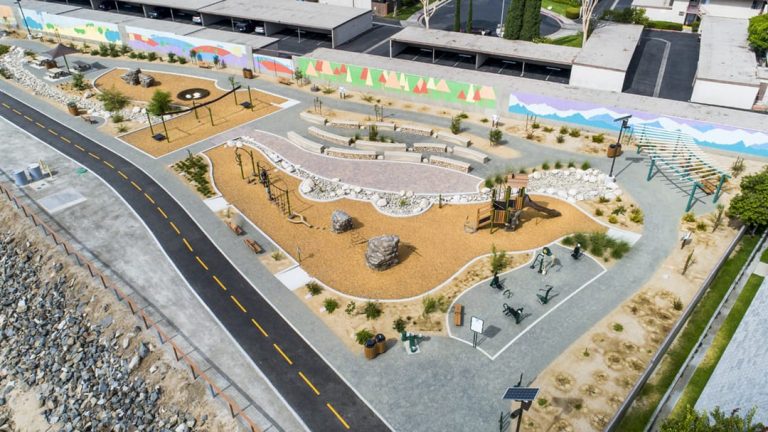
The choice between hardscape materials and stabilized aggregate surfaces ultimately depends on project goals, budget, environmental considerations, and cultural factors. While traditional hardscape options continue to dominate the North American landscape industry due to their familiarity, stabilized aggregates offer compelling benefits for projects prioritizing sustainability, permeability, and a natural aesthetic.
For landscape architects like John Collver, the key takeaway is clear: with the right education and awareness, clients and contractors can learn to appreciate the benefits of stabilized aggregates, making them a viable and attractive option in an increasingly sustainability-focused world.
The success of projects like Greensville School demonstrates that, with the right approach, stabilized aggregate can be a valuable addition to the palette of landscape materials available to architects and designers.

John D. Collver, OALA/CSLA Senior Landscape Architect at SVEDAS Architects Inc
https://www.svedasarchitects.com/landscape-architecture/