

English


ABOUT ORGANIC-LOCK
DESIGN, INSTALLATION & MAINTENANCE
ADDITIONAL RESOURCES
PRODUCT SPECIFICATIONS
PROJECTS
WHERE TO PURCHASE
CONTACT US
DEALER LOGIN
Block Quote


In the heart of Silicon Valley, where innovation and reinvention are part of the cultural DNA, a remarkable urban transformation has unfolded. Cityline Sunnyvale, a collaborative project by the Sares Regis Group of Northern California and Hunter Partners, marks the evolution of a declining suburban shopping mall into a dynamic, pedestrian-friendly civic center. Once a void in downtown Sunnyvale, the site has been reborn as a vibrant public realm – a space that bridges history and modernity, ecology and urbanism.
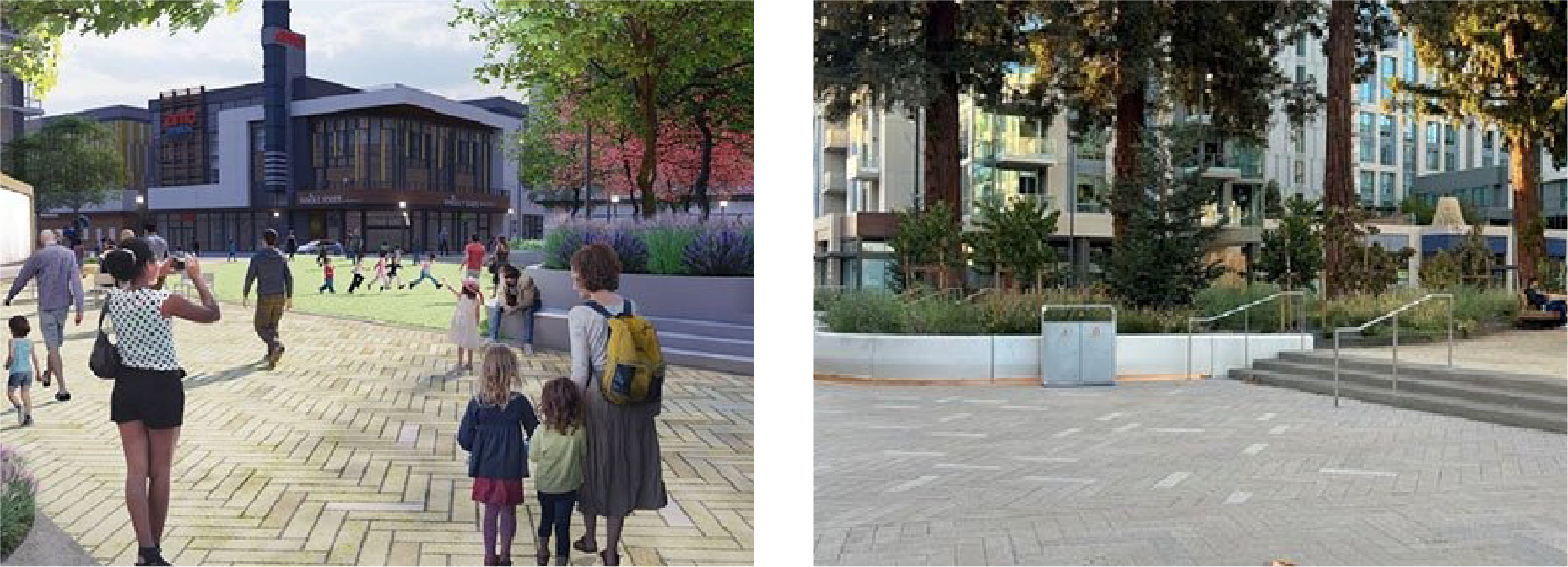
At the core of this redevelopment lies Redwood Square, the centerpiece of Block 3 South and a rare example of mature natural heritage shaping a contemporary urban landscape. Anchored by a preserved grove of century-old redwood trees, the square offers a striking juxtaposition: a soaring canopy set within a walkable plaza, surrounded by public art, amenities, and mixed-use development.
The project posed a profound design opportunity: how do you create a new civic and cultural hub while respecting the deep roots – literal and figurative – of place? San Francisco based landscape architecture and urban design firm Bionic was tasked with answering this question. Through an approach based in ecological sensitivity, placemaking, and community engagement, the design team wove together natural legacy and urban vitality to create a space that is both distinctly local and boldly forward-looking.
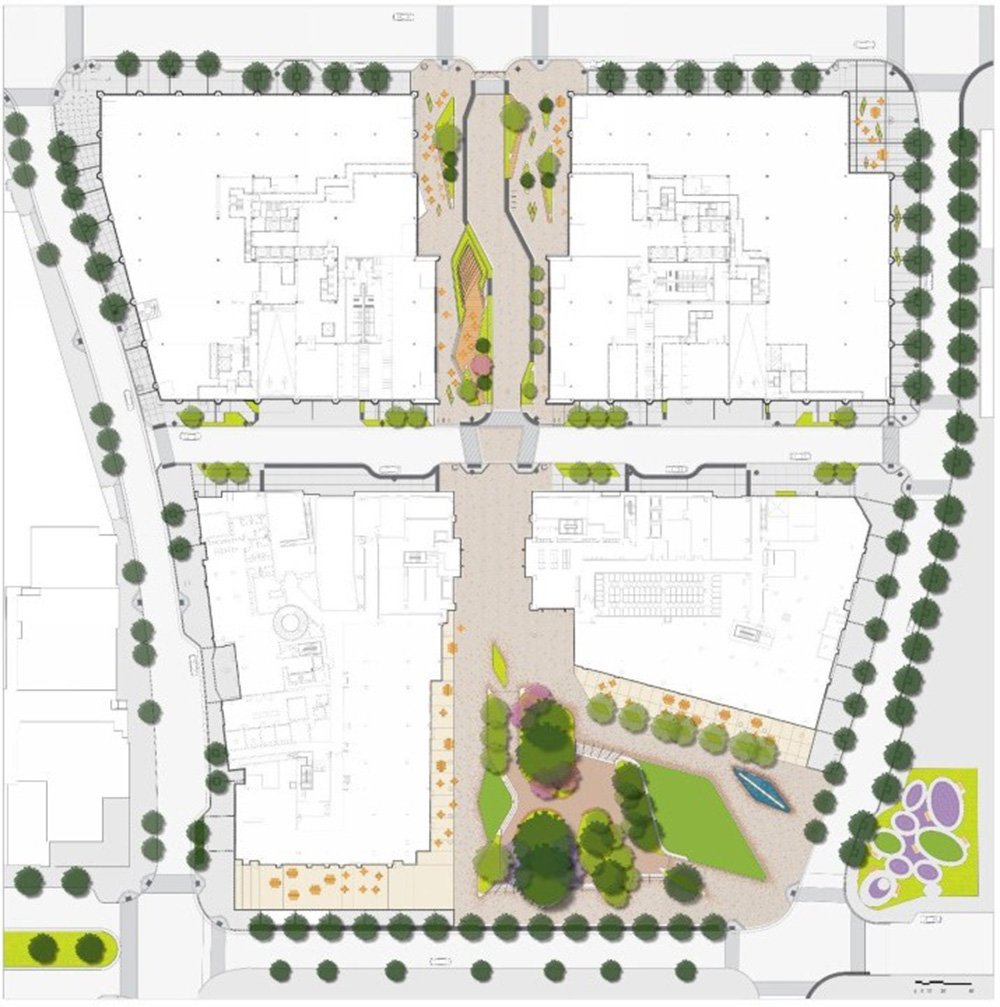
From the beginning, the project was anchored in its greatest asset: the historic redwoods. These trees stand as living witnesses to Sunnyvale’s transformation. Bionic’s approach was to celebrate their presence, weaving the public realm around arborist-defined root protection zones which strictly governed construction tolerances.
“THERE WAS ALWAYS THIS IDEA OF NOT ISOLATING THE REDWOOD TREES – WE WANTED PEOPLE TO BE ABLE TO EXPERIENCE THEM. THERE WAS LOTS OF THINKING ABOUT HOW WE COULD CREATE GEOMETRIES THAT ALLOWED PEOPLE TO MOVE THROUGH THE REDWOODS AND EXPERIENCE THEM BUT ALSO PRESERVE THEIR HEALTH.”
- Peter Frankel, Principal, Bionic
The design language emerged from this constraint - a geometry that allowed movement while protecting the trees. The grove was
not a backdrop; it was the origin point for the spatial and material composition of Redwood Square.
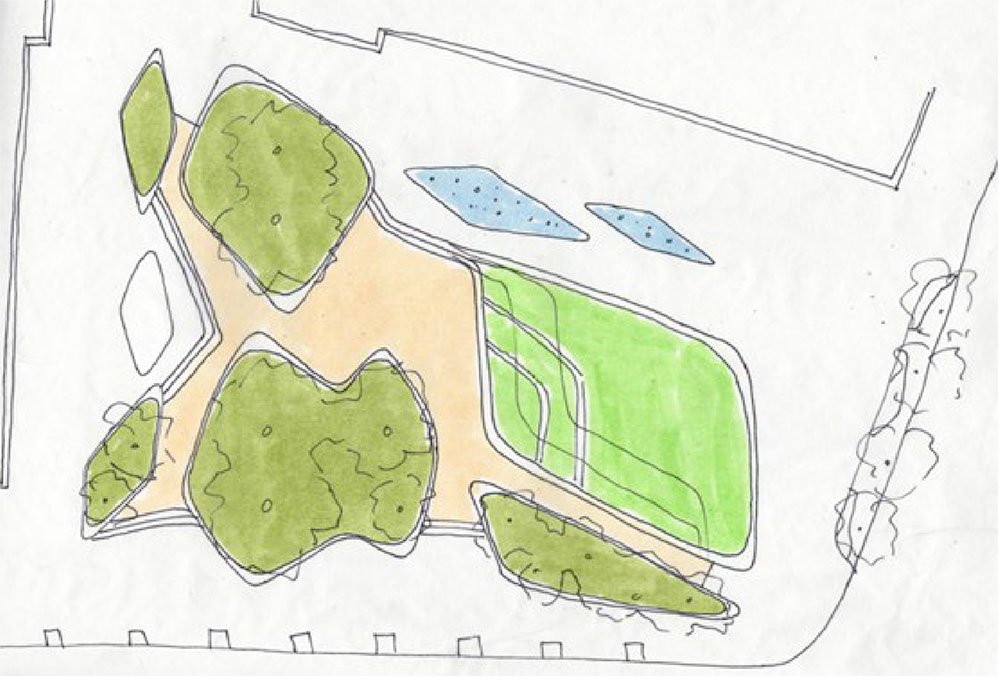
A central design objective at Cityline Sunnyvale was to craft a layered spatial experience by establishing distinct character zones
throughout the public realm. This strategy not only supports wayfinding and placemaking but also enhances comfort, visual interest,
and programmatic flexibility across the site.
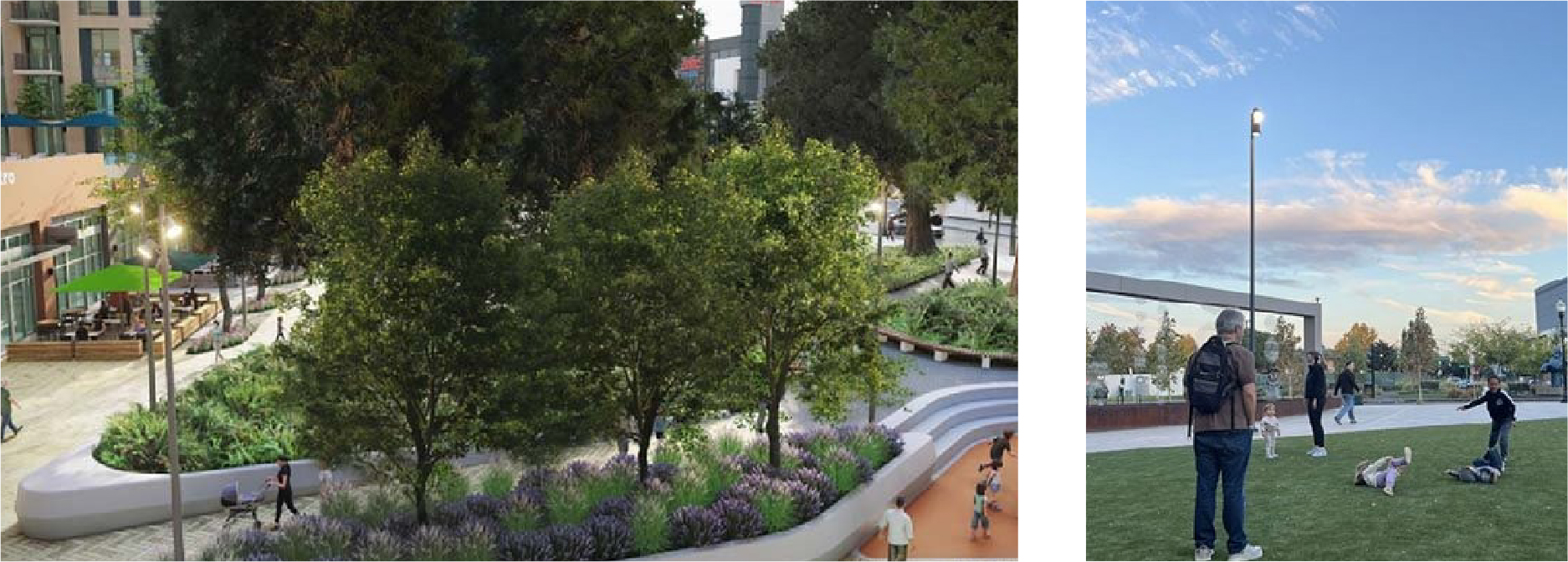
At the heart of this framework is the Redwood Grove - a shaded, contemplative space that deliberately contrasts with the
surrounding plaza and streetfront activity. Elevated slightly above the main plaza, the natural microclimate created by the towering
redwood trees offers a respite from Sunnyvale’s intense summer sun, providing a cooler, quieter retreat within the more active urban
setting.
Surrounding this core are additional character zones with distinctly different energy and function. The plaza’s perimeter is lined with
restaurants, cafés, and retail. This edge zone is designed for higher energy and social interaction. Nearby, family-friendly features such
as children’s play areas and open lawns accommodate a wide range of community programming and informal gatherings.
Public art is woven throughout, dotting the Cityline with moments of visual interest. Rounding out the character zones are mixed-use
buildings that reinforce the "live-work-play" ethos of the district. Connectivity corridors - featuring thoughtfully landscaped pathways,
intuitive wayfinding, and integrated lighting - serve as transitions linking different character zones into one cohesive whole.
This layered approach - combining elevation shifts, material changes, microclimatic considerations, and adjacency to active
ground-floor uses - results in a dynamic public landscape. Each character zone contributes to the overall identity of Cityline as a
walkable, adaptable, and inclusive urban environment.
More than just a park, Redwood Square represents a commitment to the community - a civic gesture in exchange for the increased
density brought by the redevelopment of downtown Sunnyvale. The project aimed to transform an undefined, underutilized space to
deliver lasting value to the community.
From the outset, this objective was guided by a deep investment in public engagement. Extensive outreach and iterative design
development with city officials, the public, and community stakeholders ensured that the space would reflect shared priorities and
local identity. This collaborative process influenced everything from the spatial organization of the plaza to programming strategies.
“IT WAS A VERY INTENSIVE PROCESS - WORKING WITH THE CITY AND THE PUBLIC TO GET BUY-IN FOR THE PROJECT. WE TALKED A LOT ABOUT DIFFERENT WAYS WE COULD ACTIVATE THE PLACE TO MAKE IT A REALLY WELL-USED AND WELL-LOVED COMMUNITY ASSET.”
- Peter Frankel, Principal, Bionic
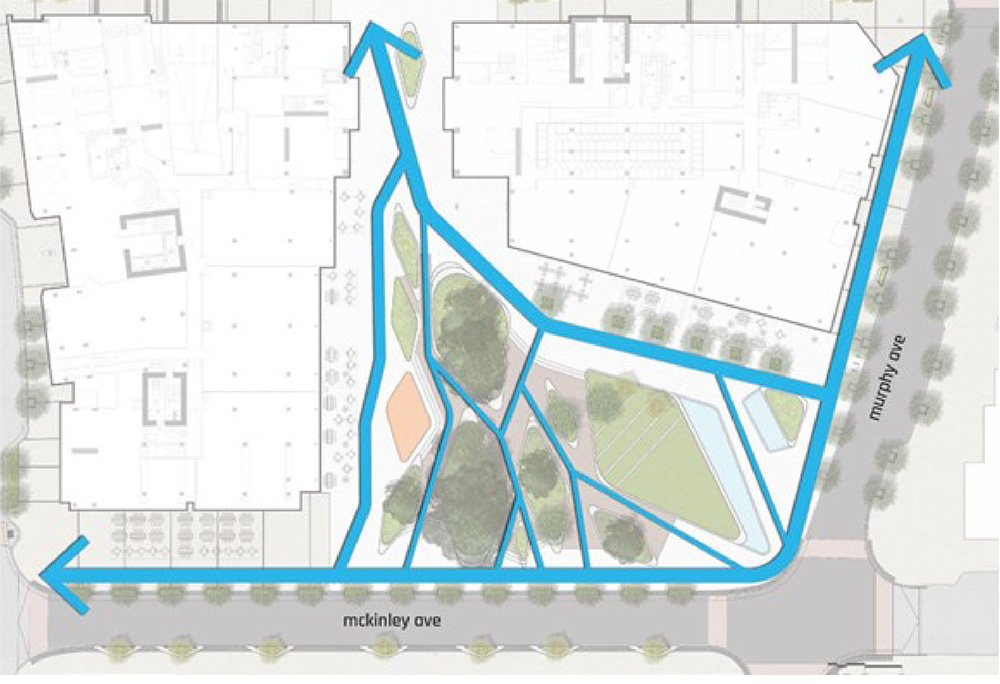
The design strategy prioritized connectivity and integration with the broader urban context. Bionic set out to extend downtown
Sunnyvale’s pedestrian network, link to the nearby train station, and integrate transit, retail, commercial, and community aspects. The
park loop and the arrangement of buildings and open spaces support a range of programmed activities and daily uses.
“THE SITE WAS UNDEFINED – A VOID IN THE MIDDLE OF DOWNTOWN. WE WERE TASKED WITH MAKING A PLACE OUT OF IT TO EXPAND DOWNTOWN SUNNYVALE, BRING IT TO THIS FOCAL POINT, AND CONNECT TO TRANSIT AND A WALKABLE DOWNTOWN DISTRICT. THE CHALLENGE WASN’T ONLY SPATIAL - IT WAS NARRATIVE.”
- Peter Frankel, Principal, Bionic
This required careful planning of pedestrian pathways, sightlines, and the creation of visual clues that would intuitively guide people
from the train station through the development to Redwood Square.
Material selection played a critical role in shaping the identity of Cityline Sunnyvale’s landscape. From paving to planting, the design
team used materials not just as finishes but as tools for placemaking. Materials were chosen to support a distinct atmosphere,
accommodate a range of uses, and endure the demands of an active urban environment.
Throughout Cityline, surfacing material transitions help define spatial hierarchies. Durable pavers and concrete delineate high-traffic
plazas and retail-adjacent spaces, while softer materials are introduced to signal moments of retreat or reflection. Public art, custom
furnishings, and planting strategies complement the material choices, collectively enriching the experience of place. This nuanced
use of material helps create a sensory rhythm throughout the site.
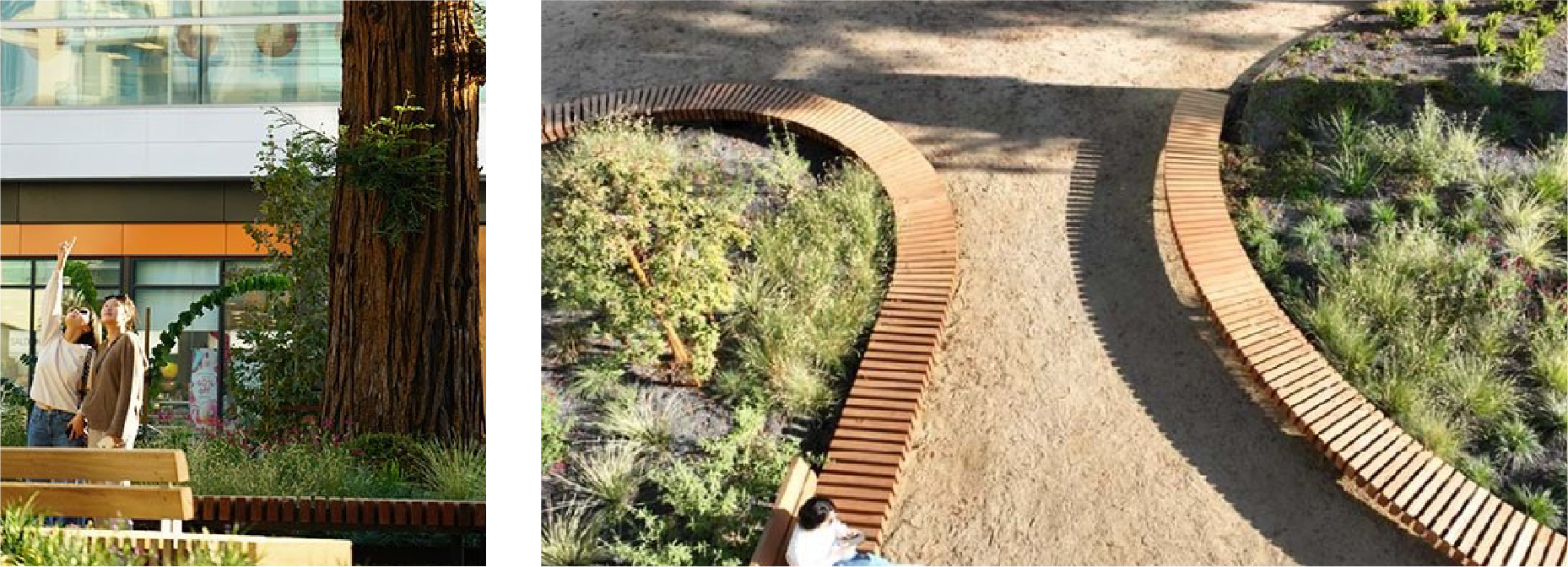
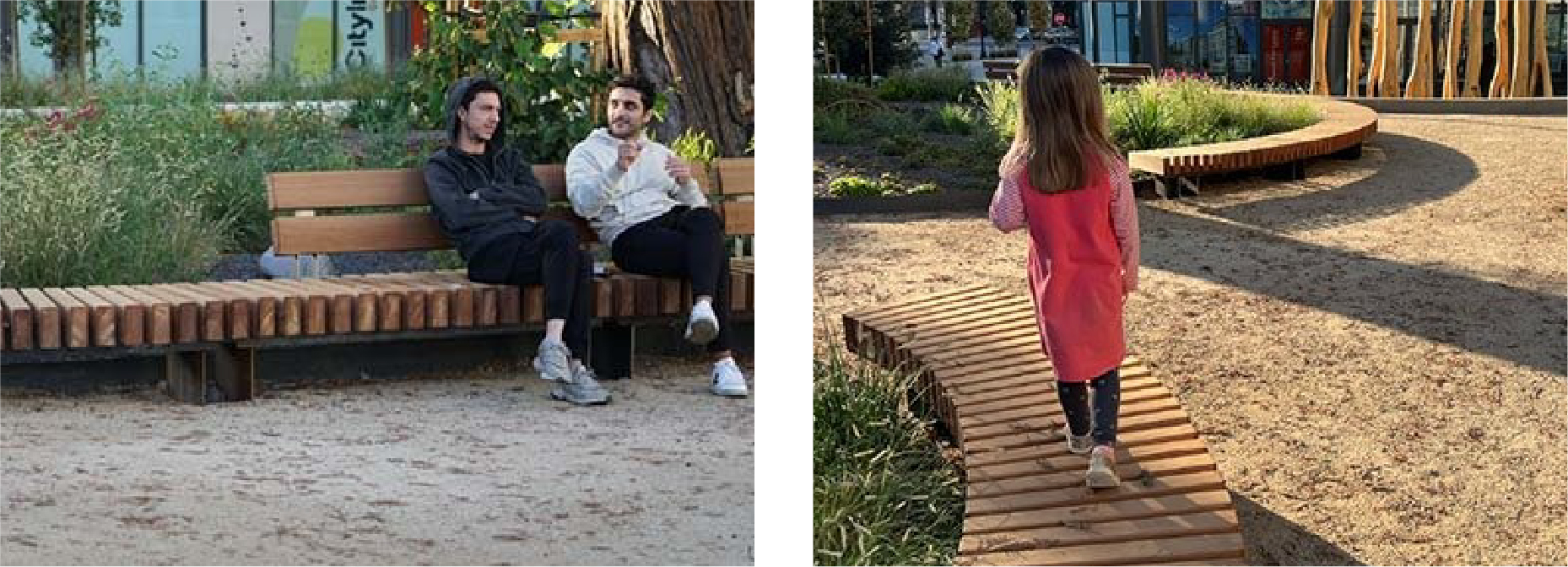
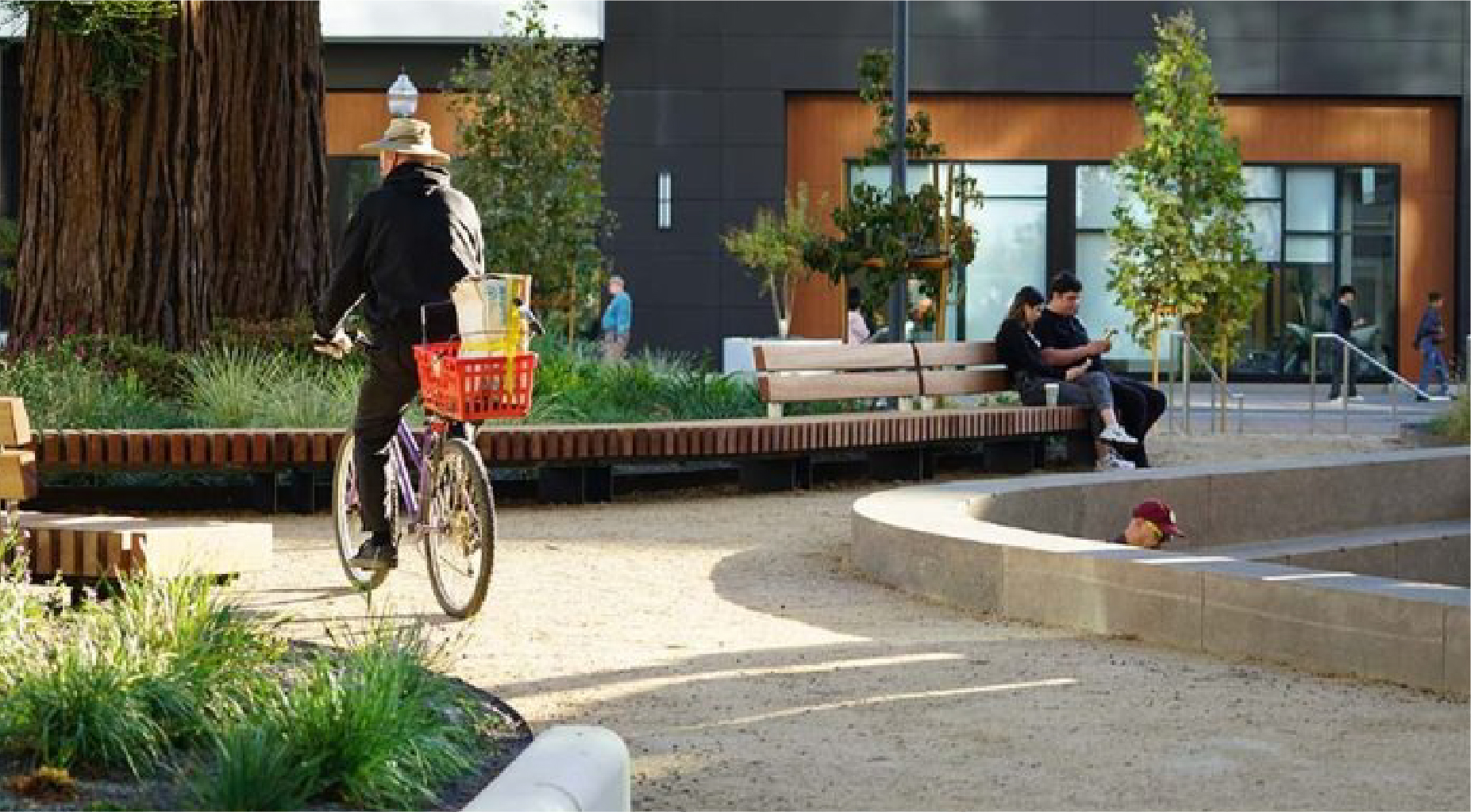
In Redwood Square, Organic-Lock Stabilized Aggregate (OLSA) was selected for the paths guiding visitors through the grove.
"INITIALLY, REDWOOD SQUARE WAS ALL GOING TO BE WOOD DECKING AROUND THE ROOT PROTECTION ZONES, BUT THAT PROVED TO BE PROHIBITIVELY EXPENSIVE. THAT’S WHERE THE ORGANIC-LOCK STABILIZED AGGREGATE CAME IN. IT WAS A MUCH MORE COST-EFFECTIVE SOLUTION THAT STILL ENABLED US TO MAINTAIN THE ROOT PROTECTION ZONES AND KEEP A SOFT, NATURAL FEELING."
- Peter Frankel, Principal, Bionic
Another key consideration in surfacing material choice was ease of maintenance. As a publicly accessible space, Redwood Square required a surface that could withstand heavy foot traffic while remaining accessible and manageable for city maintenance teams.
“IT’S A PUBLIC PROJECT, SO MAINTENANCE IS VERY IMPORTANT. HAVING A SURFACE THAT FEELS NATURAL AND SOFT BUT IS RELATIVELY EASY TO MAINTAIN IS KEY. ORGANIC-LOCK STABILIZED AGGREGATE THREADS THAT NEEDLE; COST-EFFECTIVE, ACCESSIBLE, MAINTAINABLE, BUT STILL DISTINCT FROM HARDER PAVED SURFACES IN THE MAIN PLAZA.”
- Peter Frankel, Principal, Bionic
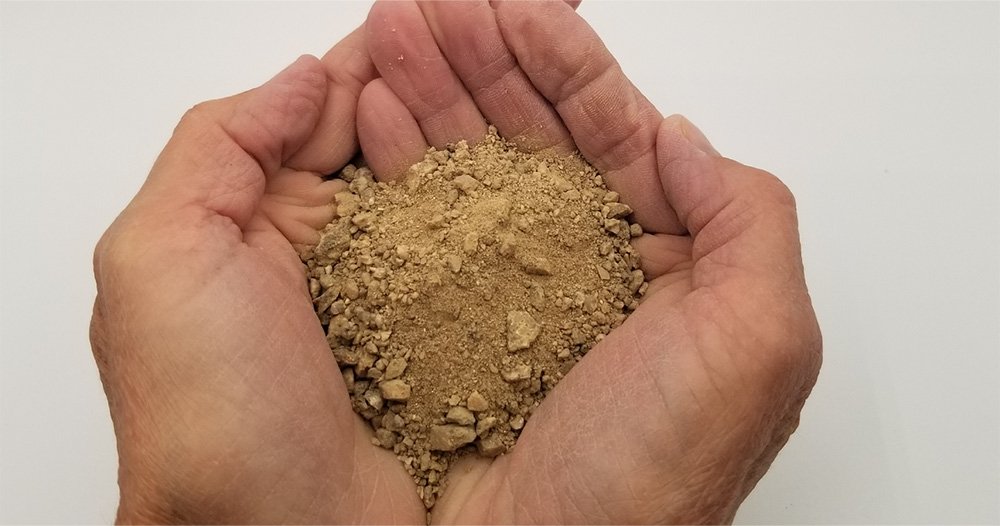
Wheeler Zamaroni supplied 100 tons of OLSA in Tan Decomposed Granite for the pathways through Redwood Square. This material creates a soft, natural, accessible walking surface within the grove, contrasting intentionally with the adjacent plaza’s harder finishes.
The planning and installation of Redwood Square’s landscape centered arborist-led preservation protocols from the outset. Root protection zones were established early and served as a strict framework for all excavation, compaction, and grading. These zones dictated where and how construction could proceed, influencing not only the placement of paths and benches, but the very geometry of the site.
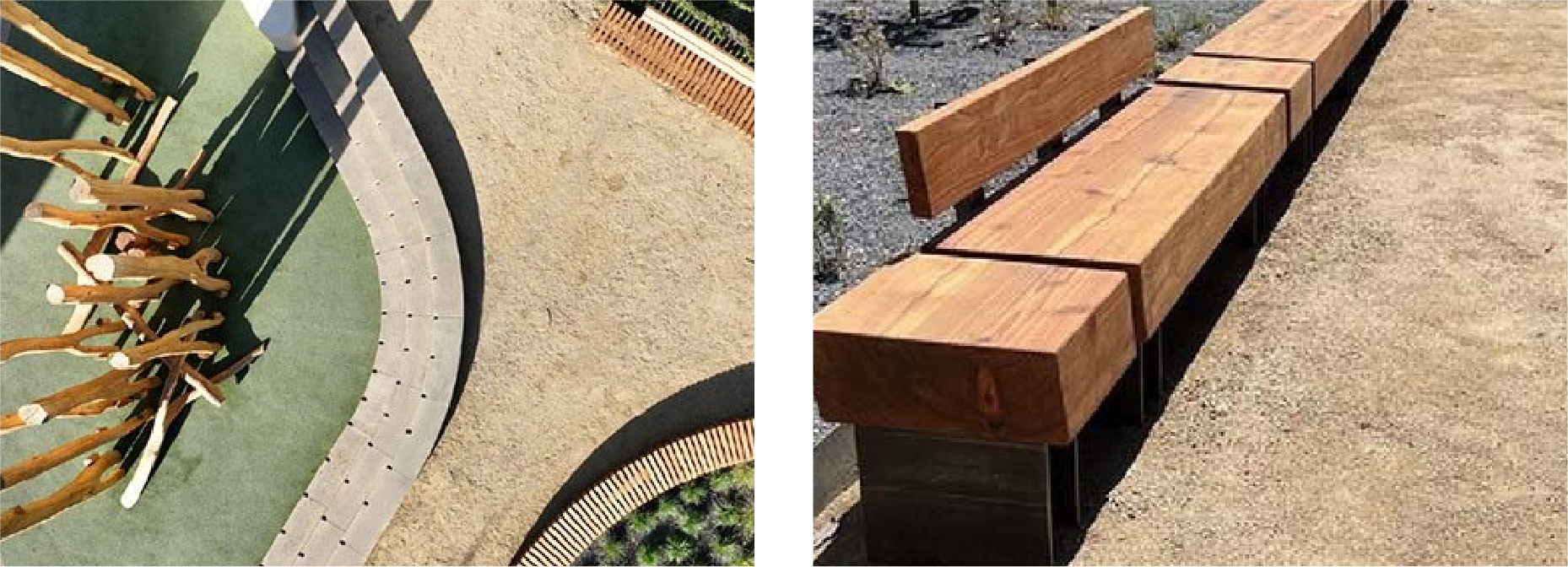
One of the more complex challenges was navigating the significant grade change between the plaza and the elevated grove. To address this, the design incorporated precast concrete walls that serve both structural and spatial roles. These elements mitigate elevation differences without disturbing sensitive root zones, while also defining edges and creating seating opportunities. “The walls help elevate the grove from the rest of the plaza. They allowed us to mitigate the grade change without excavating within the tree protection zones,” said Frankel.
Sequencing of construction was just as important as material choice. The underground parking garage was carefully designed and constructed in an L-shape around the trees, allowing the trees to remain undisturbed. Once major hardscape and grading work was complete, the Organic-Lock Stabilized Aggregate (OLSA) was installed as one of the final steps – protecting the material from construction damage and ensuring precision in finish quality.
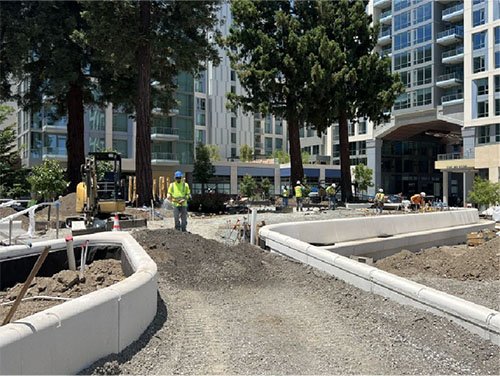
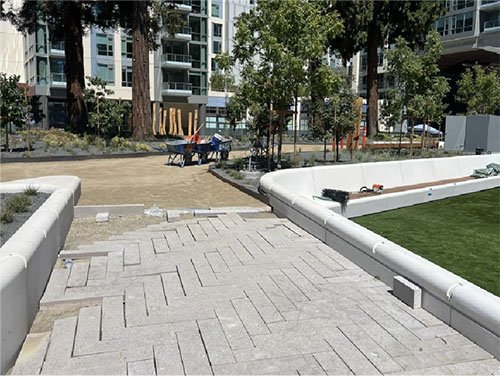
The redevelopment of the Cityline Sunnyvale site involved a range of design and construction challenges – outlined below.
1. Preserving Century-Old Redwood Trees: The redwoods are the site’s anchor and defining asset. However, their protection required strict adherence to arborist-defined root protection zones, which governed circulation design, material selection, and construction methods. The design team worked around these zones, weaving the public realm geometry through the grove without disturbing root systems.
2. Navigating Significant Grade Changes: The redwood grove sat higher than the surrounding plaza, requiring creative grading solutions. Precast concrete walls were introduced to manage this transition without invasive excavation. These also functioned as seating, edges, and spatial frames - turning a technical requirement into a design feature.
3. Undefined Urban Conditions: The site was originally a void in downtown Sunnyvale - a gap in the pedestrian network and public life. The challenge was not just spatial, but conceptual: to create a new destination that felt rooted in place. The design team worked to extend the downtown grid, enhance walkability, and create intuitive sightlines and pathways connecting transit, retail, and public space.
4. Balancing Building Height with Public Perception: Community and governmental concerns about building mass and scale were a major hurdle. Public support was secured by offering high-quality public space as a civic trade-off for high-rise densification. The mature redwoods helped mediate the visual scale of taller buildings.
5. Value Engineering Pressures on Material Selection: The original concept for Redwood Square included a raised wood deck, but cost proved prohibitive. Organic-Lock Stabilized Aggregate (OLSA) was identified as a more economical yet high-performing alternative. When another round of value engineering threatened the selection of OLSA for the project, the design team successfully advocated for its inclusion based on aesthetic, accessibility, and long-term maintenance benefits.
6. Maintaining Vision over a Long Project Timeline: Spanning nearly a decade from vision to completion, the project endured economic shifts, ownership changes, and phased construction. Maintaining continuity across this timeline required strong design leadership, clear documentation, and ongoing stakeholder engagement to uphold the original vision.
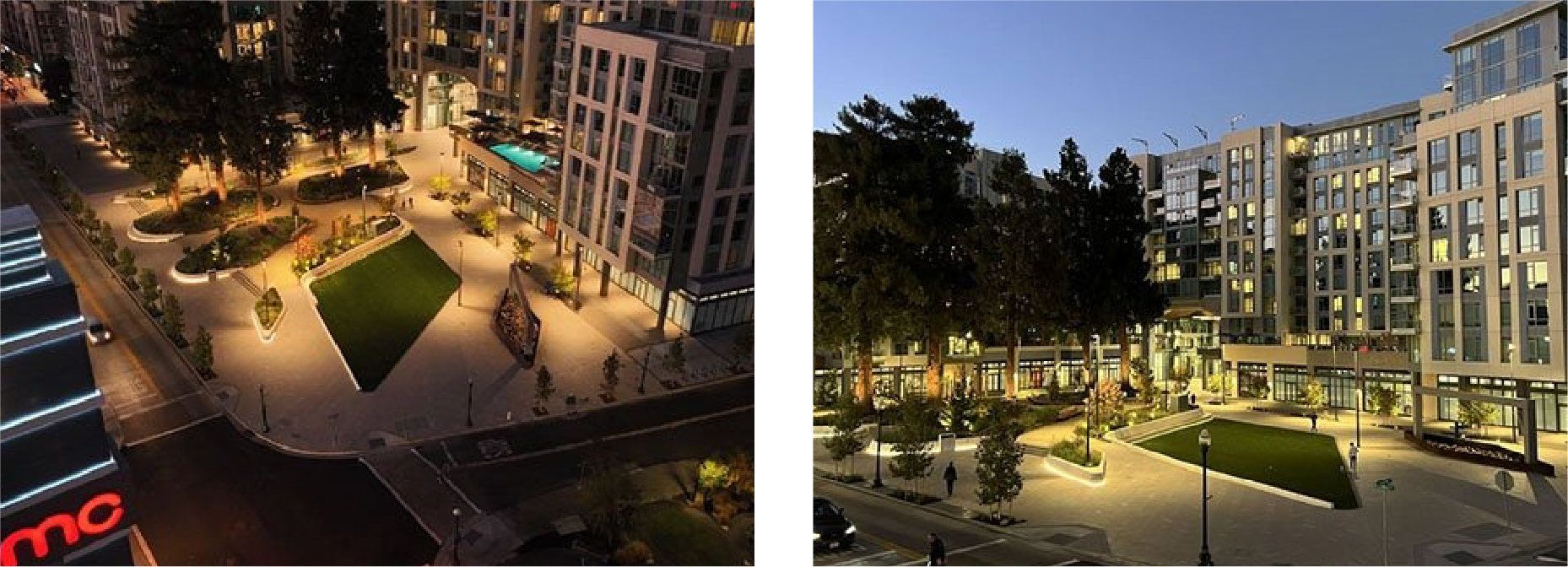
The landscape at the Cityline has successfully transformed a void in downtown Sunnyvale into a walkable, transit-connected, and programmatically active urban district — one that reflects the layered history of Sunnyvale while embracing the momentum of Silicon Valley’s future.
“It’s been great to see the programming implementation and the use of the park – it matches what we’d hoped for while we were designing the landscape. It’s been very successful in terms of creating different zones of character — the grove with the redwood trees has a distinct feeling compared to the perimeter with restaurants and other zones. It’s a nice contrast. On top of that, it’s heavily used and occupied. It feels like a really special place,” reflected Frankel.
The completed project reflects the goals set out at the start: to create a civic space that honors existing ecological assets, supports a range of public activities, and contributes meaningfully to the redevelopment of downtown Sunnyvale. By focusing on long-term stewardship, careful material selection, and thoughtful spatial organization, the design team delivered a public space that is both functional and distinctive
Bionic is a landscape architecture, urban design, and planning practice based in San Francisco, California. Founded in 2007, the firm’s mandate is simply to “enable life.” This timely and valued pursuit involves the stimulation of culture, the design of ecologies, and the negotiation of complexity between the built environment and the natural world.
The Bionic team brings inventive creative energy, highly responsive management, and exceptional technical capacity to partner with cities, companies, agencies, non-profits, and communities to create lively spaces that reflect each site’s distinct character and maximize its potential to engage and inspire people. The firm excels at resolving the complexity of landscape, infrastructure, technology, architecture, transportation, ecology, economics, and social factors by employing a highly creative and collaborative approach to projects while striving to invent new and contemporary forms of landscapes, systems, and places called for by modern life.
Contributors
Bionic – https://bioniclandscape.com/
Wheeler Zamaroni – https://wzsupply.com/
Organic Lock – www.organic-lock.com/