


English


ABOUT ORGANIC-LOCK
DESIGN, INSTALLATION & MAINTENANCE
ADDITIONAL RESOURCES
PRODUCT SPECIFICATIONS
PROJECTS
WHERE TO PURCHASE
CONTACT US
DEALER LOGIN
Block Quote


Tulsa Educare 4 at the Celia Clinton Campus in Tulsa, Oklahoma, represents a paradigm shift in early childhood education. This 21,500 square foot landscaping project, designed and built by JONESPLAN and completed in 2021, centers on the theme of creating natural outdoor learning environments for young children, utilizing natural materials to foster experiential learning.
Educare’s mission is to advance quality early learning and create environments that promote positive outcomes for children. Through partnerships and innovation, they endeavor to provide equitable access to high-quality early care and education for families. The outdoor play-scape at Tulsa Educare 4 supports this mission by integrating natural elements to create stimulating and interactive outdoor spaces.
The main design objective at Tulsa Educare 4 was to develop a stimulating outdoor learning environment for pre-kindergarten aged children.
“Instead of typical plastic playgrounds, the focus at Educare is to create natural outdoor learning environments and encourage curriculum that isn’t exclusive to the indoors. The outdoor classrooms expose children to different natural materials and areas for risky play to further physical, intellectual, and emotional growth.”
- Mary Tepera Jones, JONESPLAN
This vision aimed to offer a diverse range of sensory and physical experiences through natural elements. A significant component was creating a shared space for students that included a bike path with various textures and areas for water play. “We wanted to include lots of different material types and plantings, as well as different types of water elements, including custom features, to stimulate learning and physical development”, reflected Tepera Jones. This approach was intended to create an engaging, interactive environment where children could explore and learn through play.
Material selection was a critical aspect of the project, as the materials themselves would become a part of the intended experiential learning experience.
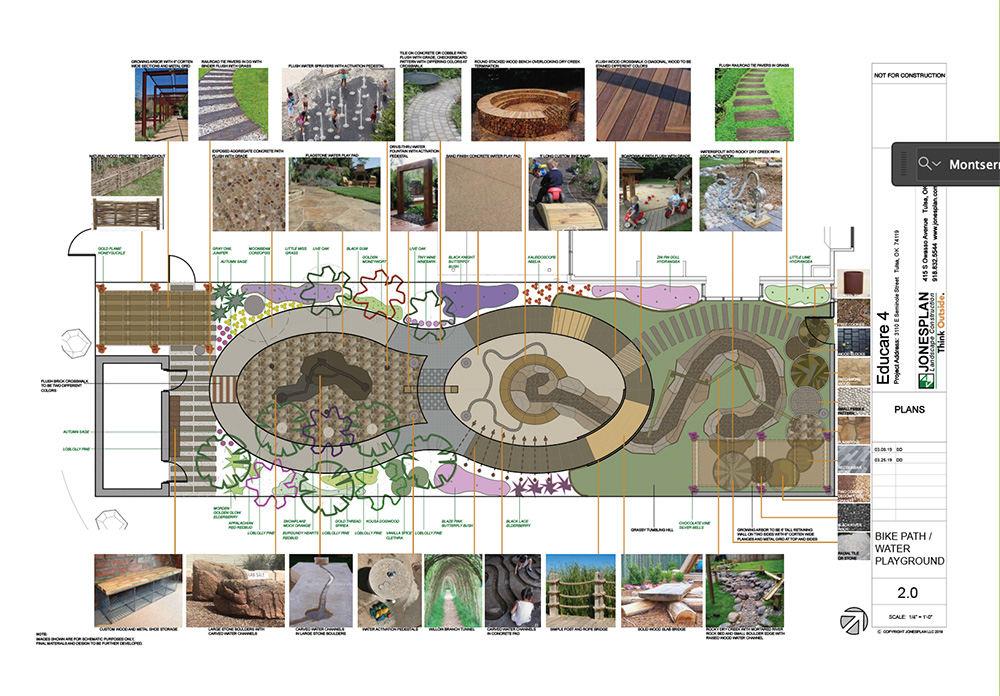
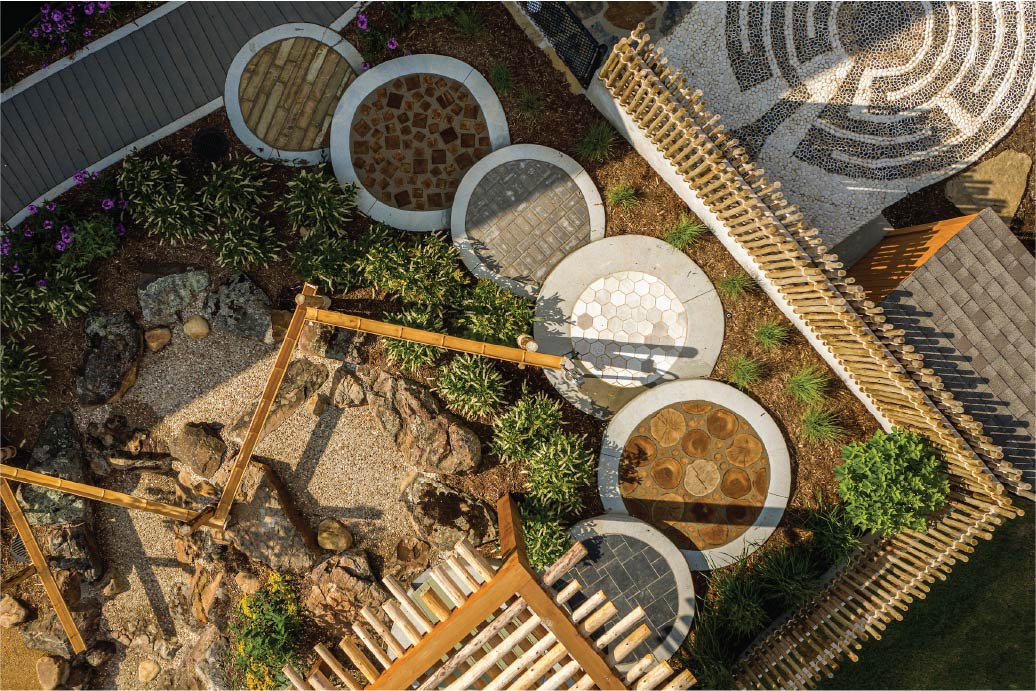
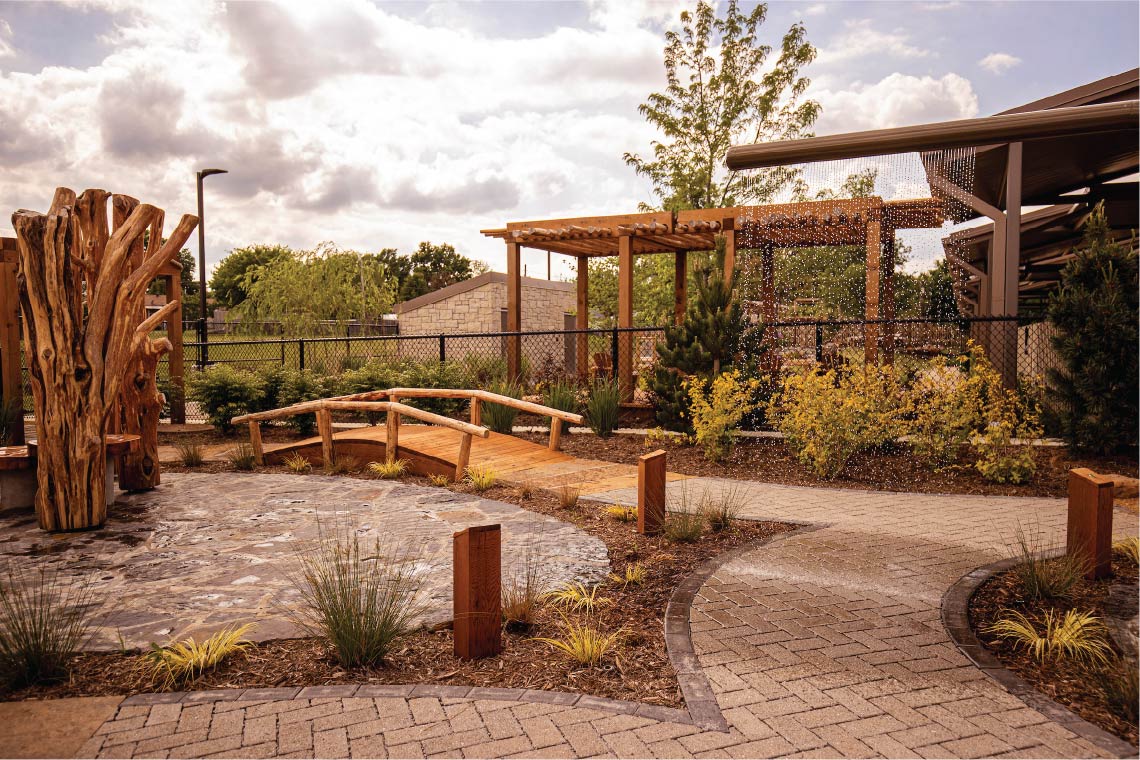
Natural materials were selected throughout, including wooden fencing, solid wood slab bridges, rocky dry creeks with mortared river rock, and a willow branch tunnel.
“Natural materials are our differentiator – for example, logs instead of dimensional lumber, boulders instead of cut stepping stones, or stabilized decomposed granite instead of a typical brushed concrete sidewalk. We see that as naturally more engaging for kids – the materials we’re using are becoming part of their experience instead of being overlooked.”
The choice of surfacing materials was especially important to the design team, who wanted to create a fun and engaging space for children to explore and enjoy. The bike path alone features twelve different materials, including: brick crosswalks, wooden boardwalks and ramps, chopped Hackett rumble strip, and Organic-Lock stabilized aggregate (OLSA) pathways. The variety of material textures and colors provides a naturally-integrated play area.
“We view the material as part of the added value to the playground. Getting the kids exposed to the different material is part of the goal, because part of what we saw, and what Educare saw, is that all the playgrounds were made of rubber and steel and plastic – very non-natural substances.”
- Dan Sinnett, JONESPLAN
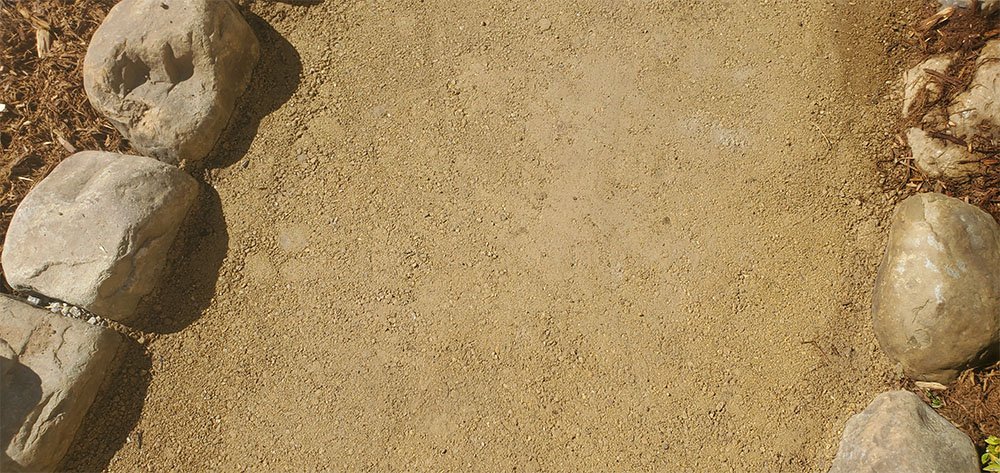
JONESPLAN specified OLSA to ensure durability and stability of the bike path while providing a natural look and feel. OLSA combines a specifically graded aggregate with a patented, renewable, plant-based binder. This mixture is designed to create permeable and natural-looking pathways and surfaces. The use of OLSA allowed the team to maintain a natural aesthetic while ensuring functional longevity.
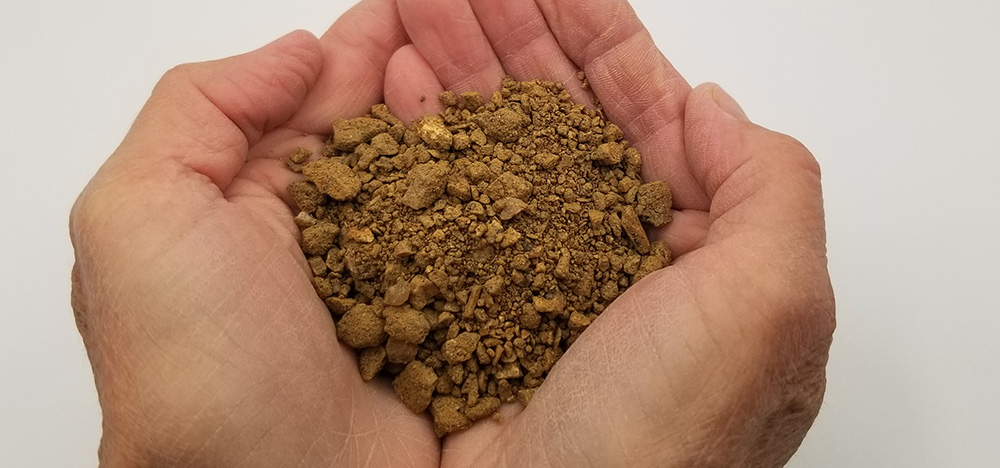
Oklahoma City-based OLSA dealer Minick Materials worked closely with JONESPLAN to supply four tons of OLSA in Desert Gold to cover approximately 200 square feet. Minick Materials delivers OLSA pre-blended and pre-hydrated to project sites so that installers are ready to go.
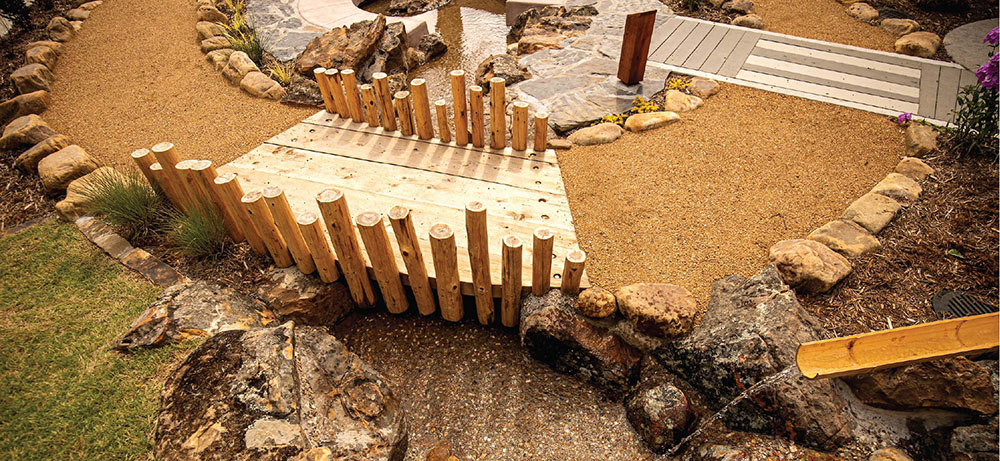
As the designer and builder of the project, JONESPLAN was able to approach the project with flexibility and responsiveness to on-site challenges, ensuring that the design vision was effectively translated into the built environment. This integrated approach ensured that creative solutions were practical and achievable.
The construction process was managed and executed by JONESPLAN. The decision to self-perform all work, rather than subcontracting, allowed for greater control over the project’s timeline and budget. Dan Sinnett from JONESPLAN noted that this approach facilitated a more integrated and cohesive execution.
Minick Materials provided on-site support for the stabilized aggregate portion of the project, including material delivery and hands-on troubleshooting to ensure success. The OLSA was delivered pre-mixed with water to streamline the installation process, ensuring proper hydration level and consistency and reducing potential errors.
Transitions between varying surface material types were a focus-point of the installation. Different material types, edge conditions, and site geometry necessitated a detail-oriented approach to the installation. For the OLSA, that meant compaction using a hand-tamper in areas where access with a roller was not possible.
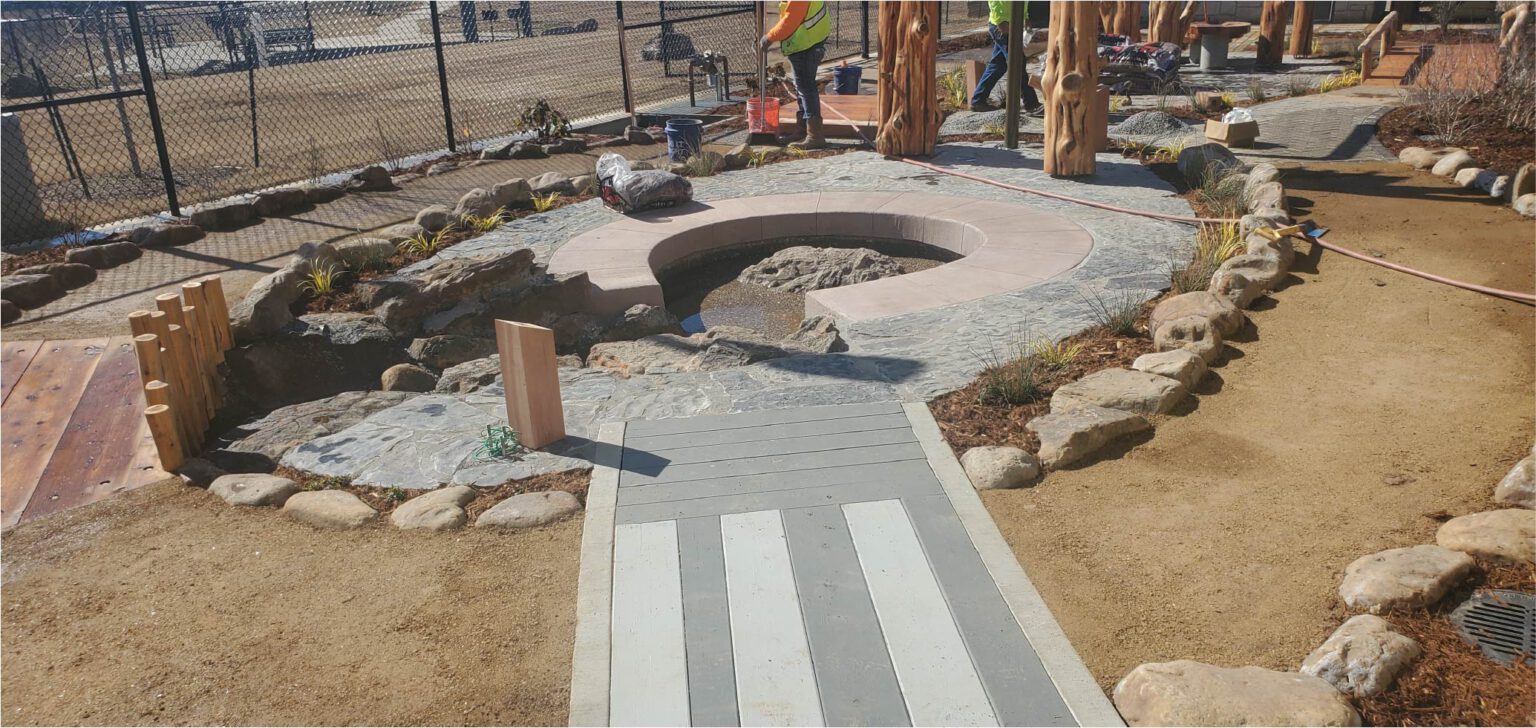
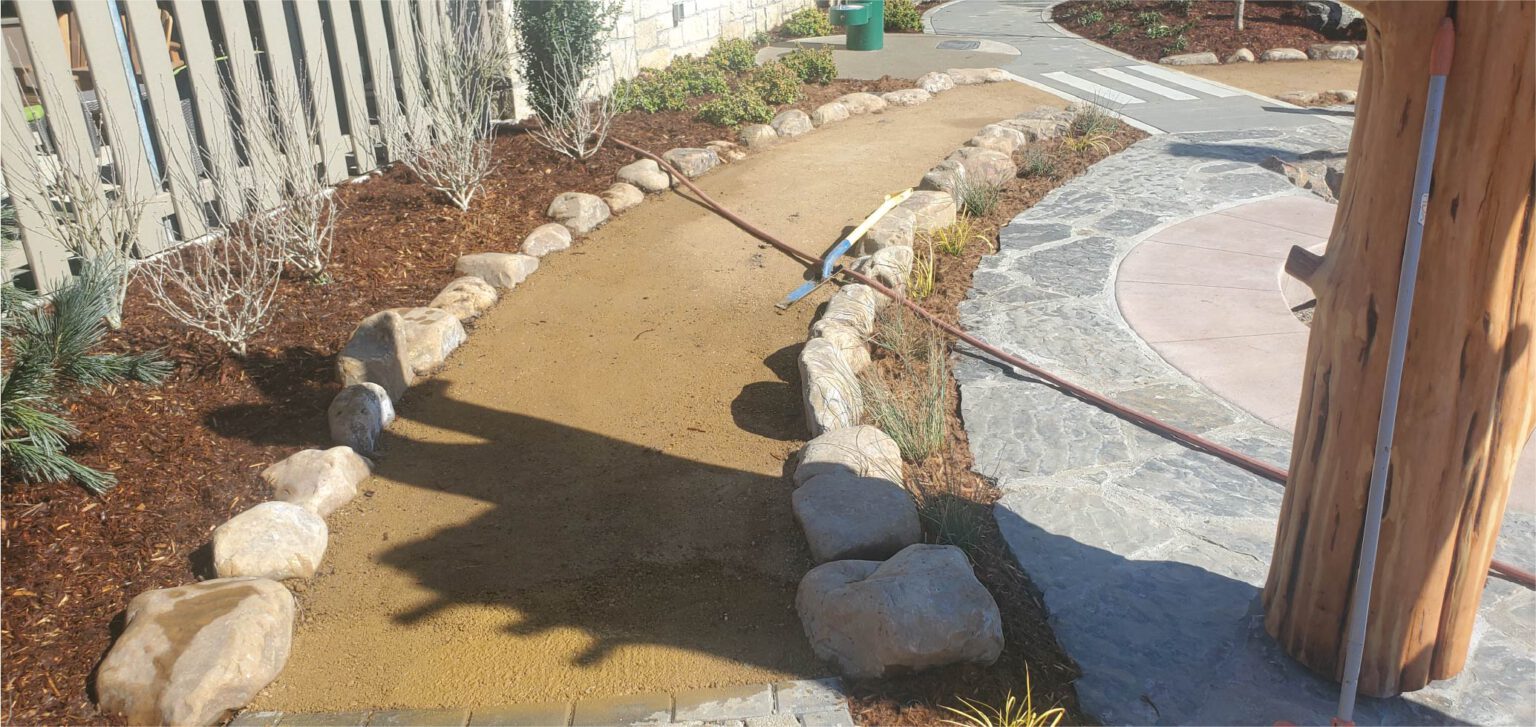
Several challenges emerged during the Tulsa Educare 4 project, primarily related to material integration and design for small children. These challenges required the design and construction team to develop innovative solutions to ensure safety, functionality, and educational value.
1- Multiple Surfacing Materials: The combination of multiple surface materials required precise planning to ensure a seamless transition between different textures and functionalities. The team’s commitment to using natural materials also required innovative approaches to meet safety standards while achieving the desired educational outcomes.
2- Water Play Feature Integration: The water play areas posed additional challenges, necessitating the use of Organic-Lock stabilized aggregate, as opposed to unstabilized aggregate, to reduce erosion and maintain a stable surface in adjacent areas. The design also features permeable pavers directly around the water features to manage water flow.
3- Integrating Safety into Design for Small Children: Designing for small children required special consideration for safety. One of the key aspects was ensuring that all play elements were appropriately sized for the age group. For instance, incorporating a six-inch high jump from a play feature onto the ground-level surface provides a safe but engaging challenge for young children, who find even small heights adventurous. Ensuring that the materials and features met playground safety standards while still being fun and engaging was a complex design task that the team managed effectively by considering the user perspective.
The Tulsa Educare 4 project successfully transformed an outdoor space into a vibrant, natural learning environment. The use of natural materials throughout not only met the aesthetic and functional goals but also provides a unique, engaging experience for the children.
Part of JONESPLAN’s award-winning portfolio of 21 different nature-based learning environments across four Educare campuses, Tulsa Educare 4 supports Educare’s goal of providing environments where all children, families, and communities can thrive.
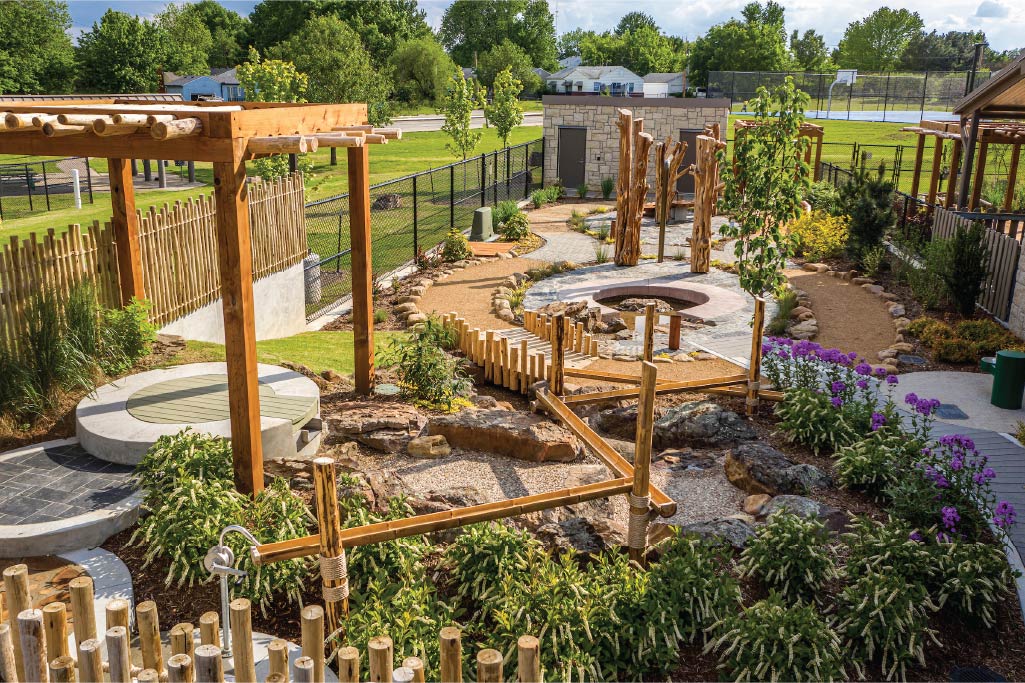
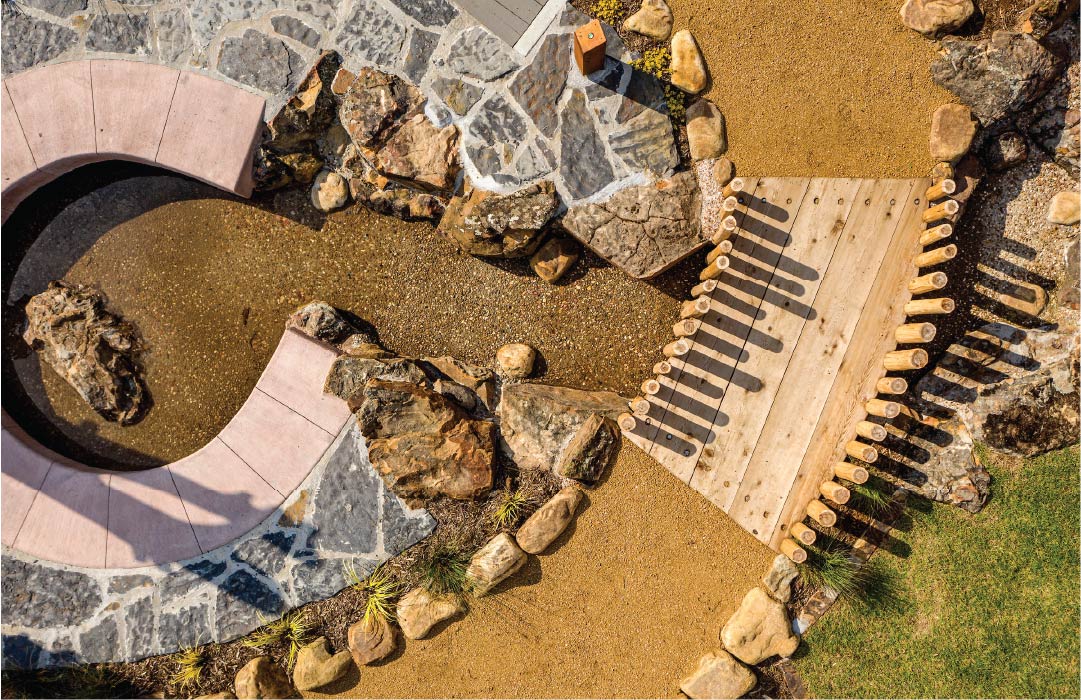
JONESPLAN – https://www.jonesplan.com/tulsa-educare-4/
Minick Materials – https://www.minickmaterials.com/
Organic-Lock – www.organic-lock.com